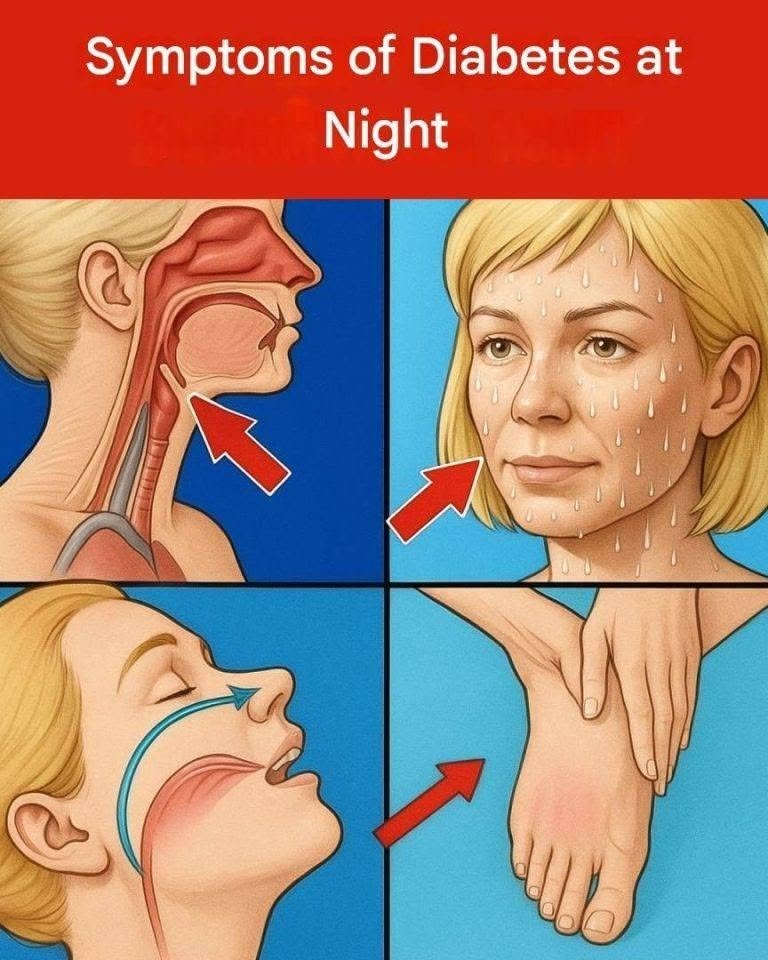
Nighttime is when blood sugar imbalances often reveal themselves most clearly—and they’re easily mistaken for other problems. Here are five diabetes symptoms that specifically show up at night.
1. Nighttime Bathroom Trips (Nocturia)
What happens: High blood sugar forces your kidneys to work overtime, pulling excess glucose into your urine along with water. This means you produce more urine than normal, and your bladder fills repeatedly overnight.
What it looks like:
-
Waking up two, three, or more times to urinate
-
Producing a large volume each time—not just a trickle
-
Intense thirst each time you wake up
-
Disrupted sleep that leaves you exhausted the next day
Why it matters: If this happens regularly and isn’t explained by drinking a lot before bed, it’s a classic early diabetes signal.
2. Severe Night Sweats
What happens: Low blood sugar (hypoglycemia) during the night triggers a surge of stress hormones like adrenaline and cortisol. The body responds with sweating, a racing heart, and anxiety—even while you’re asleep.
What it looks like:
-
Waking up drenched, with sheets and pillowcases soaked
-
Sweating heavily despite a cool room
-
Feeling clammy, shaky, or anxious upon waking
-
Nightmares or vivid, disturbing dreams (the brain’s response to low glucose)
Why it matters: Night sweats can indicate blood sugar dropping too low overnight, especially in people taking insulin or certain diabetes medications. It’s a red flag that needs immediate attention.
3. Restless, Tingling, or Burning Feet
What happens: Peripheral neuropathy—nerve damage from chronically high blood sugar—often becomes more noticeable at night when there are no distractions. The damaged nerves misfire, creating sensations that make sleep difficult.
What it looks like:
-
Tingling, pins-and-needles, or numbness in the feet
-
Burning or electric-shock sensations
-
The feeling of bugs crawling on the skin
-
An irresistible urge to move the legs (sometimes diagnosed alongside restless legs syndrome)
Why it matters: Neuropathy is a complication of long-standing, often undiagnosed high blood sugar. It’s treatable but not reversible, making early detection critical.
4. Unrelenting Thirst and Dry Mouth (Pairing with Your Earlier Question)
What happens: High glucose pulls fluid from tissues, leaving your mouth and throat parched. This isn’t just mild discomfort—it’s a thirst that water can’t seem to touch, and it intensifies when you’re trying to sleep.
What it looks like:
-
A mouth so dry your tongue sticks to the roof
-
Waking up with a burning, cottony sensation
-
Gulping water by the bedside but still feeling dry
-
Chapped lips and a scratchy throat every morning
Why it matters: Persistent nighttime dry mouth combined with frequent urination is a hallmark pairing of undiagnosed diabetes.
5. Headaches and Brain Fog Upon Waking
What happens: Overnight blood sugar swings—either too high or too low—can trigger morning headaches and a groggy, hungover feeling even without alcohol.
What it looks like:
-
A dull, throbbing headache focused at the temples or back of the head
-
Waking up confused, irritable, or unusually groggy
-
Difficulty thinking clearly for the first hour or more
-
Symptoms that improve after eating breakfast (if blood sugar was low) or after hydrating (if it was high)
Why it matters: The “dawn phenomenon”—a natural rise in blood sugar in the early morning—can be exaggerated in diabetes, causing significant symptoms right when you wake.
Quick Self-Check: Are Nighttime Symptoms Adding Up?
| Symptom | Happens Regularly? |
|---|---|
| Waking to urinate 2+ times per night | |
| Drenching night sweats | |
| Tingling or burning feet | |
| Extreme thirst and dry mouth | |
| Morning headaches and grogginess |
If you’re checking off two or more, a blood sugar test is a reasonable next step. A simple A1C blood test—drawn once, no fasting—can provide a three-month average of your blood sugar and catch diabetes or prediabetes before damage progresses.
When to Seek Emergency Care
Night sweats in particular deserve urgent attention if they’re accompanied by:
-
Chest pain or palpitations
-
Severe confusion or inability to wake properly
-
Seizures
-
Cold, clammy skin with rapid breathing
These can signal severe hypoglycemia, which requires immediate treatment.
Nighttime symptoms are easy to blame on bad sleep, stress, or aging. But when they cluster together, they’re telling you something important—and catching it early changes everything.