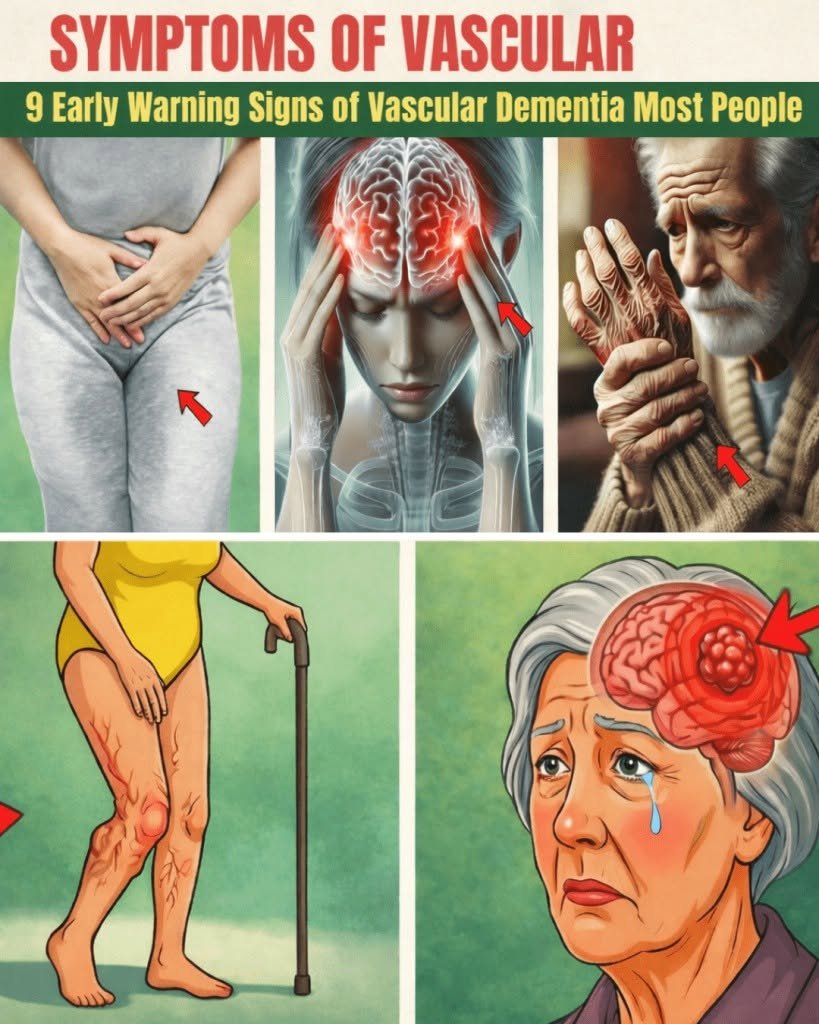
Vascular dementia is the second most common form of dementia after Alzheimer’s, and it’s caused by reduced blood flow to the brain—often from a series of small, unnoticed strokes or narrowed blood vessels. Unlike Alzheimer’s, which often begins with memory loss, vascular dementia’s earliest signs are usually cognitive and physical changes that many people dismiss as normal aging or stress. Catching them early can lead to treatments that slow progression and preserve quality of life.
1. Subtle Changes in Problem-Solving and Planning
What happens: Damage to the brain’s frontal lobes—where executive function lives—makes it harder to plan, organize, and follow through on tasks that used to feel automatic.
What it looks like in daily life:
-
Struggling to follow a familiar recipe or manage monthly bills
-
Taking much longer to complete routine tasks
-
Difficulty packing for a trip or planning a family meal
-
Trouble with multi-step instructions that were once easy
Why it’s missed: This often gets dismissed as being “overwhelmed,” “distracted,” or simply “getting older.” But a noticeable, persistent change in executive function is a red flag.
2. Slowed Thinking (Processing Speed)
What happens: The brain’s white matter—the wiring that connects different brain regions—gets damaged by poor blood flow. Signals travel more slowly, and thinking speed drops.
What it looks like in daily life:
-
Taking noticeably longer to respond in conversation
-
Needing extra time to make decisions, even small ones
-
Difficulty keeping up with fast-paced TV shows or group discussions
-
A general sense of mental “fog” that doesn’t lift
Why it’s missed: It’s easy to assume someone is just tired, depressed, or not paying attention. But vascular-related slowing is consistent and progressive, not situational.
3. Mood and Personality Shifts (The One Most People Miss)
This is #3, and it’s the most overlooked because it doesn’t look like “memory problems.”
What happens: Damage to the frontal lobes and subcortical areas of the brain—the regions most affected by small vessel disease—disrupts emotional regulation. The result is not just sadness or anxiety, but a fundamental shift in how the person reacts to the world.
What it looks like in daily life:
-
Sudden bursts of irritability or anger over minor things
-
Apathy and loss of interest in hobbies, socializing, or family
-
Emotional flatness or inappropriate responses (laughing at sad news, indifference to happy events)
-
Depression that doesn’t respond to typical treatment
-
Family members saying, “They just seem like a different person”
Why it’s missed: It’s often labeled as depression, late-life mood disorder, or even just a difficult personality. But vascular damage to emotional centers of the brain causes changes that are neurological in origin—not psychological. This is sometimes called “vascular depression,” and it responds differently than typical mood disorders.
4. Unsteady Gait and Frequent Falls
What happens: Small vessel disease affects the brain’s motor control centers and the pathways that coordinate balance and walking.
What it looks like in daily life:
-
A shuffling walk or shorter, hesitant steps
-
Trouble starting to walk (as if the feet are stuck)
-
Leaning or veering to one side
-
Frequent, unexplained falls—sometimes without tripping on anything
-
Difficulty turning around or backing up
Why it’s missed: Falls are common in older adults, and the connection to brain health isn’t always made. But when walking changes accompany cognitive shifts, it points toward vascular causes.
5. Urinary Incontinence That Develops Suddenly or Worsens
What happens: The brain’s control over the bladder relies on intact pathways in the frontal lobes. When small vessel disease damages these connections, the signal that says “not now” gets lost.
What it looks like in daily life:
-
Urgency—feeling the need to go immediately, with little warning
-
Accidents that happen before reaching the bathroom
-
Frequent urination, especially at night
-
This symptom appearing alongside the cognitive or mood changes above
Why it’s missed: It’s often attributed to aging, prostate issues, or pelvic floor problems. While those can certainly be causes, new-onset incontinence combined with cognitive or mood changes strongly suggests a brain-based origin.
The Pattern That Tells the Story
Vascular dementia often presents in a stepwise pattern—meaning a noticeable decline after a vascular event like a small stroke or TIA, followed by a plateau, then another decline. This differs from Alzheimer’s, which usually progresses gradually and steadily.
Comparison: Vascular Dementia vs. Alzheimer’s
| Feature | Vascular Dementia | Alzheimer’s Disease |
|---|---|---|
| First signs | Slowed thinking, poor planning, mood changes | Memory loss (especially recent events) |
| Progression | Stepwise—sudden drops, then stable periods | Slow, steady decline |
| Walking/balance | Often affected early | Usually preserved until late stages |
| Mood | Apathy, irritability, emotional flatness | Anxiety, depression more common |
| Memory | May be intact early on | Central, defining feature |
Risk Factors That Make This More Likely
Vascular dementia is closely tied to cardiovascular health. The risk factors are largely the same:
-
High blood pressure (the single biggest modifiable risk factor)
-
High cholesterol
-
Diabetes
-
Smoking
-
Atrial fibrillation (irregular heartbeat that allows clots to form)
-
Previous strokes or TIAs (“mini strokes”)
-
Obesity and sedentary lifestyle
What to Do If You Recognize These Signs
1. Don’t wait. Early intervention with blood pressure management, blood thinners (if indicated), and lifestyle changes can dramatically slow vascular damage.
2. See the right specialists. A neurologist or geriatrician can perform cognitive testing and order brain imaging (MRI or CT) to detect the small vessel damage that characterizes vascular dementia.
3. Control vascular risk factors aggressively. This is the single most effective way to slow progression. Managing blood pressure, blood sugar, and cholesterol protects the remaining healthy brain tissue.
4. Address the mood component. Because vascular depression has a neurological basis, it may respond to medications that also support brain blood flow. A psychiatrist experienced in geriatric or neurocognitive disorders is ideal.
The Message Your Brain Is Whispering
Mood shifts that feel out of character. A walk that’s lost its bounce. Decisions that take longer than they should. These are not moral failings or inevitable aging—they can be your brain quietly signaling that its blood vessels need attention. And when you listen early, there is still time to act.