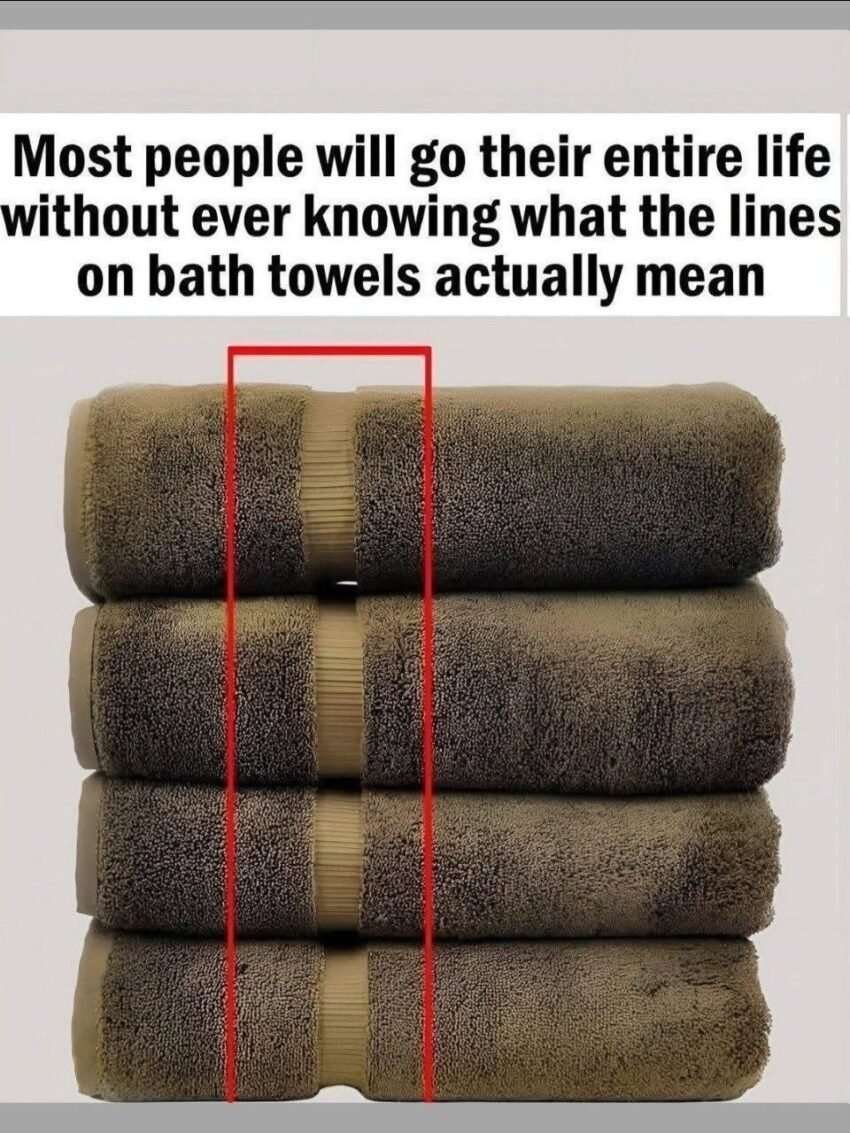
Those lines on bath towels—whether they’re a smooth stripe, a textured band, or a woven border—are not just decorative. They serve several practical purposes rooted in textile manufacturing and towel function.
1. The “Dobby Border”: A Structural Reinforcement
What it is: The most common “line” on a bath towel is a flat-woven or differently textured band near each end, often called a dobby border.
What it actually means: This isn’t an afterthought. The dobby border is a tighter, denser weave that prevents the towel from unraveling, warping, or losing its shape over years of washing. Towels are cut from large bolts of terry cloth fabric, and the ends need finishing. A dobby border is the most durable, elegant way to do that—stronger than a simple hem and more refined than a serged edge.
The bonus: Because it lacks the thick loops of terry cloth, it dries faster and is less prone to mildew at the very edge where towels stay damp longest.
2. The Cam Border: A Mark of Quality
What it is: Some luxury towels have a smooth, tightly woven satin or twill line (often called a cam border) running along the edges or ends.
What it actually means: This is a hallmark of higher-end manufacturing. A cam border requires an additional step in the weaving process and indicates a towel designed to hold its structure and appearance. It prevents curling at the edges—a common frustration with cheaper towels.
3. Aesthetic Grounding (Why Designers Use Them)
What it means for your bathroom: Visually, those lines “anchor” the towel when it’s folded or hung. Without a border, a solid terry towel can look formless and saggy. The line creates a visual stopping point that makes even a simple white towel look crisp, structured, and intentional—like the difference between a tailored shirt and a shapeless one.
4. The “Right Side” Indicator
What it means in daily use: On some towels, the dobby border only appears on one side. This subtly indicates which face of the towel was intended to be displayed outward when folded or hung. It’s a quiet signal from the manufacturer about presentation.
5. A Dry-Off Hack Hidden in Plain Sight
What it means for function: That smoother woven band is less absorbent than the looped terry, which makes it perfect for one specific task: drying your face or patting skin dry without the heavy drag of full terry cloth. Some people unconsciously gravitate toward using the border area for their face because it feels gentler.
The Takeaway
Those lines are doing serious work. They’re the towel’s backbone—preventing fraying, reducing curling, drying faster at the edges, and signaling manufacturing quality. Far from being a random design choice, they’re the quiet evidence of a towel built to last.
Next time you fold laundry, you’ll see them differently.