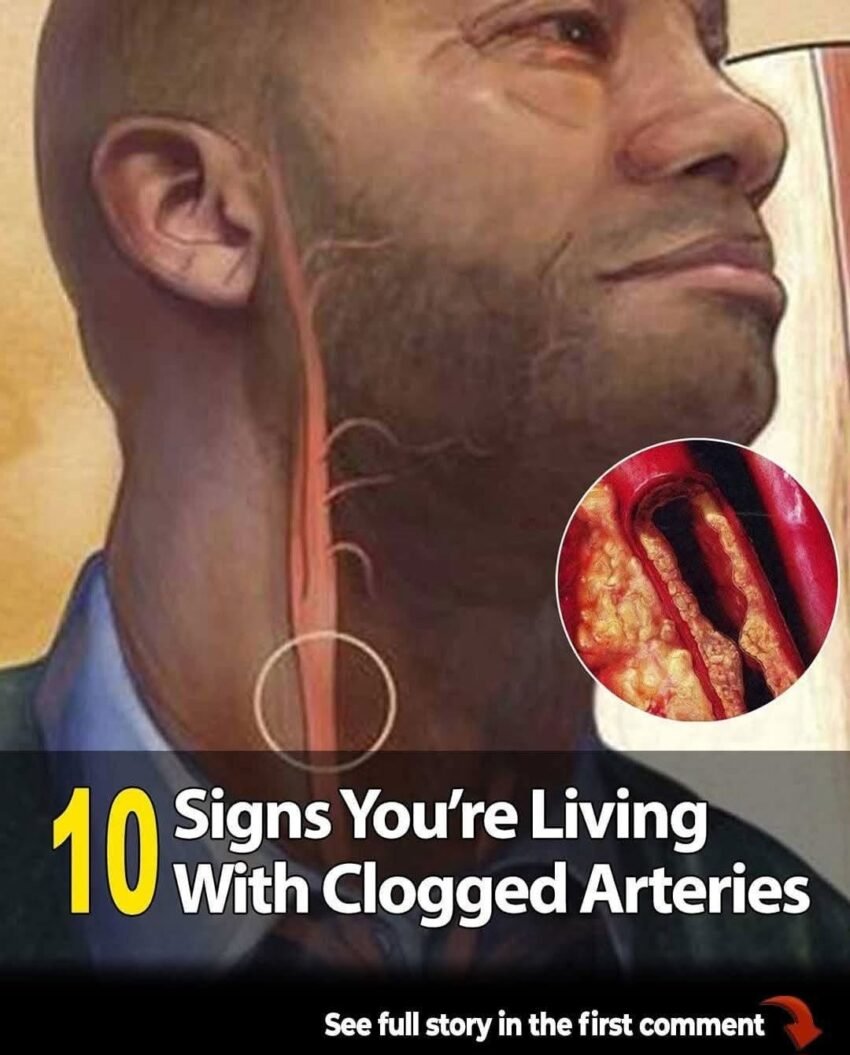
This is a critical topic where the line between “subtle symptom” and “medical emergency” can be dangerously thin. Unlike the viral lists that often recycle vague symptoms to scare you, the real subtle signs of atherosclerosis (clogged arteries) depend entirely on where the blockage is—heart, brain, legs, or kidneys.
Here are 10 evidence-based, subtle symptoms categorized by the affected area, which is how a cardiologist or vascular surgeon actually thinks about them. The key word is subtle, meaning they appear before a catastrophic heart attack or stroke.
If the Blockage Is in the Heart (Coronary Arteries)
1. Shortness of Breath with Ordinary Exertion
This is the single most overlooked symptom, especially in women. You might think you’re just “out of shape.”
-
What it feels like: Getting winded doing things that used to be easy—carrying groceries up one flight of stairs, walking the dog at your normal pace, gardening.
-
Why it happens: Your heart’s left ventricle stiffens or weakens because it’s chronically starved of oxygen-rich blood. The heart can’t pump efficiently, so fluid backs up into your lungs.
-
The distinction: It’s not just feeling puffy; it’s that your breathing is labored and you feel you can’t get a deep, satisfying breath during an activity that shouldn’t require it.
2. Jaw, Throat, or “Chin” Pain
Not all heart-related pain is a crushing left-arm-and-chest Hollywood heart attack. Myocardial ischemia (low blood flow to the heart muscle) can refer pain upward.
-
What it feels like: An ache, pressure, or burning sensation in the lower jaw, neck, or throat. It can feel like a toothache, a choking sensation, or an earache on the left side.
-
The key clue: It comes on predictably with physical effort or emotional stress and resolves completely when you rest. If your jaw tightens and aches every time you walk uphill and feels fine when you sit, that’s a cardiac red flag, not a dental problem.
3. Nausea, Indigestion, or Epigastric Burning
The bottom wall of the heart (inferior wall) lies just above the diaphragm and stomach. When it’s ischemic, it irritates the diaphragm, mimicking a GI problem.
-
What it feels like: A sensation like heartburn that doesn’t quite respond to antacids, or a sudden wave of nausea and clammy sweating that comes with exertion and goes away with rest. Patients often dismiss this as “just something I ate,” but it’s episodic and linked to activity.
If the Blockage Is in the Legs (Peripheral Artery Disease – PAD)
4. Calf or Thigh Fatigue When Walking That Stops With Rest
This is the classic sign of PAD, but people call it “getting old” instead of recognizing it as a blocked vessel.
-
What it feels like: A deep, achy cramping or heavy fatigue in the calf, thigh, or buttock muscle that reliably starts after a specific distance (e.g., always after walking two blocks). You stop, stand still for 2-5 minutes, and the discomfort fully resolves. This is called claudication.
-
The distinction: It’s not the general soreness of a hard workout. It’s a reproducible, predictable cramping that goes away with rest and returns upon the same distance. Advanced PAD can cause cool, hairless, shiny skin on the lower legs and feet, and even pain at rest in the toes when lying down.
5. Changes in Toenail Growth and Leg Hair
This is a sign your cardiologist or vascular surgeon might notice first: one foot or leg has significantly less hair than the other, and the toenails are thickened, brittle, and slow-growing.
-
Why it happens: The reduced blood flow from narrowed iliac or femoral arteries means the hair follicles and nail beds are chronically under-nourished. It’s a visible trophic change that develops gradually.
If the Blockage Is Leading to the Brain (Carotid or Vertebral Arteries)
6. A Transient Ischemic Attack (Mini-Stroke): Amaurosis Fugax
This is the “curtain coming down” symptom. It is the definition of a subtle, must-not-ignore warning sign.
-
What it feels like: A sudden, painless loss of vision in one eye, like a gray or black shade being pulled down over your field of vision, then lifting back up after a few seconds or minutes.
-
Why it happens: A tiny piece of plaque (embolus) from a narrowed carotid artery breaks off and temporarily blocks the retinal artery. It’s a transient ischemic attack. Ignoring it is dangerous because a permanent, blinding stroke could follow soon after.
7. Subtle Cognitive Drift or Dizziness
Multi-infarct dementia or vertebrobasilar insufficiency can be subtle. When the tiny arteries in the brain slowly clog, you don’t get a sudden stroke; you get slower processing and micro-damage.
-
What it feels like: Unexplained, brief episodes of dizziness, vertigo, or loss of balance (especially when turning the head and looking up, which can kink a narrowed vertebral artery). Family might notice a step-change in your ability to plan, organize, or manage finances—this is vascular cognitive impairment.
General and Atypical Signs
8. Erectile Dysfunction (ED) as a Vascular Marker
In men, erectile dysfunction—particularly when it starts gradually and affects the ability to get a rigid erection—is often the canary in the coal mine. The penile arteries are 1-2mm wide (smaller than the 3-4mm coronary arteries), so they show signs of endothelial dysfunction and plaque buildup years before a heart event.
-
The key: ED is a powerful independent predictor of future heart attack, especially in men with no obvious hormonal or psychological cause. It should trigger a cardiovascular risk assessment, not just a prescription for a little blue pill.
9. Renal Artery Stenosis: Sudden-Onset High Blood Pressure
If the artery to one kidney becomes narrowed by plaque, the kidney mistakenly thinks your blood pressure has crashed. It aggressively releases hormones (renin) to raise it.
-
What it looks like: Someone over 55 with previously well-controlled blood pressure suddenly develops resistant hypertension that requires three or more drugs to manage. This is a secondary, renovascular cause and signals significant systemic atherosclerosis.
10. Diagonal Earlobe Crease (Frank’s Sign)
This is the only external, physical exam finding with a documented, though debated, correlation to coronary artery disease. It’s not diagnostic by itself, but it’s a subtle flag.
-
What it looks like: A deep, diagonal crease that runs from the ear canal opening across the earlobe to the bottom edge. Multiple studies have shown a statistical association between this crease and the presence of CAD, especially when combined with other risk factors. It’s a subtle clue for a doctor to dig deeper, not a self-diagnosis.
Crucial takeaway: All of these symptoms share a pattern—they are often exertional, meaning they come on with activity and resolve with rest. A symptom that disappears when you stop moving can be dangerously easy to ignore. If you recognize these patterns, the next step is not an internet search but a conversation with a doctor who can order a simple ankle-brachial index, a stress test, or a carotid ultrasound. These are treatable, screenable conditions long before they kill you.