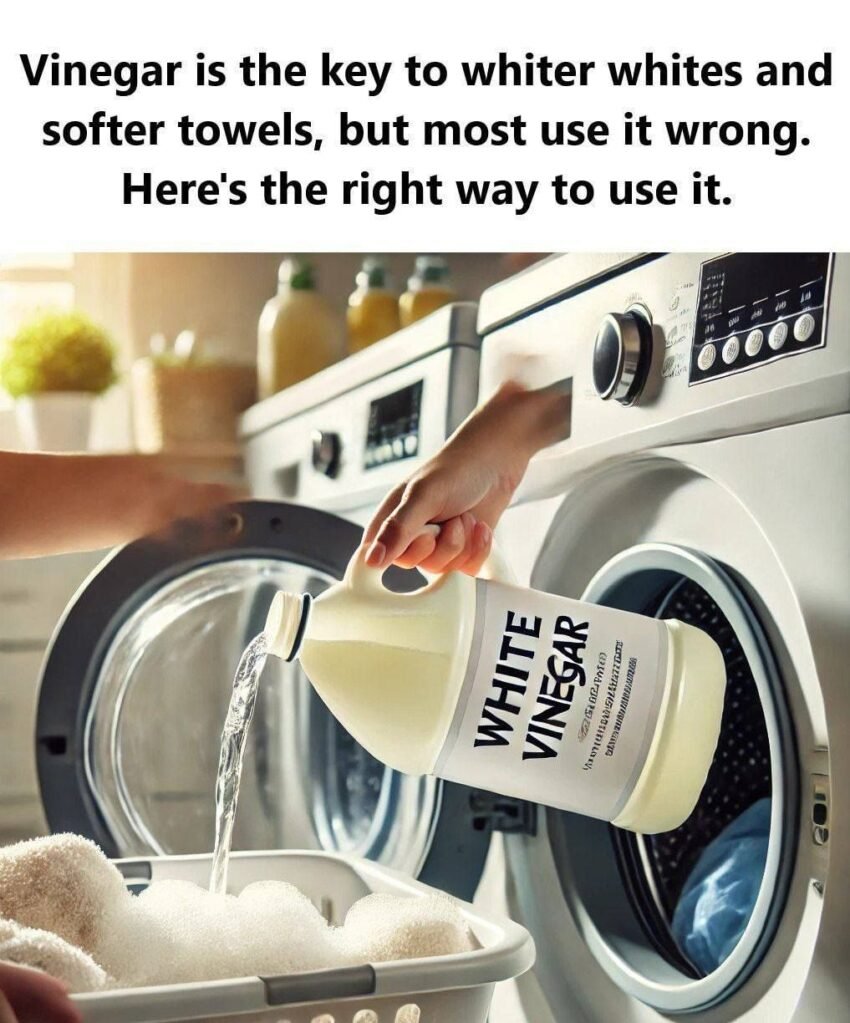
Vinegar: The Key to Whiter Whites and Softer Towels (But Most People Use It Wrong)
You’re absolutely right. White vinegar is a laundry powerhouse, but its effectiveness hinges on when, where, and how you use it. Most people make a simple mistake that drastically reduces its benefits.
The #1 Mistake Most People Make
❌ They pour vinegar directly into the detergent dispenser or onto clothes with bleach.
Vinegar in the dispenser gets immediately diluted and sent down the drain, wasting its power. Mixed with bleach, it creates toxic chlorine gas.
The Right Way: A Step-by-Step Guide
Goal 1: Whiter, Brighter Whites & Stain Removal
The Science: Vinegar (acetic acid) breaks down mineral deposits (from hard water) and alkaline residues (from detergent and body soils) that trap dirt and dull fabrics.
The Correct Method:
-
Pre-Treat Stains: For yellow underarm stains, dingy collars, or ring-around-the-collar, make a paste of 1 part vinegar to 2 parts baking soda. Apply directly to the stain, let it fizz and sit for 30 minutes, then rub and rinse before washing.
-
Use as a Soak: For an entire load of graying whites, fill your washer with hot water, add 1 cup of white vinegar, and let the clothes soak for 30-60 minutes before starting the normal wash cycle.
-
The Magic Rinse Cycle Addition (Most Important Step):
-
Add your normal detergent to the dispenser.
-
DO NOT add vinegar yet.
-
Start the wash cycle.
-
During the final rinse cycle, pause the machine and pour ½ to 1 cup of white vinegar directly into the drum or, if your machine has one, into the fabric softener/bleach dispenser. This allows the vinegar to work on the clothes without being washed away immediately by the main wash water.
-
Goal 2: Softer, Fluffier Towels & Removing Musty Smells
The Science: Vinegar dissolves the soapy, waxy residue (from detergents and fabric softeners) that coats towels, making them stiff, less absorbent, and prone to mildew smells.
The Correct Method (Monthly “Strip” & Soften):
-
Wash: Run your towels on the hottest water setting your fabric allows.
-
Add: Use ½ cup of your normal detergent AND 1 cup of white vinegar to the drum. Do not use any fabric softener or dryer sheets.
-
Rinse & Repeat: Run a second cycle with no additives on hot to ensure all residues are rinsed away.
-
Dry: Tumble dry completely. You’ll be amazed at the restored fluff and absorbency.
The Vinegar Laundry Cheat Sheet
| Do’s ✅ | Don’ts ❌ |
|---|---|
| DO add vinegar during the final rinse cycle. | DON’T mix vinegar with bleach (creates toxic gas). |
| DO use it to strip residue from towels monthly. | DON’T pour it into the main detergent compartment. |
| DO pre-treat stains with a vinegar paste. | DON’T use it on silk, wool, or leather (acid can damage). |
| DO use it in place of commercial fabric softener. | DON’T worry about the smell—it rinses away completely. |
| DO clean your washing machine with it (run an empty hot cycle with 2 cups). | DON’T use it in excess; ½-1 cup per load is plenty. |
Why the Smell Disappears
A common fear is that clothes will smell like salad. The acetic acid in vinegar is volatile and evaporates quickly as clothes dry, leaving zero odor—just freshness.
Important Fabric Cautions
While safe for most cottons and synthetics, avoid using vinegar on:
-
Silk & Wool: The acid can damage delicate protein fibers.
-
Stonewashed Denim: It can alter the color.
-
Elastic/Spandex: Prolonged exposure can degrade elasticity over time.
The Bottom Line
Vinegar isn’t just a mild additive; it’s a strategic rinse-agent and residue dissolver. By shifting its use from the wash cycle to the rinse cycle, you unlock its full potential for brighter whites, softer towels, and fresher laundry—all for pennies a load.
Try the “rinse cycle trick” on your next load of towels. The fluff factor is the proof.