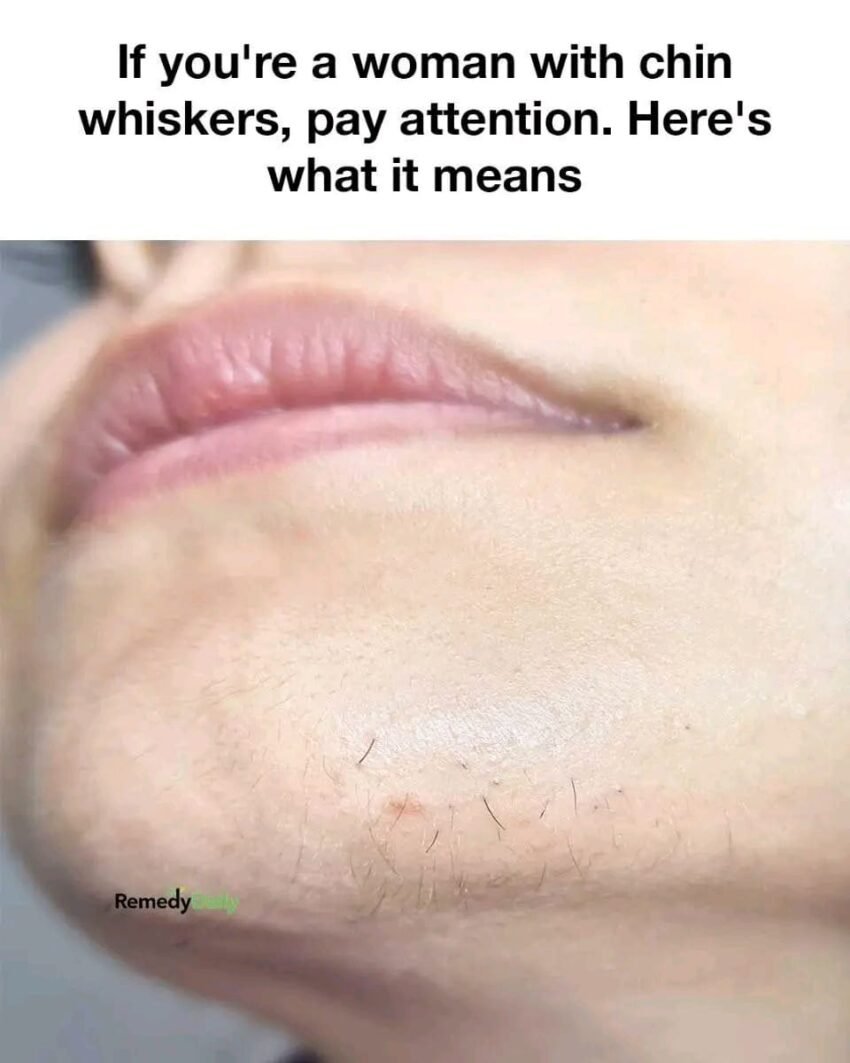
Your chin whiskers—particularly in individuals who don’t typically grow much facial hair (like cisgender women or some transgender individuals)—can be a sign of underlying health changes. While often benign, they can sometimes signal hormonal imbalances or other conditions.
Here’s what your chin whiskers could be telling you about your health.
1. Hormonal Imbalance (The Most Common Cause)
Chin hairs are often androgen-sensitive, meaning they respond to male hormones like testosterone. Everyone has some androgens, but an increase or a heightened sensitivity can trigger coarse, dark chin hair.
Possible Conditions:
-
Polycystic Ovary Syndrome (PCOS): This is a leading cause. PCOS involves insulin resistance and elevated androgens. Other signs include: irregular periods, acne, weight gain (especially around the abdomen), thinning scalp hair, and fertility issues.
-
Menopause & Perimenopause: As estrogen levels drop, the relative effect of androgens becomes more pronounced, leading to new facial hair (along with hot flashes, night sweats, and mood changes).
-
Adrenal Disorders: Conditions like congenital adrenal hyperplasia or tumors on the adrenal glands can cause excess androgen production.
-
Cushing’s Syndrome: High cortisol levels can also lead to hirsutism (excessive hair growth in a male-pattern).
Medical Term: Hirsutism—excessive male-pattern hair growth in women on the chin, upper lip, chest, back, or abdomen.
2. Insulin Resistance
This is closely tied to PCOS but can exist on its own. High insulin levels can stimulate ovarian and adrenal glands to produce more androgens. If you have chin whiskers plus darkening skin in body folds (acanthosis nigricans), intense sugar cravings, or difficulty losing weight, insulin resistance could be a factor.
3. Medication Side Effects
Certain drugs can cause hair growth as a side effect, including:
-
Minoxidil (used for hair loss)
-
Corticosteroids (like prednisone)
-
Some hormonal therapies
-
Certain antidepressants and immunosuppressants
4. Genetic & Ethnic Predisposition
Sometimes, it’s simply genetics. If the women in your family have chin hairs, you might too, without any underlying disorder. Certain ethnic backgrounds (e.g., Mediterranean, South Asian, Middle Eastern) are also more prone to naturally having more facial hair.
5. Rare but Serious: Ovarian or Adrenal Tumors
A sudden, rapid onset of coarse chin hair alongside other virilization signs (deepening voice, enlarged clitoris, severe acne, balding) needs immediate medical attention. This can indicate a tumor producing androgens.
When to See a Doctor: The Red Flags
Consult a healthcare provider—typically a primary care doctor, endocrinologist, or gynecologist—if your chin hair is accompanied by:
-
Sudden or rapid increase in growth
-
Irregular or absent menstrual cycles
-
Unexplained weight gain or difficulty losing weight
-
Acne or oily skin that worsens
-
Thinning scalp hair (female-pattern hair loss)
-
Changes in voice or muscle mass
-
Skin darkening (especially neck, armpits, groin)
-
Development of a “buffalo hump” or purple stretch marks (signs of Cushing’s)
What to Expect at the Doctor
Your doctor will likely:
-
Take a detailed history (family history, menstrual cycle, symptoms).
-
Perform a physical exam, possibly checking for other signs of excess hair.
-
Order blood tests to check:
-
Testosterone (free and total)
-
DHEA-S (an adrenal androgen)
-
LH/FSH ratio (for PCOS)
-
Fasting insulin and glucose
-
Thyroid function (TSH)
-
Cortisol (if Cushing’s is suspected)
-
-
Recommend an ultrasound to look for ovarian cysts (if PCOS is suspected).
Management & Treatment
-
Cosmetic Removal: Bleaching, plucking, threading, waxing, laser hair removal, or electrolysis.
-
Medical Treatment (if an imbalance is found):
-
Anti-androgen medications (like spironolactone) to block androgen effects.
-
Oral contraceptives (birth control pills) to regulate hormones and suppress ovarian androgen production.
-
Topical creams like eflornithine (Vaniqa) to slow hair growth.
-
Managing insulin resistance with medications like metformin and lifestyle changes (diet, exercise).
-
The Bottom Line
A few stray chin whiskers are often normal, especially with age. However, new, coarse, and increasing chin hair—especially when paired with other symptoms—is your body’s way of signaling a potential hormonal shift or condition.
Don’t just pluck and ignore. If you have concerns, a doctor can help determine if it’s a benign trait or a sign of something that needs addressing, helping you feel better both inside and out.