
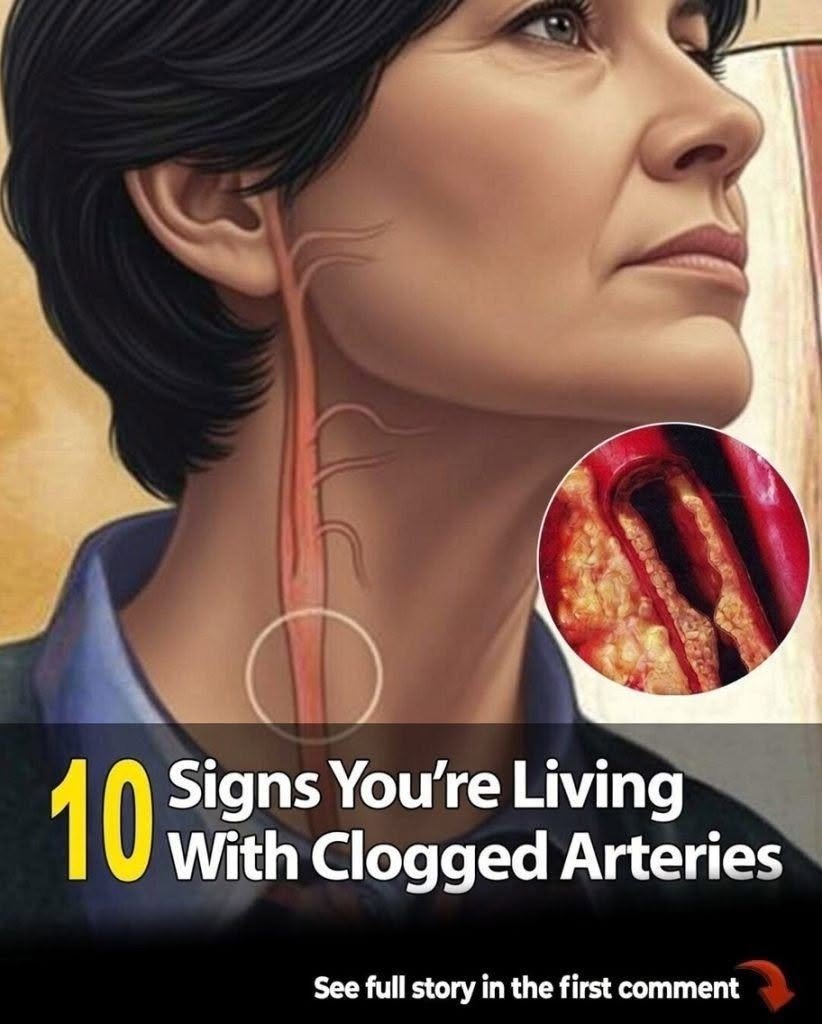
Blocked arteries (atherosclerosis) are systemic. A sign in your legs is a direct warning about your heart and brain. Never ignore a signal from one area because you assume it’s unrelated to another.
Here are 10 critical indicators, organized by the region they affect.
From the Heart (Coronary Arteries)
These signs are not always the classic “elephant on the chest” Hollywood portrayal, especially in women, diabetics, and the elderly.
1. Angina That’s “Uncomfortable,” Not Painful
Blocked coronary arteries cause ischemia—a lack of oxygen-rich blood to the heart muscle. This often manifests not as pain, but as a squeezing, pressure, tightness, or a burning sensation in the center of the chest. It can feel like bad indigestion. The key differentiator is that it’s triggered by exertion or emotional stress and relieved by rest. If you feel a strange chest tightness every time you walk uphill or carry groceries, and it stops when you stop, that is a textbook angina pattern. Do not dismiss it as being “out of shape.”
2. Shortness of Breath as a Cardiac Equivalent
When the heart’s pumping ability is compromised by blocked arteries, fluid can back up into the lungs (congestive heart failure). The symptom is breathlessness that’s disproportionate to the activity. You find yourself winded doing things that used to be easy—making the bed, walking across a room. Lying flat may make it worse, requiring you to sleep propped up on pillows (orthopnea). This is a classic sign that the left side of the heart is struggling.
3. Unexplained, Profound Fatigue
This is a critically overlooked sign, especially in women in the weeks leading up to a heart attack. Oxygen-depleted muscles signal the brain to conserve energy. The fatigue isn’t just “tiredness”; it’s a crushing exhaustion where simple tasks feel monumental. If you are suddenly unable to complete your normal daily routine without feeling drained, your cardiovascular system needs an immediate check.
From the Brain (Carotid Arteries)
4. A Transient Ischemic Attack (TIA) or “Mini-Stroke”
This is the single most important warning you will ever get, and it’s unforgivable to ignore. A piece of plaque or a clot temporarily blocks a brain artery. Symptoms appear suddenly and last only minutes to an hour, resolving completely. They can include:
-
Sudden, painless loss of vision in one eye (like a “window shade being pulled down”).
-
Slurred speech or inability to find words.
-
Numbness or weakness on one side of the body (face, arm, or leg).
-
Sudden, severe dizziness or loss of balance.
If this happens, you are at extreme risk of a permanent, disabling stroke within the next 48 hours. This is a 911 emergency, not a “let’s see the doctor next week” situation.
From the Legs (Peripheral Arteries)
5. Intermittent Claudication: The Pain That Stops You
This is the leg equivalent of angina. A blockage in the leg arteries causes a predictable, reproducible cramping, aching, or burning pain in the calf, thigh, or buttock muscles. It comes on with a specific walking distance and is completely relieved by stopping to rest for a few minutes. As the blockages worsen, the pain-free walking distance gets shorter. This is not sciatica or arthritis; it’s a lack of oxygen to the working muscles.
6. Cold, Hairless, Shiny Legs and Feet
Chronic lack of blood flow causes visible trophic changes. One foot or leg may feel significantly colder to the touch than the other. You may notice hair loss on the lower legs and shiny, thin, atrophic skin. The toenails become thick, brittle, and slow-growing. This is a sign of advanced, chronic ischemia.
7. A Non-Healing Wound or “Rest Pain”
This is the end-stage warning before tissue death. A small cut, blister, or scratch on the foot simply doesn’t heal for weeks. Worse is “rest pain”—severe, burning pain in the toes or forefoot that occurs at night when the legs are elevated in bed. Patients dangle their foot over the side of the bed to get gravity-assisted blood flow, which relieves the pain. A non-healing wound and rest pain are signs of critical limb ischemia, a medical emergency that can lead to amputation.
Systemic & Visceral Signs
8. Erectile Dysfunction as a Vascular Marker
For men, this is a canary in the coal mine. The penile arteries are small (1-2mm) and often show the effects of atherosclerosis years before the larger coronary arteries. Erectile dysfunction, especially in a man with no other obvious cause, is often a marker of widespread endothelial dysfunction and silent arterial plaque. It is a cardiovascular risk factor that should trigger a cardiac workup.
9. Pain After Eating (Mesenteric Ischemia)
If the arteries supplying the intestines are severely blocked, the gut is starved of blood at the very moment it needs it most—during digestion. This causes “intestinal angina”: severe, crampy abdominal pain 15-60 minutes after eating. The fear of pain leads to food avoidance and significant, unintentional weight loss. This is a serious, progressive condition.
10. A Bruit: A Noise You Can Hear
A bruit (pronounced “brew-ee”) is a whooshing or blowing sound heard through a stethoscope over a narrowed artery, most commonly the carotid artery in the neck. It’s caused by turbulent blood flow. While a physical exam finding, you may be told you have one. It is a direct acoustic sign of arterial turbulence and requires a non-invasive ultrasound to quantify the degree of blockage. Never ignore being told you have a bruit.
The Unifying Principle
These 10 signs are all manifestations of the same systemic disease. The presence of any one of them is a mandate to aggressively manage risk factors: stopping smoking immediately, controlling blood pressure and blood sugar, and initiating lipid-lowering therapy with your physician. These signs are your opportunity to intervene before the permanent catastrophe of heart muscle death, brain tissue death, or limb loss.