
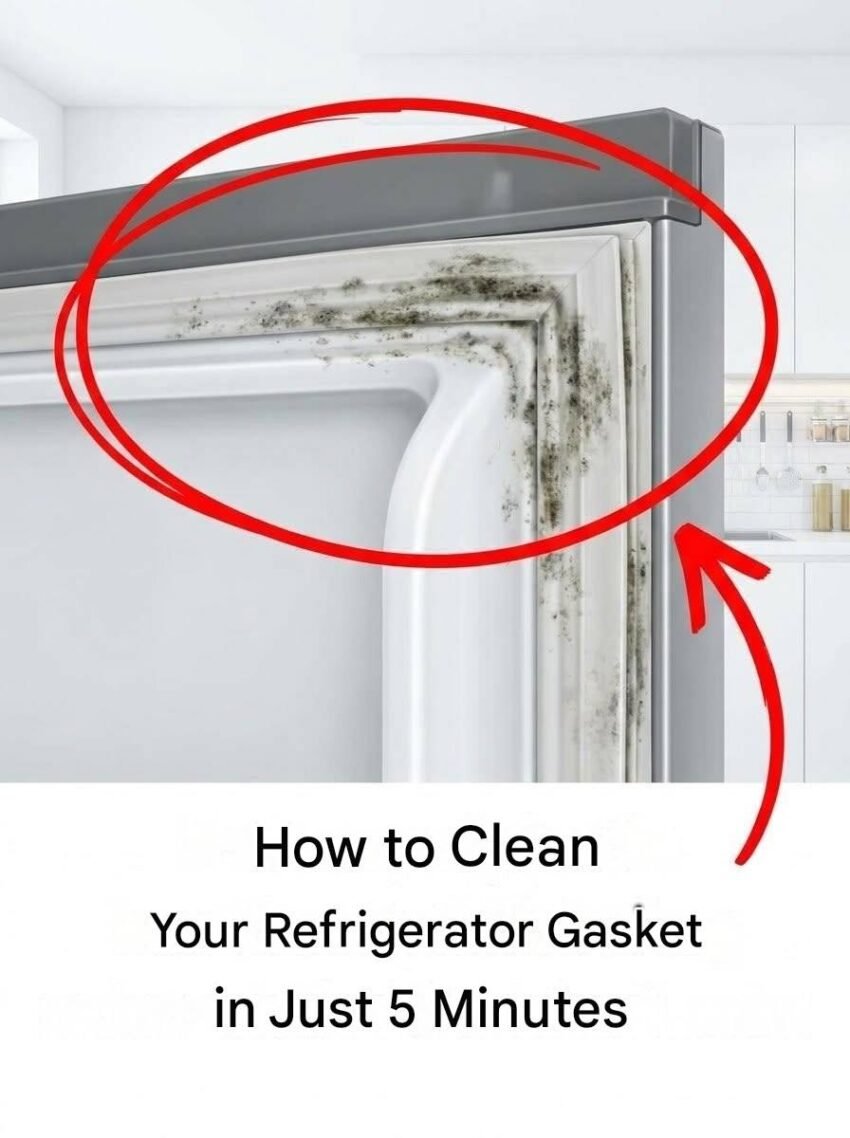
That rubber gasket (the waterproof seal around the door) is one of the most neglected spots in the kitchen, and a dirty one is the leading cause of a fridge that doesn’t seal properly, runs constantly, and grows mold. Here’s the fastest, most effective 5-minute method.
What You’ll Need
-
White vinegar (undiluted, in a spray bottle if possible)
-
A clean microfiber cloth (paper towels work but tear on the rubber)
-
An old toothbrush or soft cleaning brush
-
A butter knife wrapped in a thin cloth (or a plastic spatula — never a sharp knife)
-
Bowl of warm water with a drop of dish soap (for the initial degreasing if it’s sticky)
The 5-Minute Method
Minute 1: The Initial Wipe
-
Dip the microfiber cloth in the warm, slightly soapy water and wring it out well. You want damp, not dripping.
-
Run the cloth along all four sides of the gasket, getting the visible grime and sticky food residue off. Fold the cloth to a clean side as you go.
-
This removes the surface layer of grease and sugar that feeds mold.
Minute 2: The Vinegar Soak
-
Spray the undiluted white vinegar liberally onto a fresh, dry microfiber cloth (don’t spray directly onto the seal to avoid liquid seeping into the gasket’s insulation or electrical components behind it).
-
Wipe the entire gasket again with the vinegar-soaked cloth, pressing gently into the accordion folds.
-
Leave the vinegar on the seal. Do not rinse it off immediately. The acid needs contact time to kill mold spores and break down mildew.
Minute 3: The Fold-Cleaning Detail (The Critical Step)
-
This is where most people stop, but mold lives inside the folds.
-
Wrap your thin cloth around the butter knife (or use a plastic spatula).
-
Gently insert the wrapped tip into each groove of the gasket’s accordion folds. Run it slowly all the way around the door.
-
You’ll likely pull out black gunk, hair, and hidden mold. Wipe this onto a separate rag, not back into the fold.
-
For stubborn bits, dip the old toothbrush in vinegar and scrub the fold gently, then wipe clean.
Minute 4: The Corners and Hinges
-
The bottom seal gets the most drips; the hinge side corner often traps debris.
-
Use the toothbrush with vinegar to scrub these corners, then wipe dry with the cloth.
Minute 5: Dry and Seal Test
-
Take a completely dry microfiber cloth and go over the entire gasket one last time. A dry seal prevents new mold from taking hold.
-
The dollar bill test: Close the fridge door on a dollar bill (or a piece of paper) so half is inside and half is out. Slowly pull it out. You should feel firm, consistent resistance. If the paper slides out easily with the door shut, the gasket is still dirty, permanently compressed, or needs replacing. Repeat this test at multiple points around the door.
What You Just Prevented
-
A broken compressor: When the seal is gummy and doesn’t close fully, the compressor runs almost non-stop trying to maintain temperature. This is the most common cause of premature fridge death.
-
Hidden mold in your food: Mold spores from a dirty gasket circulate inside the fridge and settle on fresh produce, making it spoil faster.
-
Energy waste: A clean, tight seal can noticeably reduce your electricity bill.
Maintenance Tip
Do the 1-minute vinegar wipe of the gasket once a week when you take out the trash. It stays clean, takes almost no time, and you’ll never have to scrub hardened black mold again.
Are you noticing the seal isn’t holding even after cleaning, or was this purely preventive?