
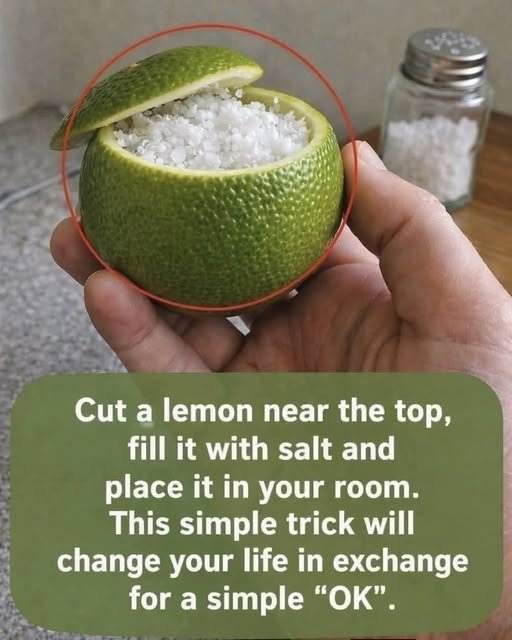
This is one of those fascinating, time-tested household practices that sits at the intersection of ancient wisdom and modern air-quality awareness. The concept is simple: place a salted lemon in a room, and it works as a natural, non-toxic air purifier and aromatherapy tool. While it won’t filter particulate matter like a HEPA filter, its mechanisms are chemically and olfactorily valid.
Here’s how it works, why it’s effective in its own right, and how to make one properly.
The Science Behind the Salted Lemon
This isn’t a magic “detox” cure-all; it’s grounded in practical chemistry and sensory science.
-
Hygroscopic Action (The Salt’s Main Job): Salt is a natural desiccant, meaning it powerfully attracts and absorbs moisture from the air. In doing so, it also captures airborne particles trapped in that moisture—including microscopic dust, mold spores, and bacteria. The salt essentially dries the local air environment around it, making it less hospitable to microbial life. You’ll often see the salt become damp or crusty, which is visual proof of this action.
-
Limonene and Antimicrobial Volatile Oils: Lemon peels are rich in limonene, a volatile oil responsible for the citrus scent. Research has shown that when limonene is vaporized, it has antimicrobial and deodorizing properties, capable of neutralizing airborne bacteria and fungi. By cutting the lemon and embedding it in salt, you’re breaking the peel’s oil glands, releasing these oils into the air continuously.
-
Odor Neutralization (Not Just Masking): This is key. The citric acid in the lemon and the sodium in the salt combine to create a mild, natural ionic effect. Rather than simply covering up smells like cooking, pet odors, or mustiness with a stronger scent, the released volatile compounds bind to odor-causing molecules at a chemical level, neutralizing them. This is why a room with a salted lemon doesn’t just smell “lemony”—it smells genuinely clean and neutral.
-
Negative Ion Generation (The Subtle Effect): The slow evaporation of the salt-lemon solution generates a very small number of negative ions. In nature, negative ions are produced by waterfalls, rain, and ocean waves, and they’re known to bind to positively charged pollutants like dust, dander, and smoke, causing them to fall out of the air. While a lemon won’t match a waterfall, this quiet chemical process contributes to the feeling of “fresher, cleaner air” you perceive in the room.
How to Make a Salted Lemon Air Purifier
The setup is simple, but a few details maximize its effectiveness and prevent mold.
Ingredients & Materials:
-
2-3 large, fresh organic lemons (non-organic are waxed, which prevents oil release).
-
A generous amount of coarse sea salt or rock salt (fine table salt dissolves too quickly).
-
A small, shallow bowl or plate.
Step-by-Step Method:
-
Prepare the Lemons: Wash the lemons thoroughly. You can either:
-
Method A (The Classic): Cut the lemons in half crosswise, exposing the flesh.
-
Method B (Maximum Surface Area): Cut the lemon into a series of deep crosshatches or cuts, like a blooming onion, but keep the base intact. This exposes even more of the peel’s essential oil pockets.
-
-
Salt Generously: In the bowl, create a thick bed of coarse salt. Place the cut lemons, flesh side up, on the salt. Pile more salt directly on top of the exposed lemon flesh and into any cuts you’ve made. Don’t be shy—the salt needs to draw out the juices and oils.
-
Placement is Everything: Place the bowl in the area you want to purify. Bedrooms, bathrooms, and living spaces near pets or cooking areas are ideal. Its effective radius is a small to medium-sized room. Do not place it directly on expensive wooden furniture, as the humidified salt can occasionally attract enough moisture to leave a residue. Use a coaster underneath the bowl.
-
Maintenance: The salt will absorb the lemon’s juice and pull moisture from the air, becoming a damp, fragrant paste. Fluff the salt with a fork daily to expose new surface area and reactivate the scent. The lemons will slowly dehydrate, looking mummified. You’ll know it’s working because the room will smell noticeably clean, not perfumed.
-
When to Replace: Replace the entire setup when the lemons begin to look completely dried and dark, or if you see any trace of green mold (which is rare due to the salt, but possible in very humid environments). Typically, one setup lasts about 2-3 weeks.
What It Is and What It Isn’t
-
It IS: A natural, elegant deodorizer, a mild antimicrobial tool for dust and airborne bacteria, and a source of sensory well-being that creates a genuinely cleaner-feeling space. It’s a beautiful way to use natural chemistry instead of synthetic plug-in air fresheners that can be endocrine disruptors and neurotoxicants.
-
It IS NOT: A replacement for a true HEPA air purifier for particulate matter, a solution for smoke inhalation, or a mold remediation tool. If you have serious allergies, asthma, or visible mold, you need mechanical air filtration. Think of this as the finishing touch on a clean room, not the primary cleaner.
In the context of everything we’ve discussed—from healing nerve pain to lowering inflammation—this practice fits perfectly into a holistic lifestyle. You’re removing a synthetic toxin source (commercial air fresheners) and replacing it with a quiet, natural process that gently supports the clean, calm environment your nervous system needs to heal. The simple scent of fresh lemon has even been shown in studies to reduce stress markers and improve mood, which is its own form of healing.