
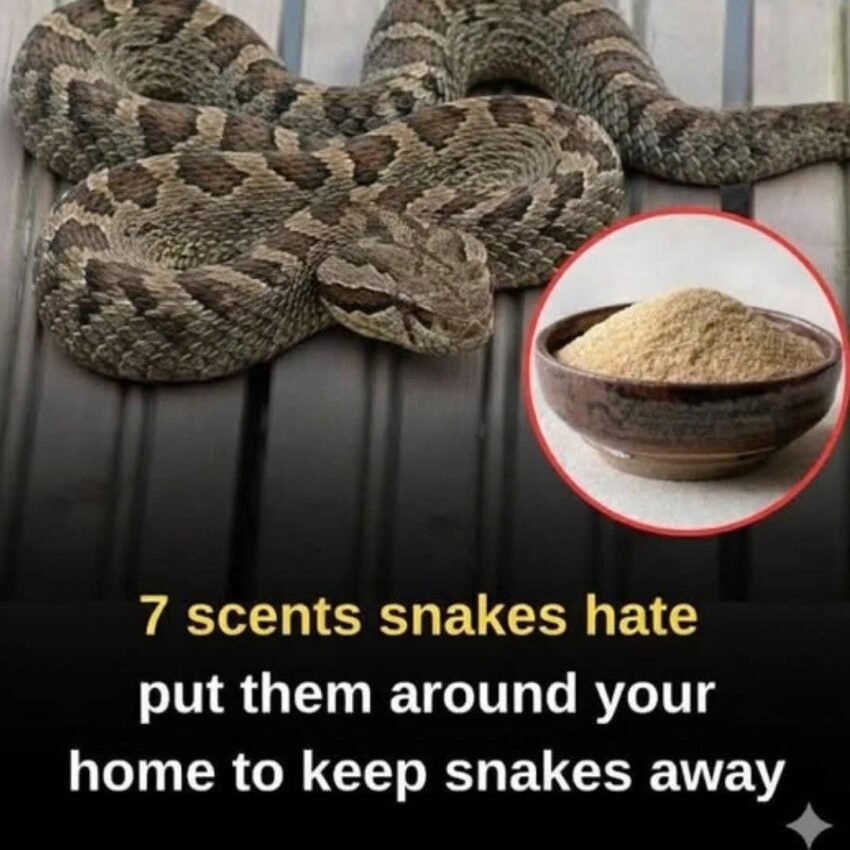
Here’s a breakdown of 7 smells that snakes are known to hate, why they work, and exactly how to use them effectively around your home.
A crucial note first: Snakes “smell” with their tongues. They collect scent particles and deliver them to the Jacobson’s organ in the roof of their mouth. This makes them extremely sensitive to strong, pungent, and irritating odors. The goal is to create a sensory barrier so unpleasant that they choose to hunt elsewhere.
1. Garlic & Onions
The sulfonic acid in garlic and onions is a powerful irritant to a snake’s sensory system.
Why it works: When chopped or crushed, these release allicin, which breaks down into volatile sulfur compounds. For a snake, this isn’t just a bad smell—it’s a confusing, overwhelming chemical cloud that masks the scent trails of their prey (rodents).
How to use it:
-
Fresh Spray: Puree 4-5 garlic cloves and a small onion with water. Let it steep overnight, strain, and pour the liquid into a spray bottle. Spray a perimeter around your porch, garden edges, and foundation cracks.
-
Dry Mix: Mix garlic powder with cayenne pepper and sprinkle it as a dry barrier. Reapply after rain. Avoid using garlic salt, as it can damage soil.
2. Vinegar
Snakes despise the sharp, acidic fumes of vinegar, especially white distilled vinegar.
Why it works: Vinegar is a contact irritant and its strong vapor is highly repellent. It’s particularly effective on porous surfaces where the smell lingers. It also helps erase the lingering scent trails that snakes follow, disorienting them.
How to use it:
-
Perimeter Soak: Do not dilute. Pour full-strength white vinegar into a spray bottle and drench the areas where you’ve seen snakes, like woodpiles, rock walls, or under decks.
-
Water Feature Shield: If you have a pond, you can soak rags in vinegar, place them in sealed bags with holes poked in them, and position these near the water’s edge (but not in the water). The slow release of fumes creates a barrier.
3. Cinnamon & Clove Oil
This is a two-in-one repellent and irritant.
Why it works: Eugenol, the active compound in clove oil, and cinnamaldehyde in cinnamon are extremely potent. For a snake, a whiff of this isn’t just strong; it’s physically irritating to their sensitive tongue and Jacobson’s organ.
How to use it:
-
Essential Oil Blend: In a 32-ounce spray bottle, mix 20 drops of cinnamon oil and 20 drops of clove oil with water and a teaspoon of dish soap (to emulsify). Shake well and spray around door thresholds, window wells, and crawl space entrances.
-
Ground Spice Barrier: Sprinkle ground cinnamon thickly in a line across a garage entrance or shed door. The fine powder also acts as a desiccant they want to avoid.
4. Ammonia
This mimics the scent of predator urine and creates a harsh, toxic vapor barrier.
Why it works: Snakes instinctively avoid areas that smell of ammonia because it signals the presence of a large predator (like a fox or coyote) that has marked its territory. The chemical itself is also a respiratory irritant.
How to use it:
-
The Soaked Rag Method (Safest): Soak old rags in ammonia and place them inside unsealed plastic sandwich bags. Poke a few holes in the bags. Place these around the perimeter of your yard, under porches, or in your garage. This contains the liquid but lets the fumes escape.
-
Safety is Critical: Never pour straight ammonia on soil or plants, as it will kill them and can contaminate runoff. Keep these bags far away from pets and children. Do not use this method if you have curious pets.
5. Smoke & Ashes
A campfire smell signals danger and habitat destruction to a snake.
Why it works: For a wild animal, smoke means a wildfire, which translates to lethal danger. The scent is an immediate evacuation signal. Cold wood ash is also an irritant to their skin and lungs.
How to use it:
-
Cold Ash Barrier: After a fire pit has completely cooled (at least 24 hours), sprinkle the fine, white ash in a thick line around areas you want to protect. It’s messy but effective as a physical and sensory barrier.
-
Smoke Saturation: If you have a snake in a woodpile or a shed, consider burning a smudge stick of sage or cedar nearby (with extreme fire safety caution). The lingering smoke smell is often enough to make the area feel unsafe.
6. Sulfur
This is an old-school repellent that triggers a pure avoidance response.
Why it works: Powdered sulfur is highly irritating to a snake’s skin and sensory organs. A snake moving across a line of sulfur will get microscopic irritants on its scales and tongue, an experience it will not want to repeat.
How to use it:
-
The Dry Line: Purchase powdered sulfur from a garden center. While wearing a dust mask and gloves, pour an unbroken line about 2-3 inches wide around your property’s border or a specific structure like a chicken coop.
-
The Drawback: Its smell is notoriously like rotten eggs. Use it away from living areas, as the wind can carry the smell. It can also lower soil pH if used excessively.
7. Lemongrass & Citrus Peels
These contain strong acidic oils and a compound called limonene.
Why it works: Limonene is a powerful insect and animal repellent that directly assaults a snake’s tongue and olfactory system. The intense, sharp citrus scent is completely unnatural and overwhelming in their typical habitat of soil and vegetation.
How to use it:
-
Citrus Drench: Boil the peels of 4-5 lemons, oranges, or grapefruits. Let the water cool completely, then pour the strained liquid into a spray bottle. Add 10 drops of lemongrass essential oil for extra potency. Spray this mixture heavily on mulch beds, the base of trees, and along foundations.
-
Fresh Peel Scatter: Chop up fresh citrus peels and scatter them under decks or in crawl spaces. They’ll release their oils as they slowly dry out, providing a longer-lasting, less messy option than a spray.
⚠️ The Golden Rule: No Smell Can Fix a Rodent Problem
The most powerful attractant for a snake isn’t a plant or a puddle; it’s a steady supply of food. If you have mice or rats, a snake will endure a lot of unpleasant smells to get a meal.
Your order of operations should be:
-
Remove food sources: Aggressively manage any rodent or large insect populations.
-
Remove shelter: Clear wood piles, heavy mulch, and tall grass directly touching your foundation.
-
Then, apply the repellent smells as a closing, perimeter defense.
Start with the garlic/vinegar spray as a safe, pet-friendly perimeter test, and only move to stronger deterrents like sulfur or ammonia if you have a persistent problem.