
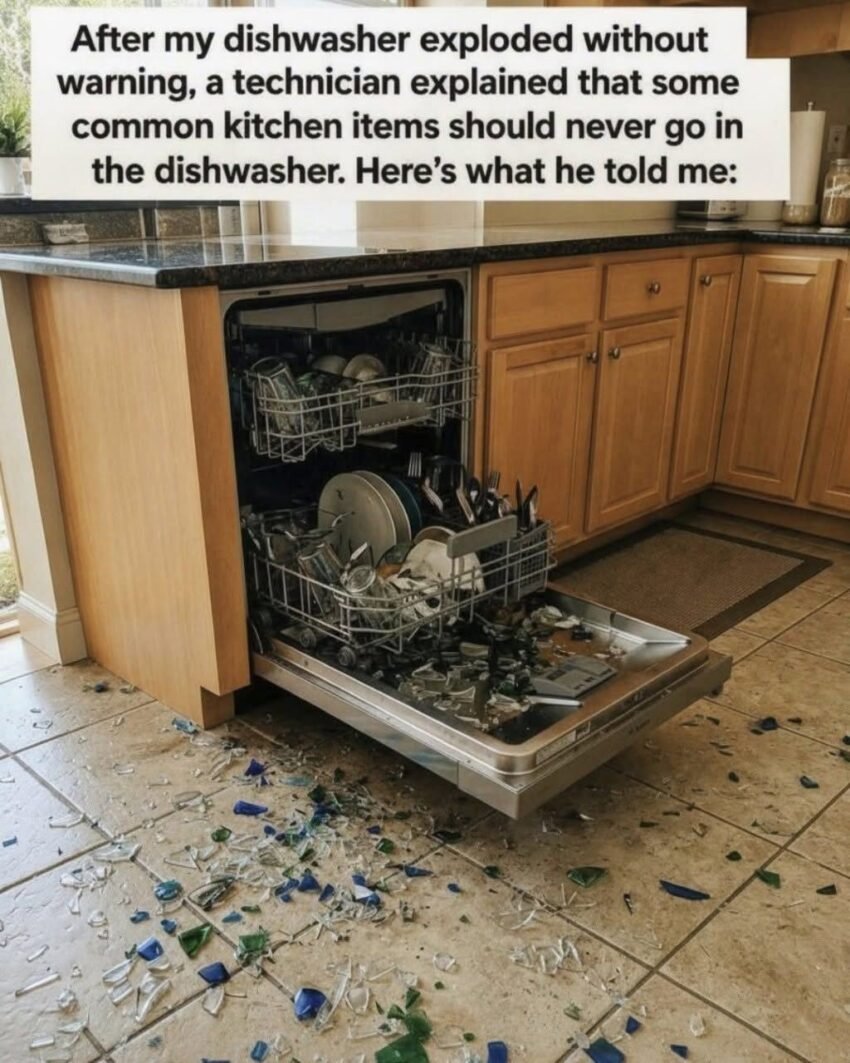
Here are 18 things you should never put in the dishwasher, even when the temptation to save time is strong.
The Kitchen Workhorses
1. Good Chef’s Knives
The high heat can warp the fine edge, and the detergent is abrasive enough to dull it. But the bigger danger is the knife rattling against other items, which nicks the blade and ruins its sharpness. Hand wash and dry immediately.
2. Cast Iron Skillets
The dishwasher is a death sentence for cast iron. It will strip away the hard-earned, non-stick seasoning layer in a single cycle and instantly cause a layer of orange rust to form. You’ll be left with a bare metal pan and a long re-seasoning project.
3. Non-Stick Pans (Most of Them)
Unless the manufacturer explicitly labels it “dishwasher safe,” keep it out. The harsh detergents and high heat can degrade the non-stick coating over time, causing it to peel and flake. The pan might survive a few cycles, but its lifespan will be drastically shortened.
4. Wooden Spoons, Boards, and Bowls
Wood is like a sponge. In the dishwasher’s long, hot, humid cycle, it absorbs water and swells. When it finally dries, it can warp and crack. More importantly, the heat and detergent strip away the wood’s natural oils, leaving it rough and splintered.
5. Copper Pots, Mugs, and Pans
That beautiful copper shine will be gone in one wash. The dishwasher’s chemicals will dull the finish and cause a permanent, blotchy tarnish. To keep them gleaming, a gentle hand wash is the only way.
What You Eat and Drink From
6. Insulated Travel Mugs and Tumblers (Like Yeti and Hydro Flask)
Many have a vacuum-sealed air gap between the inner and outer walls for insulation. The dishwasher’s high heat can expand the air and break this seal, ruining its ability to keep drinks hot or cold. Water can also get trapped inside the walls and rattle around or leak.
7. Fine Crystal and Stemware
Think of your thin crystal glasses at a loud rock concert—that’s what the dishwasher’s vibration is like. It can cause chipping and even shatter delicate rims. The heat and detergent will etch the surface over time, turning your sparkling crystal permanently cloudy.
8. Gold-Trimmed or Hand-Painted Dishes
Your grandmother’s fine china with a gold rim is for special occasions, not the dishwasher. The harsh detergents and water jets will quickly wear away the metallic trim and fade the hand-painted details, leaving you with a sad, patchy pattern.
9. Acrylic or Melamine Plastics
Cheap, lightweight plastics from outdoor sets or kids’ dishes are not made for dishwasher heat. They can warp, melt, and develop a chalky, degraded surface. More concerningly, melamine can leach chemicals at high temperatures, which you don’t want on a surface that touches food.
The Gadgets and Gizmos
10. Garlic Press, Graters, and Microplanes
These tools have sharp teeth and tiny, intricate cutting surfaces. A dishwasher can’t get them truly clean (garlic skin and cheese rind will stick like glue), and the wet environment can lead to rust on the cutting edges, making them dull and useless.
11. The Instant Pot Lid
The inner pot is usually dishwasher safe, but the lid is a mini-computer with gaskets, valves, and steam-release mechanisms. The dishwasher can push food debris deep into these parts, clogging them and creating a safety hazard. It can also deteriorate the sealing ring.
12. Meat Thermometers
The powerful spray and high heat can force water past the seals and into the electronic components or the dial face. A fogged-up or waterlogged thermometer is no longer reliable.
13. Cheese, Coffee, and Nut Grinders (Manual)
The parts are often made of metal that will rust in a humid dishwasher. More importantly, the residual oils from coffee and nuts can be deposited by the dishwasher cycle onto the drying element or other items, leaving a lingering rancid smell in your machine and on your dishes.
The “Absolutely Not” and Surprising Items
14. Anything with a Paper Label (Jars, Wine Bottles)
This one is a guaranteed mess. The dishwasher will turn the paper into a mushy pulp that dislodges and gets sucked right into your machine’s drain pump and filter. A few washes like this, and you’ll be calling a repair service for a clog.
15. Aluminum Bakeware and Sheet Pans
Anodized aluminum is sometimes safe, but standard aluminum reacts chemically with the dishwasher detergent in a process called oxidation. The shiny surface will turn a dull, dark grey and leave a chalky black residue on your hands and anything else in the wash.
16. The Garbage Disposal Sink Strainer
Tempting, I know. But all the gunk it filters out—grease, tiny food particles, fat—gets distributed throughout your dishwasher, coating the filter, spraying back onto your “clean” glasses, and leaving a greasy film. It’s a self-defeating cycle.
17. Garlic Bulbs (Yes, the Viral “Hack”)
A viral trend suggests running garlic bulbs through a rinse-only cycle to peel them easily. Don’t do it. The garlic’s sticky, sulfuric juices will get into every crevice of your machine. Your next load of glasses will smell faintly of garlic, which is impossible to get out.
18. Pet Bowls (If You Have a Cat Especially)
The real danger isn’t the bowl material, but what’s on it. Cat feces can contain the Toxoplasma gondii parasite, which is extremely hardy. While the dishwasher should kill it, the risk of this parasite surviving and contaminating surfaces where you put your fork is a biological hazard not worth taking. Wash them separately by hand in a utility sink.