
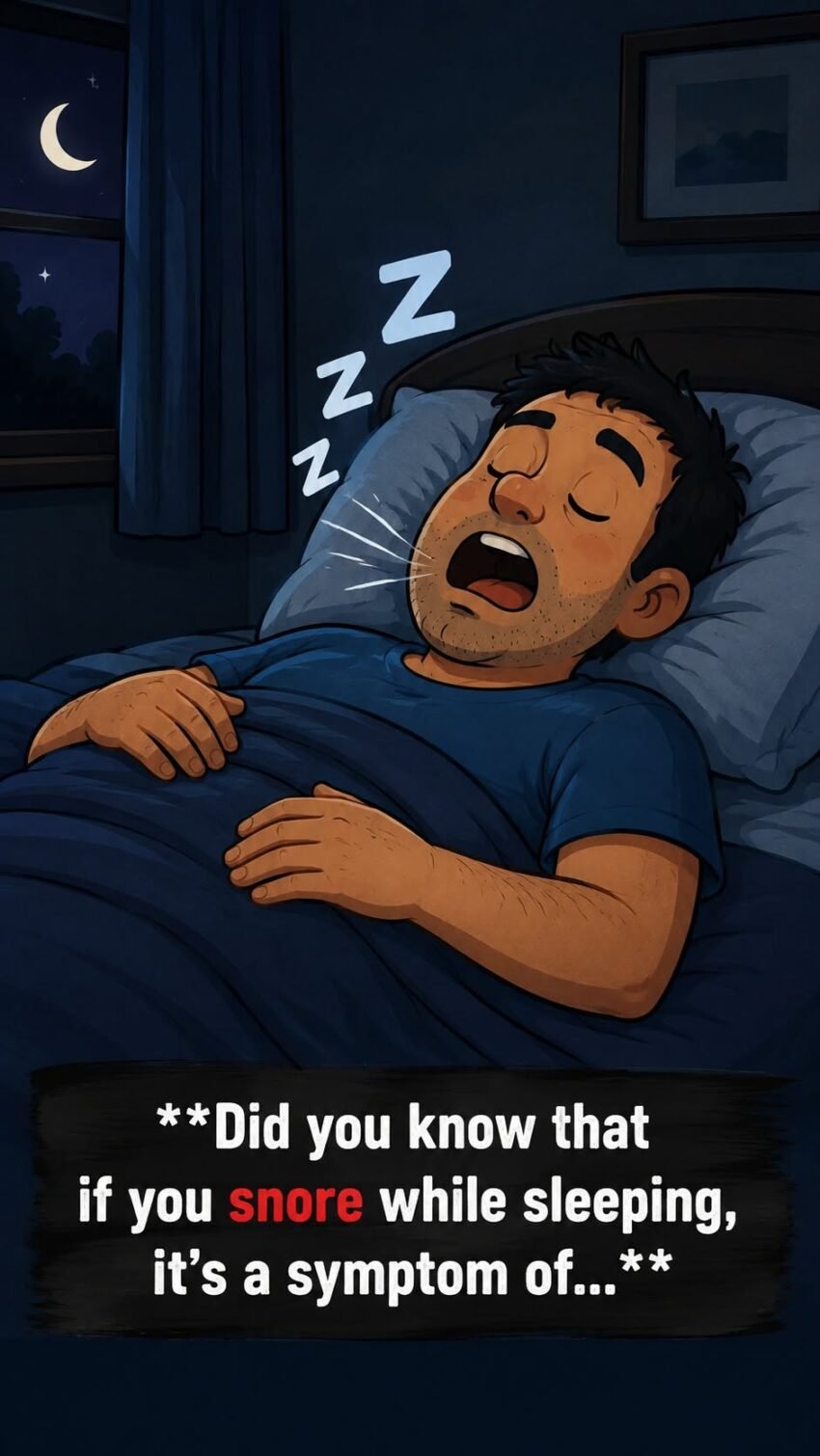
Here’s what snoring could be a symptom of, broken down from the simplest mechanics to the most critical health warnings.
The Simple Mechanics: What’s Happening in Your Throat
At its core, snoring is the sound of vibrating tissue. When you sleep, the muscles in your palate, tongue, and throat relax. If they relax too much, they narrow your airway. As air is forced through this smaller passage, the surrounding tissue vibrates—that’s the snore. The narrower the passage, the more forceful the airflow, and the louder the snore. The root causes of this narrowing are what you need to pay attention to.
1. A Direct Symptom of Obstructive Sleep Apnea (OSA) — The Most Critical One
This is the condition you must not ignore. Snoring, particularly loud snoring punctuated by gasping, choking, or snorting sounds, is the hallmark symptom of Obstructive Sleep Apnea.
-
What it is: OSA isn’t just a narrow airway; it’s a recurring, complete collapse of the airway that causes you to literally stop breathing for 10 seconds or more, sometimes hundreds of times a night. Your brain, starved of oxygen, wakes you up just enough to force a breath, shattering your sleep cycle.
-
The Danger: This isn’t just about being tired. Untreated OSA starves your vital organs of oxygen and puts immense strain on your cardiovascular system. It’s directly linked to high blood pressure, heart attack, stroke, type 2 diabetes, and atrial fibrillation. If your snoring is punctuated by silence followed by a gasp for air, you must see a doctor for a sleep study.
2. A Symptom of Your Anatomy
Sometimes, the very structure of your head and throat makes you a snorer from birth.
-
Deviated Septum: A misalignment of the wall between your nostrils can restrict airflow through the nose, forcing you to breathe through your mouth and creating more vibration.
-
Enlarged Tissues: A low, thick soft palate, an elongated uvula (the dangling tissue in the back of your throat), or large tonsils can physically narrow your airway.
-
Narrow Airway: Some people are simply born with a genetically narrower throat passage.
3. A Symptom of Sleep Position (The Gravity Problem)
If you only snore on your back, you’re a positional snorer. In this position, gravity has a direct line to pull your relaxed tongue and soft palate straight down into your airway. A simple fix like sewing a tennis ball into the back of your pajama shirt to keep you on your side can sometimes silence a positional snorer overnight.
4. A Symptom of Nasal Congestion or Blockage
Snoring is also a symptom of anything that blocks airflow through the nose, forcing mouth-breathing.
-
Chronic Allergies: Inflamed and swollen nasal passages.
-
A Sinus Infection: Mucus and inflammation block the airways.
-
Physical Blockages: Nasal polyps (noncancerous growths) can obstruct the nasal passages.
-
This type of snoring often improves when the underlying congestion is treated.
5. A Symptom of Lifestyle and Diet
What you put into your body directly impacts your sleep.
-
Alcohol Before Bed: Alcohol is a powerful muscle relaxant. It unnaturally relaxes your throat muscles much more than normal, causing even a non-snorer to snore.
-
Sedatives: Similar to alcohol, sleeping pills and some tranquilizers relax the central nervous system and throat muscles.
-
Being Overweight: Extra weight around the neck and chest compresses the airway. Fat deposits around the neck circumference physically reduce the internal diameter of your throat, making the walls more likely to collapse and vibrate.
6. A Symptom of Severe REM Sleep Deprivation
You might notice you only snore when you’re completely exhausted. This happens because when you’re profoundly sleep-deprived, you crash into deep, rapid eye movement (REM) sleep where muscle atonia (a normal, complete relaxation of your muscles) is at its peak. This extreme relaxation can trigger snoring in a person whose normal sleep architecture wouldn’t include it.
7. A Symptom of Hormonal Changes (Menopause)
For women, perimenopause and menopause bring a significant drop in estrogen and progesterone. These hormones help maintain muscle tone in the upper airway. As they decline, the airway can become more collapsible, leading to new snoring and a sharp increase in the risk of sleep apnea, even in women who are a healthy weight.
The Bottom Line: The first diagnostic step is to identify the pattern. Simple, steady snoring without gasping is often a quality-of-life issue. Loud, heroic snoring with observed pauses in breathing is a major medical symptom. If it’s the latter, a home sleep test is not just a good idea—it’s a critical step for your long-term health.