
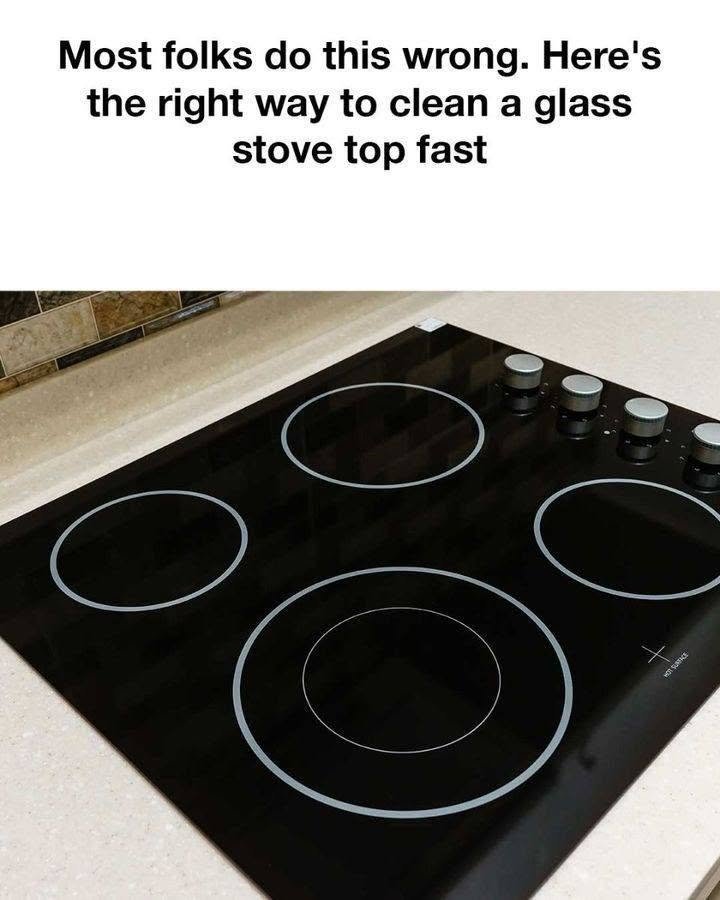
The most common mistake people make is using the wrong cleaner or tool, which can leave a hazy film or, worse, permanently scratch the glass. Here’s the approach that aligns with what most experts (and those viral “aha!” videos) recommend.
The Common Mistake
Spraying a general-purpose cleaner directly onto a cool or warm stovetop and wiping it with a paper towel. This often just smears grease around and leaves a cloudy residue once the cooktop dries. A much bigger mistake is using abrasive scrubbers like steel wool or scouring powder, which cause micro-scratches that dull the glass and make future cleaning harder.
The Correct, No-Streak Method
Think of it like this: you need to safely remove burnt-on gunk first, then polish the glass.
What You’ll Need:
-
A razor blade scraper (specifically for glass cooktops, with a fresh blade)
-
Ceramic cooktop cleaner (a specialized, milky-white liquid like Cerama Bryte)
-
Microfiber cloths (at least two)
-
A non-abrasive scrub pad (often comes with the cleaner)
The Step-by-Step Process:
-
Cool & Scrape (The “Thank Goodness I Learned This” Step):
-
Ensure the cooktop is completely cool to the touch. Scraping a hot surface can damage it or the scraper.
-
Hold the razor scraper at a 30-45 degree angle and gently push it across the glass to lift off any burnt-on sugar, melted plastic, or hard crusts. Think of it as skimming, not digging. This step alone eliminates 90% of the scrubbing.
-
-
Apply the Specialist Cleaner:
-
Shake the bottle of ceramic cooktop cleaner and apply a few dime-sized drops directly to the cool glass. Do not use regular glass cleaner, which can damage the surface over time.
-
-
Buff with a Microfiber Cloth (The Polishing Secret):
-
Use a clean, dry microfiber cloth to gently rub the cleaner in a circular motion over the entire surface. You’ll see the milky white paste break down and lift the grease and haze.
-
Keep buffing until the paste is completely gone and you’re left with a clean, dry surface. The micro-abrasives in the cleaner are safe for glass and are what give you that crystal-clear, streak-free finish.
-
-
Final Polish:
-
Take a second, clean, dry microfiber cloth and give the cooktop a final, vigorous buff to remove any last trace of residue. The surface should now be sleek and slippery to the touch.
-
Crucial Maintenance Habits
-
Wipe Spills Immediately: Once the cooktop is cool enough to touch but still slightly warm, wipe up sugary or starchy spills (like jam or pasta water) immediately. If they cool and harden, they can actually bond to the glass and be extremely difficult to remove, sometimes even pitting the surface.
-
Clean in Zones: If you have a messy cook, wait for the entire surface to cool, then scrape and polish. Cooking on a dirty cooktop can “bake on” the residue, making it much harder to remove later.
-
The Cloth Test: After cleaning, wipe your hand over the dry glass with a clean cloth under your palm. If the cloth drags or catches, there’s still residue. Polish again with a dry microfiber cloth.
Once you switch to the razor scraper and the specialized ceramic cleaner with a microfiber cloth, it really is a game-changer—no more hazy film or fear of scratching. This is likely the method you saw that makes people say, “I’ve been doing it wrong this whole time!”