
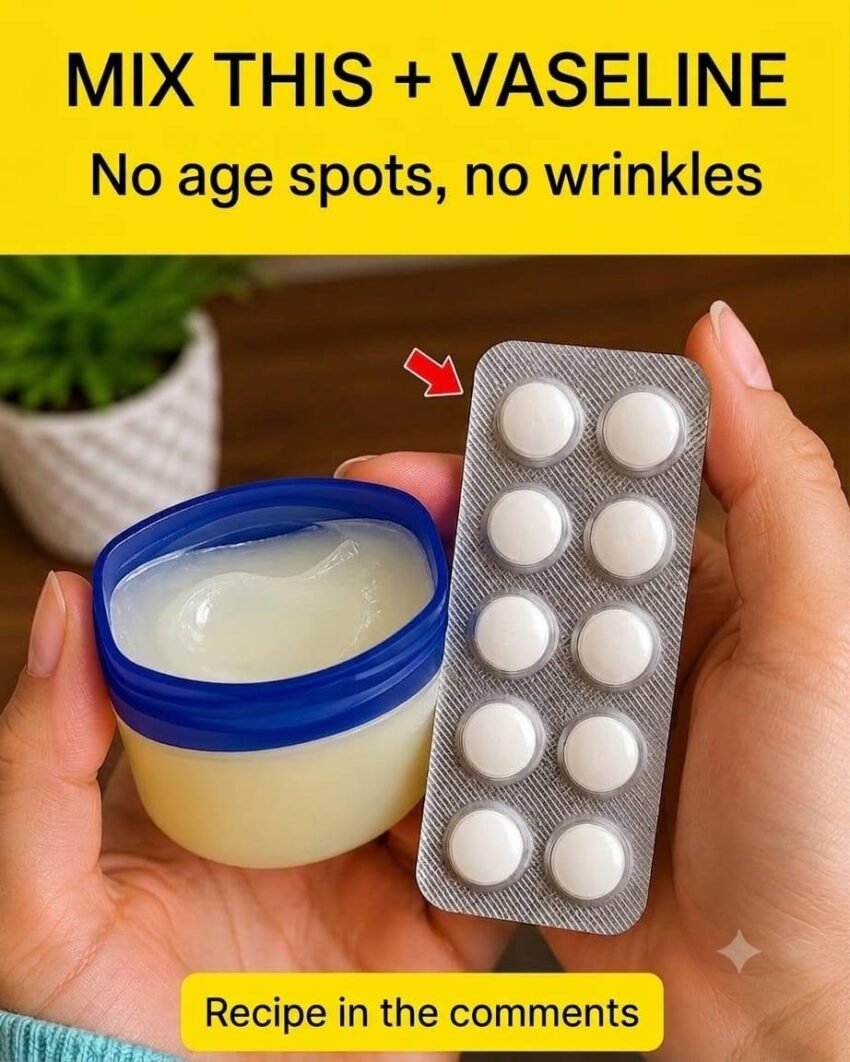
Let’s break down the possible meanings so you have the facts to stay safe.
If This Is About Making Topical Skin Products
You may have seen a “hack” about crushing up pills (like aspirin, ibuprofen, or vitamin C) and mixing them with Vaseline to create a face mask, spot treatment, or pain cream.
Do not do this. It is dangerous and ineffective.
-
Aspirin (Acetylsalicylic Acid): Some DIY recipes suggest mixing crushed aspirin with Vaseline to “exfoliate” or treat inflammation. Aspirin is an acid. Applying it directly to the skin can cause severe chemical irritation, burns, and an allergic reaction. The molecule is also not stable or effectively absorbed in a greasy base.
-
Ibuprofen or Other Painkillers: These are designed for systemic absorption through the digestive tract. Rubbing them on your skin in Vaseline will not meaningfully reach the muscle tissue underneath, and it can cause localized skin irritation or sensitization. You are far better off using a topical product specifically formulated for transdermal delivery (like a diclofenac gel) than a crushed pill.
-
Vitamins or Antibiotics: Crushing vitamin C can cause a stinging, acidic burn. Crushing leftover antibiotics and applying them to a wound is a recipe for antibiotic resistance and contact dermatitis, and it does nothing to treat a deep infection.
The Verdict: Pills are formulated with binders, fillers, and coatings that have no business being on your face or in a wound. Buy the proper $5 product designed for skin.
If This Is About Storing or Ingesting Pills
A genuinely useful, medically sound practice is sometimes called a “hack” for helping people who have difficulty swallowing pills.
The Safe “Vaseline” Alternative (It’s Not Vaseline):
You don’t use Vaseline. You use a thick, lubricating food gel. This is a legitimate technique used in speech therapy and geriatric care.
-
The Correct Method: Instead of placing a dry pill on the tongue, you take a spoonful of thick, slippery food like applesauce, yogurt, chocolate pudding, or specifically formulated pill-swallowing gel. You nestle the pill in it. The thick texture provides weight and the smooth texture reduces friction, tricking the brain’s gag reflex.
-
Why Not Vaseline (Petroleum Jelly): Vaseline is a hydrocarbon. It is not food. Ingesting it internally acts as a laxative, prevents the absorption of fat-soluble vitamins, and carries a risk of lipoid pneumonia if it accidentally slips into the airway. Never coat a pill in Vaseline to swallow it.
Critical Warning on Crushing Pills:
If a “hack” tells you to crush a pill and mix it into food or a petroleum jelly to make it “easier to take,” you must verify it’s safe first. Crushing an extended-release (XR, SR, ER) or enteric-coated tablet will cause the entire dose to dump into your system at once. This can be fatal, especially with heart medication, painkillers, or blood pressure drugs. Always ask a pharmacist, “Is it safe to crush this specific pill?”
If This Is About Concealing Substances
This is the most serious possibility. A “hack” describing how to mix a crushed substance into a thick, greasy base like Vaseline is sometimes discussed in contexts of hiding or masking medications or other substances—either for deceptive purposes or to apply a substance to the skin that isn’t meant for skin.
-
The Danger: Any attempt to use a topical ointment to introduce an undisclosed substance into someone’s system is unethical, illegal, and medically catastrophic. The absorption rate through the skin and Vaseline is completely unpredictable and could easily lead to an overdose.
The Bottom Line
There is no safe, beneficial “hack” that involves mixing crushed pills from your medicine cabinet with Vaseline.
-
For skin: Use real skincare.
-
For swallowing: Use applesauce or prescribed food thickeners, not petroleum jelly.
-
For anything else: That’s a hard no.
If you’re comfortable sharing the specific health or cosmetic goal you’re trying to achieve, I can point you to a science-backed, safe solution that actually works.