
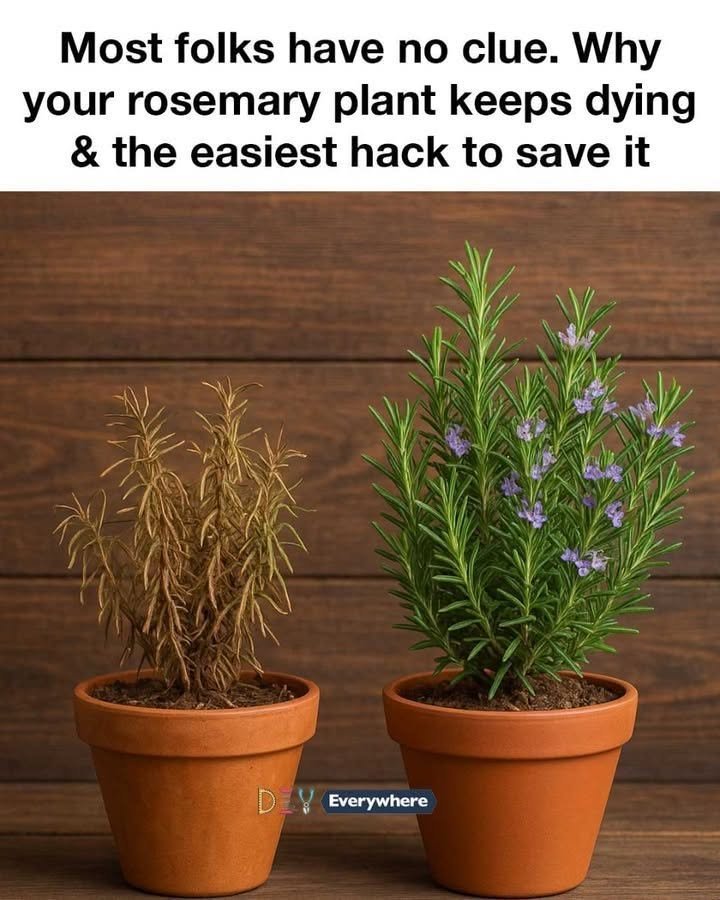
It’s true—rosemary has a reputation for being unkillable in the wild, yet somehow, it dies a slow, brown death on our windowsills. The core misunderstanding is simple: people water rosemary like a tropical houseplant, when it actually wants to be treated like a desert shrub.
Here’s why your plant keeps dying and the easiest hack to save it.
The Real Culprit: Drowning by “Love”
In almost 9 out of 10 cases, rosemary dies from root rot caused by overwatering and poor drainage. It’s native to the dry, rocky hills of the Mediterranean, where its roots are designed to dry out quickly.
The plant is a drama queen about wet feet. You’ll see the classic death spiral:
-
Tips start browning.
-
Whole stems turn pale green, then brown.
-
Leaves drop off like pine needles from a dry Christmas tree.
-
The irony: You see dry, crispy leaves and think, “It needs more water!” You water it, and the root rot accelerates, killing it faster.
The Two Other Silent Killers
Before we get to the hack, don’t overlook these:
-
Light Starvation: Rosemary demands a minimum of 6 hours of direct, scorching sunlight. A bright window isn’t enough; it needs light hitting the actual leaves. In low light, it slows its growth so much that the soil stays wet forever.
-
The Wrong Soil: Standard potting mix is a death trap. It’s designed to hold moisture, while rosemary roots need to breathe. They want a rocky, sandy, low-nutrient home.
The Easiest Hack: The “Terra Cotta & Gritty Mix” Reset
You don’t need a fancy watering schedule. You need to trick physics to make overwatering almost impossible. Do this today:
1. Repot into terra cotta, period.
Plastic and glazed ceramic pots hold water in. A raw, unglazed terra cotta pot is porous—it wicks moisture out through the walls. You physically cannot drown a rosemary plant in terra cotta as easily. The pot does the work for you.
2. Mix your soil to be “lean and mean.”
Don’t use 100% potting soil. Make a 50/50 mix of succulent/cactus soil and extra perlite or poultry grit. This creates a free-draining, slightly alkaline environment. When you water, the water should run straight through immediately, not pool on top.
3. The “Taco Test” Watering Method
Never water on a schedule. Instead, feel the leaves. Rosemary leaves are stiff and flat when they’re full of water. When they’re thirsty, they start to curl inward like a taco. Wait until the very tips of the newest growth feel slightly soft or look just a tiny bit curled, then drown it in the sink until water runs out the bottom, and let it drain completely.
If It’s Already Almost Dead…
If you have a mostly brown plant with just a sliver of green at the base, you have one last-ditch move: water propagation rescue.
-
Snip the healthiest remaining green tips (3-4 inches long).
-
Strip the leaves from the bottom inch.
-
Place in a glass of plain water on a bright windowsill.
-
Wait. Rosemary is stubborn and can take 2–3 weeks to root in water.
-
Change the water every 3 days. Once roots are an inch long, pot them directly into your dry, gritty, terra cotta setup.
Stop loving it to death. Treat it mean, give it sun, and keep its roots dry, and your rosemary will turn into a bush you can’t control.