
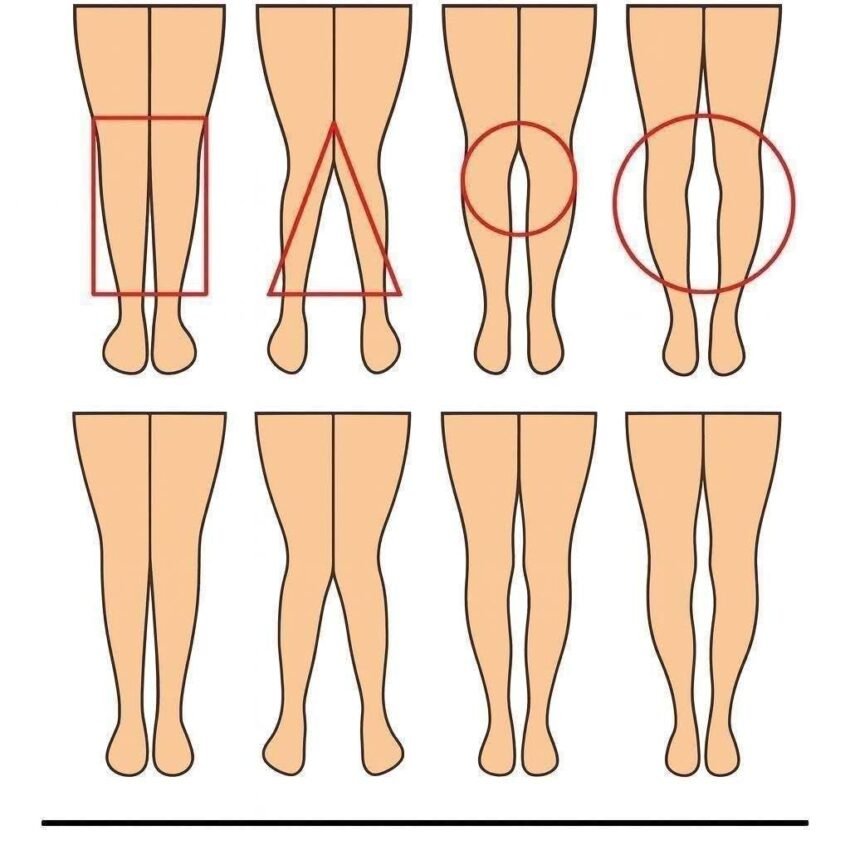
If a woman looks at her legs, here is what the shape, proportion, and fat distribution might be trying to tell her.
The Health Clues Hidden in Leg Shape
Leg shape isn’t just an aesthetic detail. It’s a billboard for your metabolic and hormonal profile. The key isn’t the size of the legs, but where the body chooses to store fat and how the bones are aligned.
1. The “Pear Shape” (Thicker Thighs and Hips, Slimmer Calves and Upper Body)
This is medically known as gynoid fat distribution.
-
What It Says About Hormones: This pattern is strongly associated with higher estrogen sensitivity and lower testosterone influence. The fat cells in the hips and thighs have more estrogen receptors and are designed to store energy for potential pregnancy and breastfeeding.
-
The Surprising Health Benefit: This is actually a metabolically protective pattern. Thigh and hip fat acts as a “metabolic sink,” safely trapping fatty acids and preventing them from circulating in the blood and depositing in organs (like the liver) or around the arteries. Women with this shape tend to have a lower risk of heart disease, stroke, and type 2 diabetes compared to those with belly fat.
-
The Catch: This fat is notoriously stubborn and resistant to breakdown during calorie restriction because it’s biologically “precious” energy.
2. The “Apple Shape” (Slimmer Legs, Larger Midsection)
This is the opposite pattern, where a woman has proportionally thinner legs but carries more weight around the abdomen.
-
What It Says About Hormones: This often points to visceral adiposity, driven by higher cortisol (stress hormone) or relative insulin resistance. After menopause, as estrogen drops, many women shift from a pear to an apple shape, with fat redistributing from the legs to the belly.
-
The Health Warning: This is the higher-risk metabolic profile. Thin legs with a large waist are a proxy for low subcutaneous fat storage capacity. When the leg fat cells can’t expand to take up excess energy, fat spills over into the liver, muscles, and around the heart. This is directly linked to the Non-Alcoholic Fatty Liver Disease we discussed after gallbladder removal.
3. “Cankles” or Thick Ankles (Lipedema vs. Lymphedema)
If the legs are disproportionately large from the ankles up to the knees, but the feet are spared, this is a specific disease, not just a shape.
-
Lipedema: This is a genetic, almost exclusively female condition of abnormal fat accumulation in the legs. The fat is painful to the touch, bruises easily, and doesn’t respond to diet or exercise. The hallmark is a “cuff” sign at the ankle—the fat stops abruptly, leaving the feet normal. It’s hormonally triggered, often appearing at puberty, pregnancy, or menopause.
-
Venous Stasis / Heart Failure: As we discussed with kidney and metoprolol signs, pitting edema (where you press a finger and leave a dent) in the shins and ankles signals fluid, not fat. It’s a sign the heart or veins aren’t pumping blood back up effectively.
The Structural Alignment: What Bowed or Knocked Knees Mean
The bone structure tells a different story, one of developmental health and biomechanics.
-
Genu Varum (Bow Legs): A natural, slight outward curve is normal. But a severe gap between the knees when standing was historically a childhood sign of Rickets (Vitamin D deficiency), leading to soft bones that bent under body weight. In an adult, worsening bowing on one side can be a sign of medial knee arthritis.
-
Genu Valgum (Knock Knees): Knees touch but ankles are apart. This places massive stress on the lateral knee ligaments and patella, often leading to chronic knee pain and patellar tracking disorders. In a growing child, it’s usually a normal phase, but a sudden onset in an adult could signal an inflammatory arthritis collapsing the joint space.
The “Can’t Lose Weight in My Calves” Dilemma
A very common, body-image focused concern.
-
The Physiological Truth: A calf that feels “bulky” is often largely determined by the genetic length of the Achilles tendon and the muscle belly of the gastrocnemius. A short tendon with a long muscle belly will always look more developed, regardless of fat loss. This isn’t a health defect; it’s a powerful, explosive muscle fiber type often found in individuals of West African or some Asian ancestries. It’s literally raw power you were born with, not something to “fix.”
The Bottom Line: The silhouette of a woman’s legs is a complex story of estrogen, insulin, childhood Vitamin D status, and genetic ancestry. The “healthiest” shape isn’t about being model-thin; it’s about having a clear differentiation where fat is stored subcutaneously on the legs and hips rather than viscerally in the abdomen.
(If your question was headed in a different direction—cultural, aesthetic, or psychological—please feel free to complete your thought, and I’ll happily address that angle too.)