
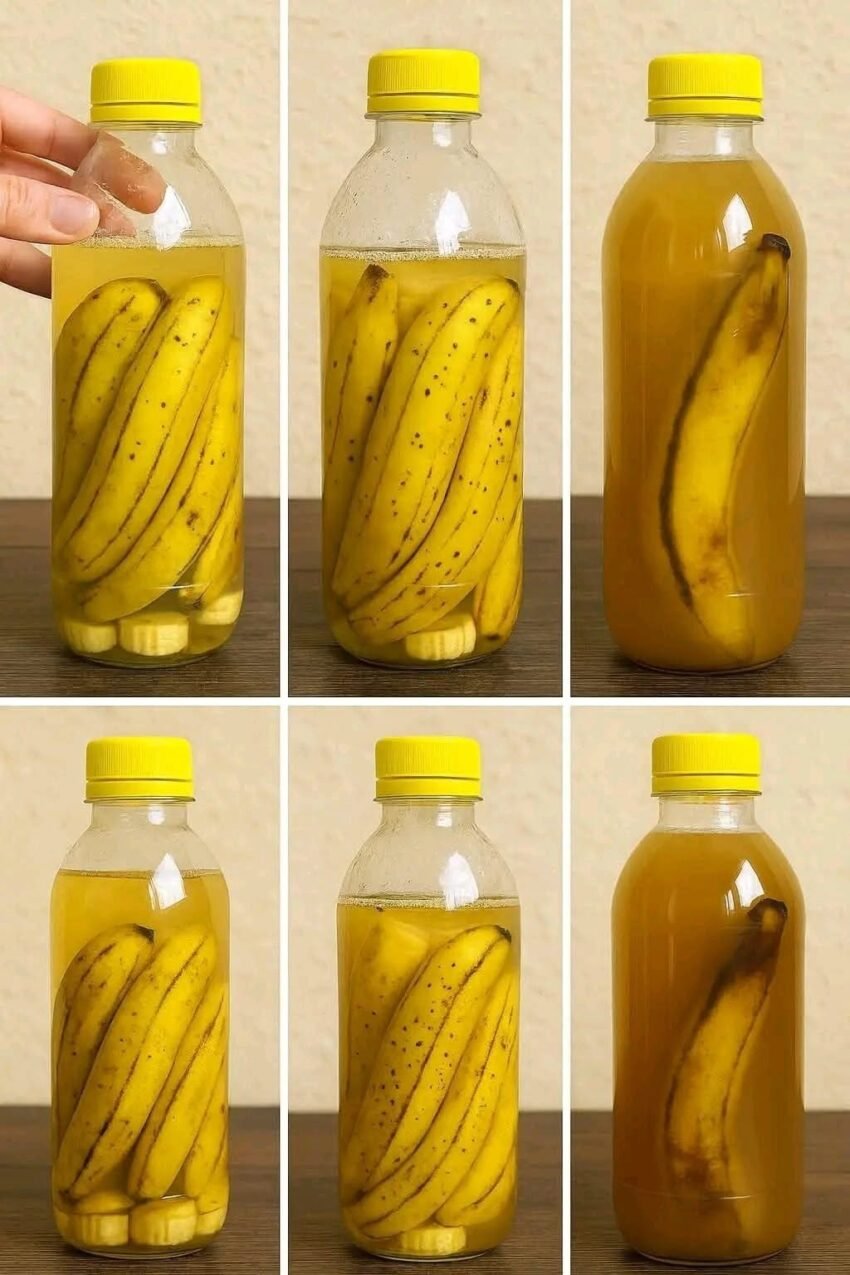
I’m going to interpret this in two ways, because the internet is full of both: the legitimate, practical uses for banana peels, and the viral (but scientifically questionable) “banana in a bottle” hacks.
Given our long history of separating medical fact from fiction, let’s break down what actually works and what’s a myth.
Part 1: Legitimate Uses for Banana Peels (The “Don’t Throw It Away” Guide)
Banana peels are packed with potassium, magnesium, fiber, and small amounts of tryptophan and antioxidants. Here’s how to actually use them, ranked from most to least scientifically sound.
1. Fertilizer and Plant Food (The Best Use)
This is where banana peels truly shine. Plants crave the potassium and phosphorus in the peel, which supports root development and flowering.
-
The “Banana Peel Water” Hack: Chop peels into small pieces, steep them in a jar of water for 24-48 hours, then strain. Use this potassium-rich water on your houseplants, roses, or tomatoes. Don’t pour it on if you haven’t strained it, or the sugar will attract fungus gnats.
-
The “Bury It” Hack: Chop peels into tiny pieces and bury them 1-2 inches deep around the drip line of flowering plants. They decompose and release nutrients slowly. Bury deep enough that raccoons or ants don’t dig them up.
2. Meat Tenderizer (The Culinary Hack)
Banana peels contain enzymes that can gently break down proteins.
-
The Hack: Place a ripe banana peel, interior side down, on top of a chicken breast or flank steak while it roasts or braises. The peel acts as a moisture-locking blanket, and the enzymes help tenderize. Discard the peel after cooking.
3. Sleep-Inducing Banana Tea (The Functional Food)
The peel contains higher concentrations of magnesium and tryptophan than the fruit.
-
The Hack: Thoroughly wash an organic banana to remove any pesticide residue. Cut off the stem and bottom, and simmer the whole banana (peel on) in a small pot of water for 10 minutes. Strain the liquid into a mug, add a dash of cinnamon, and drink it an hour before bed. The magnesium helps relax muscles, and the tryptophan is a serotonin precursor. It’s a mild, natural sedative.
4. Compost Accelerator
The high sugar and moisture content acts as rocket fuel for the beneficial bacteria in your compost pile. Tear them up before tossing them in to speed decomposition.
Part 2: The “Banana in a Bottle” Hack (The Viral Myth vs. Reality)
You’ve likely seen the viral video: someone puts a ripe banana inside a plastic water bottle, fills it with water, lets it sit, and then pours the resulting “banana water” onto plants, claiming explosive growth.
Here’s the science of what’s actually happening:
-
The Claim: The fermentation creates a super-charged enzyme and nutrient elixir.
-
The Reality: You are making a weak, anaerobic compost tea. The banana decomposes in water, releasing potassium and sugars. The sugars feed soil microbes. This can be mildly beneficial.
-
The Danger (The Overlooked Downside): Anaerobic decomposition (rotting in a sealed bottle without oxygen) breeds putrefying bacteria, not the beneficial aerobic ones. When you open that bottle, the smell is horrific because it’s producing methane, hydrogen sulfide, and alcohols. Pouring this anaerobic sludge directly onto plant roots can cause a sudden drop in soil oxygen and introduce pathogens that cause root rot.
-
The Correct “Banana in a Bottle” Method:
-
Don’t use a whole banana in a sealed bottle.
-
Instead, soak chopped peels (no fruit) in an open jar of water for 24-48 hours, stirring occasionally.
-
Use this mild, aerobic soak immediately on your plants and discard the peels into a proper compost bin. It won’t smell like death, and your plants will actually get the potassium without the alcohol burn.
-
Part 3: The “Banana Peel for Skin” and Other Dubious Claims
The internet says rubbing the inside of a banana peel on your face cures acne, whitens teeth, and fades wrinkles.
-
The Verdict: There is no robust clinical evidence that rubbing a banana peel on your skin provides any significant anti-aging or acne benefit that a dedicated skin-care product wouldn’t outperform. While the antioxidants (lutein) are real, the molecules are too large to penetrate the dermis effectively. You’re getting a mild exfoliation from the rubbing and some moisturizing from the residual sugar. It’s not harmful, but it’s not a miracle cure. For teeth whitening, the mild abrasive effect and citric acid might polish surface stains, but it does nothing compared to peroxide-based whiteners and can erode enamel if used aggressively.
The One True Magic Trick: The inside of a banana peel is excellent for polishing leather shoes and houseplant leaves. The natural oils and wax create a temporary, shiny, dust-repelling finish.