
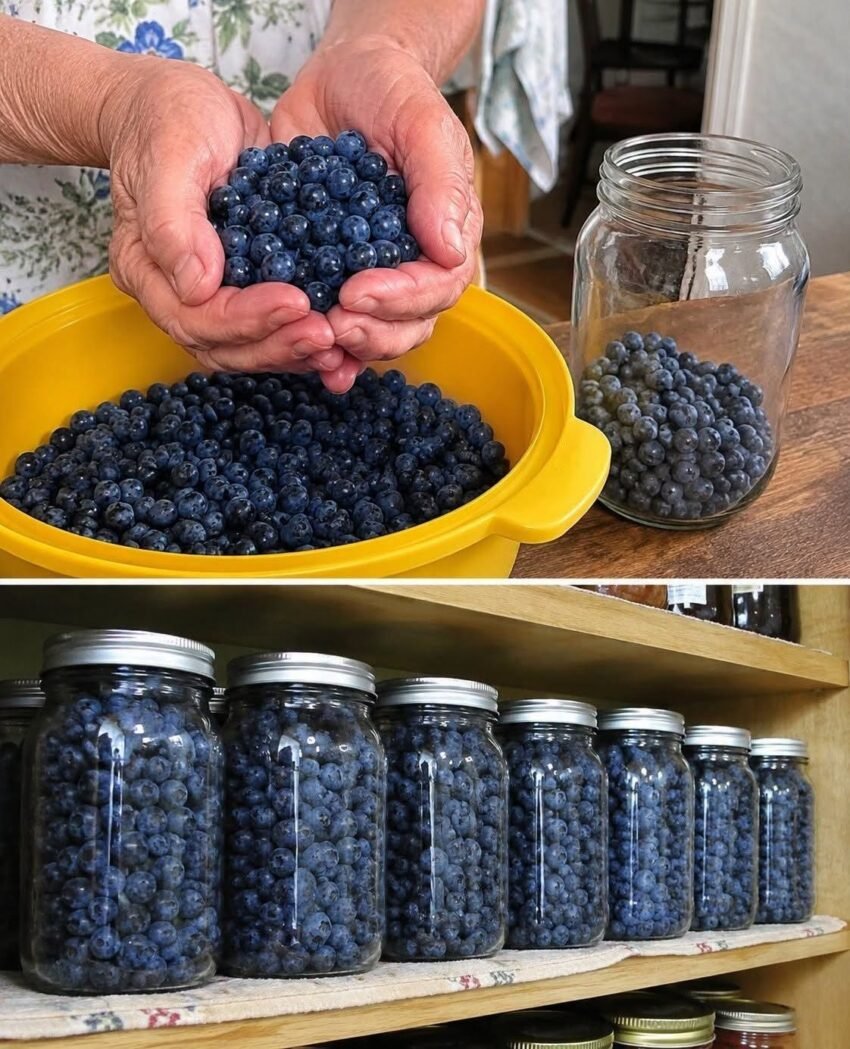
The claim is true: you can absolutely make fresh blueberries last for weeks, and even months, but the “right way” is a specific, science-backed process that fights the two enemies of berry freshness: mold spores and excess moisture.
Here is the definitive guide, from the “eat now” countertop to the “eat in three months” freezer.
The Golden Rule: The Vinegar Wash
This is the non-negotiable first step, whether you plan to eat them in a week or a year. The enemy of the blueberry is not the berry itself, but microscopic mold spores that cling to the skin. Water alone won’t kill them; a diluted acid bath will.
-
The Method:
-
Fill a large bowl with a solution of 1 part white vinegar to 3 parts cool water.
-
Gently place the blueberries in the bath. Swirl them around for 30-60 seconds. You’ll often see the water become slightly cloudy.
-
Drain the blueberries into a colander.
-
This is the most critical step: Rinse them thoroughly with a gentle spray of cool, fresh water for at least a minute. You do not want your berries to taste like vinegar. Rinse until you can no longer smell it.
-
The Second Most Critical Step: The Thorough Dry. Lay the washed berries out in a single layer on a clean kitchen towel or layers of paper towels. Gently pat them completely dry with another towel. Any surface moisture will accelerate rotting and cause clumping in the freezer. They must be bone-dry to the touch.
-
Now, Choose Your Storage Path
Path A: Refrigerator Storage (For Eating within 1-2 Weeks)
Now that the mold spores are neutralized, the goal is to manage humidity.
-
The Best Method: Line an airtight, hard-sided container (glass or plastic) with a dry paper towel. Gently pour in your completely dry blueberries. Place another dry paper towel loosely on top before sealing the lid.
-
Why It Works: The container keeps out fridge odors. The paper towels are the genius trick—they absorb the condensation that naturally forms as the fridge cycles, preventing a micro-puddle from forming at the bottom of the container and turning the bottom berries to mush.
-
The Result: Berries stored this way can remain firm and mold-free for 1-2 weeks, sometimes longer. Check the top paper towel every few days; if it feels damp, swap it out for a fresh, dry one.
Path B: Freezer Storage (For Months of Perfect Berries)
This is where the “last for months” promise is fulfilled. The goal here is to individually quick-freeze them so they don’t fuse into a solid, purple ice block.
-
The Method (Flash Freezing):
-
Take your completely dry, vinegar-washed berries.
-
Spread them in a single layer on a baking sheet lined with parchment paper. Make sure they are not touching.
-
Place the baking sheet flat in the freezer for 2-4 hours, until the berries are frozen solid as individual little pebbles.
-
Immediately transfer the individually frozen berries to a heavy-duty freezer bag or a vacuum-sealed bag. Squeeze out as much air as possible before sealing.
-
-
The Result: You can pour out exactly the number of frozen blueberries you need for pancakes, smoothies, or muffins. They won’t be mushy when thawed if you use them directly in baking or while still slightly frozen. Stored this way, they maintain their quality for up to 6-8 months, and are safe to eat for even longer.
One Golden “Don’t” & The Muffin Exception
-
Don’t wash only what you’ll eat. Mold spreads in a colony. If you put a dry, unwashed pint with a single moldy berry in the fridge, that mold will have a family reunion overnight. The vinegar wash on the whole pint the moment you bring it home is the ultimate preventative measure.
-
The “Baking-Ready” Hack: If you know a pint is destined entirely for muffins or pancakes, you can wash, dry, and flash-freeze them without the vinegar step if you’re in a hurry, but honestly, the vinegar leaves no taste and protects the entire batch’s lifespan.
This simple routine—a vinegar bath, a thorough drying, and a paper towel-lined home—turns a fragile luxury into a reliable staple. Enjoy your berries, for weeks to come.