
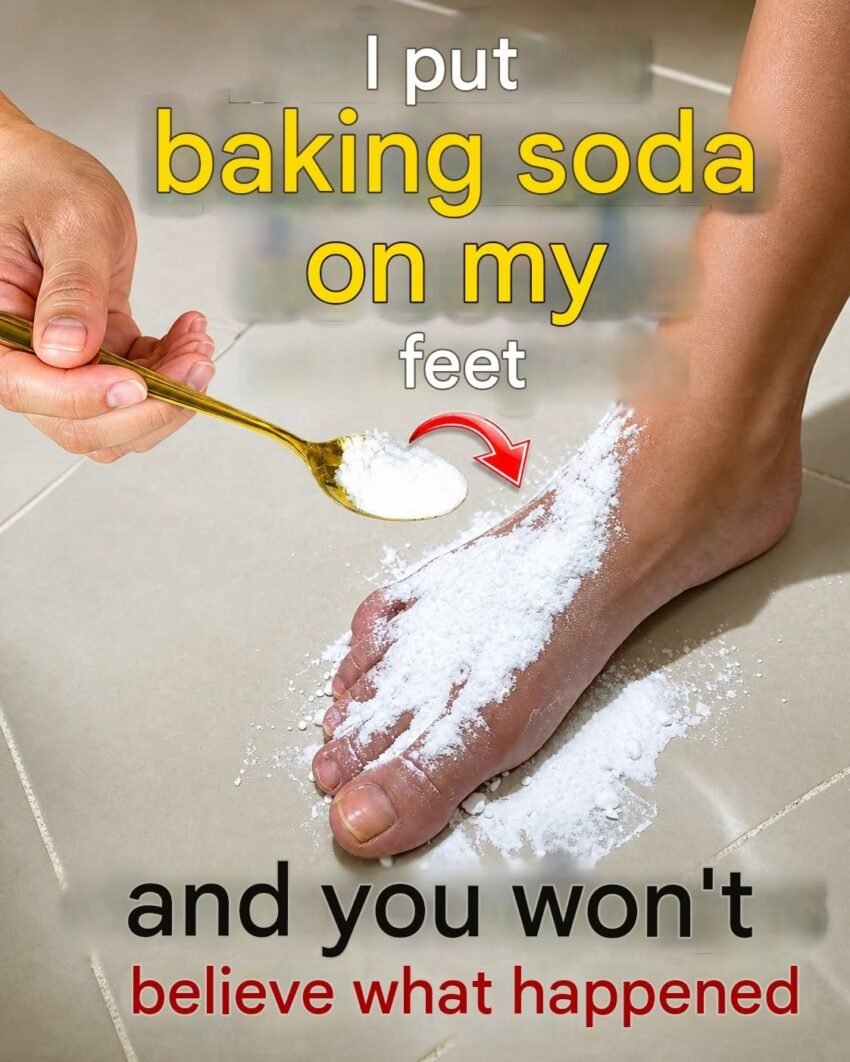
When you put baking soda on your feet, you aren’t just doing one thing—you’re triggering a multi-action chemical and physical process. Here’s exactly what happened and why.
The Immediate and Short-Term Effects
1. A Massive pH Shift (Odor Annihilation)
The “you won’t believe” part is probably how completely foot odor vanishes. This isn’t masking; it’s chemical warfare.
-
The Cause of Smell: Foot odor (bromodosis) is caused by bacteria like Brevibacterium that thrive in the warm, moist environment inside shoes. They consume dead skin and sweat, and their waste product is the volatile, cheesy-smelling isovaleric acid.
-
The Baking Soda Mechanism: Bacteria thrive in a slightly acidic-to-neutral pH. Baking soda (sodium bicarbonate) is a mild alkali. Dusting it on creates a highly alkaline environment where odor-causing bacteria simply cannot survive or reproduce. It directly neutralizes the stinky acid waste into odorless salts. The smell isn’t covered up; it’s chemically destroyed.
2. The Perfect Desiccant (The Bone-Dry Feeling)
You’d feel your feet go from clammy to silky-dry almost instantly.
-
Baking soda is hygroscopic, meaning it actively pulls moisture out of the environment and locks it away. On a microscopic level, the powder creates a massive surface area that soaks up sweat and humidity, leaving no wet habitat for fungus or bacteria to grow.
What Happened After Leaving It On (Or Doing a Soak)
3. Exfoliation Without Scrubbing
If you massaged it in or made a paste, the fine, crystalline powder acted as a gentle physical exfoliant, smoothing out rough heels without the harshness of a pumice stone. It’s hard enough to remove dead skin but dissolves slightly in moisture, preventing deep scratching.
4. The Soothing of Inflammation
If your feet were tired, itchy, or swollen after a long day, a baking soda soak (3 tablespoons in warm water) would have surprised you. The alkalinity has a mild anti-inflammatory effect on the skin, calming the nerve endings that signal itch and irritation. It’s the same principle behind baking soda baths for sunburn or eczema, providing deep, calming relief.
The “You Won’t Believe” Long-Term Payoffs
5. A Shift in the Skin Microbiome
By regularly altering the skin’s pH to an alkaline state, you fundamentally change which microbes can colonize your feet. This makes it an effective, non-prescription strategy for managing chronic athlete’s foot fungus, which also needs an acidic environment to thrive. While not a cure for a severe infection, it halts its spread and prevents recurrence.
6. The Unexpected Silkiness
Because the baking soda neutralizes the hardening acidic sweat and gently sloughs off the outer layer, your skin’s natural moisture barrier can recover. You’ll notice your feet feel softer for days afterward, not just immediately after treatment.
Critical Precaution: The Line Not to Cross
The “you won’t believe what happened” story can turn negative if misused. The same potent mechanism that neutralizes odor can also completely destroy your skin’s protective acid mantle if overdone.
-
Never use baking soda on cracked or bleeding skin. It will cause intense burning.
-
Limit direct powder application to a light dusting inside shoes or socks, not a thick paste left on the skin for hours. A weekly foot soak is safer than daily direct contact.
-
Discontinue immediately if you feel itching, burning, or see redness. An alkaline rash is a sign your skin barrier is compromised.
This isn’t a myth—it’s pure chemistry applied to biology, and when done correctly, it works far better and more cheaply than any scented foot powder on the market. If you’re into these kind of dual-purpose pantry staples, hydrogen peroxide has an equally shocking, science-based use in the garden that you might want to try next.