
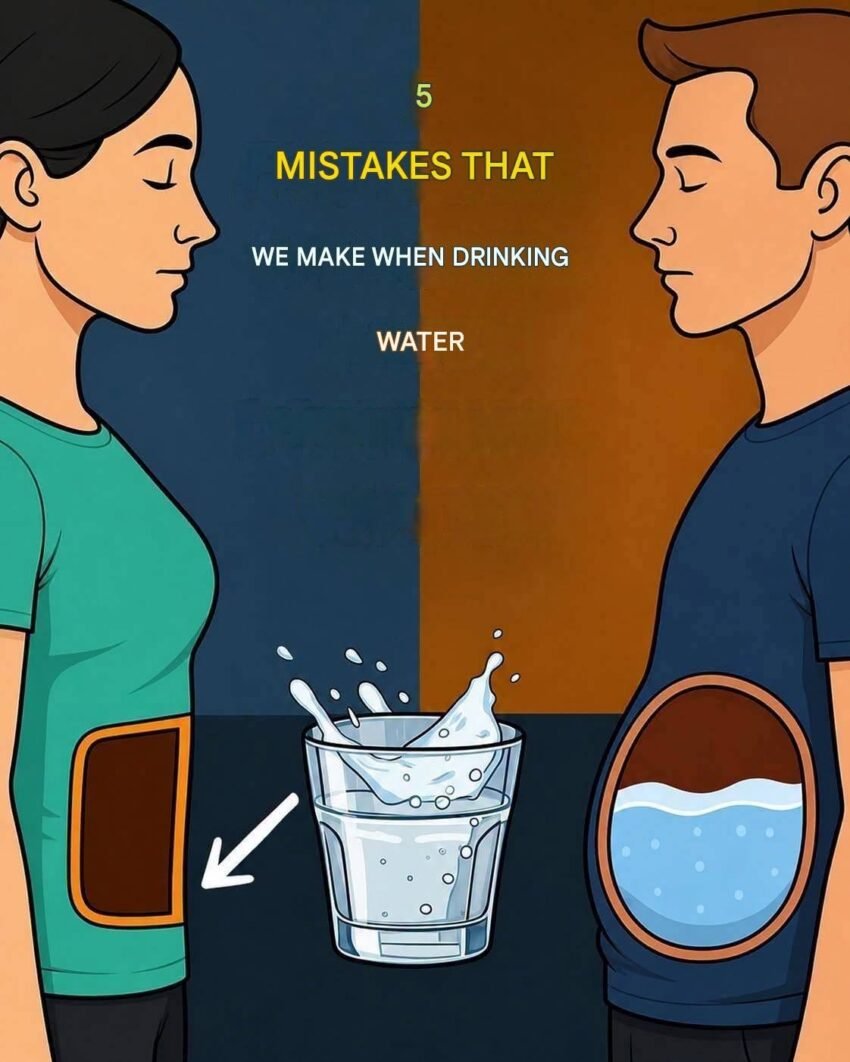
Here are 5 common mistakes people make when it comes to drinking water, which can negatively impact health:
1. Drinking Too Much, Too Fast
Your kidneys can only process about 0.8 to 1.0 liters of water per hour. Gulping down excessive amounts rapidly overwhelms this system.
-
The Risk: This dilutes the sodium in your blood, leading to a dangerous condition called hyponatremia (water intoxication). Symptoms range from nausea and headaches to seizures and coma.
-
The Fix: Sip water steadily throughout the day rather than chugging large volumes at once. Use your thirst and urine color (aim for pale straw) as practical guides.
2. Chugging Water With Meals
While staying hydrated is important, drinking large glasses of water right before, during, or immediately after eating can interfere with digestion.
-
The Risk: It dilutes your stomach acid and digestive enzymes, making it harder for your body to break down food efficiently. This can lead to bloating, indigestion, and poor nutrient absorption.
-
The Fix: Aim to drink most of your water 30 minutes before a meal and wait about an hour after eating before significantly increasing your fluid intake. Small sips during the meal are fine.
3. Relying Only on Thirst to Drink
If you drink only when your mouth feels dry, you’re often already slightly dehydrated.
-
The Risk: The thirst mechanism becomes less reliable with age. Chronic, low-level dehydration can cause persistent fatigue, brain fog, constipation, kidney stones, and recurring urinary tract infections.
-
The Fix: Create a proactive habit. Drink a glass first thing in the morning, link water intake to daily routines (like after a meeting or bathroom break), and eat water-rich foods like cucumbers and watermelon.
4. Drinking Water That’s Been Sitting Out Overnight
That glass of water on your bedside table has had hours to collect dust and bacteria from the air, and its chemistry changes slightly.
-
The Risk: It absorbs carbon dioxide, which lowers its pH, making it slightly acidic and tasting stale. More importantly, it’s an open invitation for airborne bacteria, mosquitoes, and dust, especially in a warm room.
-
The Fix: Use a covered water bottle for your bedside table, or pour a fresh glass in the morning.
5. Overlooking Your Body’s Electrolyte Balance
Plain water is essential, but if you’re sweating heavily through intense exercise, heat exposure, or sauna use, drinking only plain water can flush out vital electrolytes without replenishing them.
-
The Risk: A critical imbalance of sodium, potassium, and magnesium can lead to muscle cramps, irregular heartbeat, and in severe cases, the hyponatremia mentioned earlier.
-
The Fix: During or after prolonged, sweaty activity, incorporate electrolytes. This doesn’t necessarily mean sugary sports drinks; a pinch of quality salt in your water or eating a banana can do the job.
Are you curious about how specific health conditions, like kidney health or high blood pressure, might change these basic rules?