
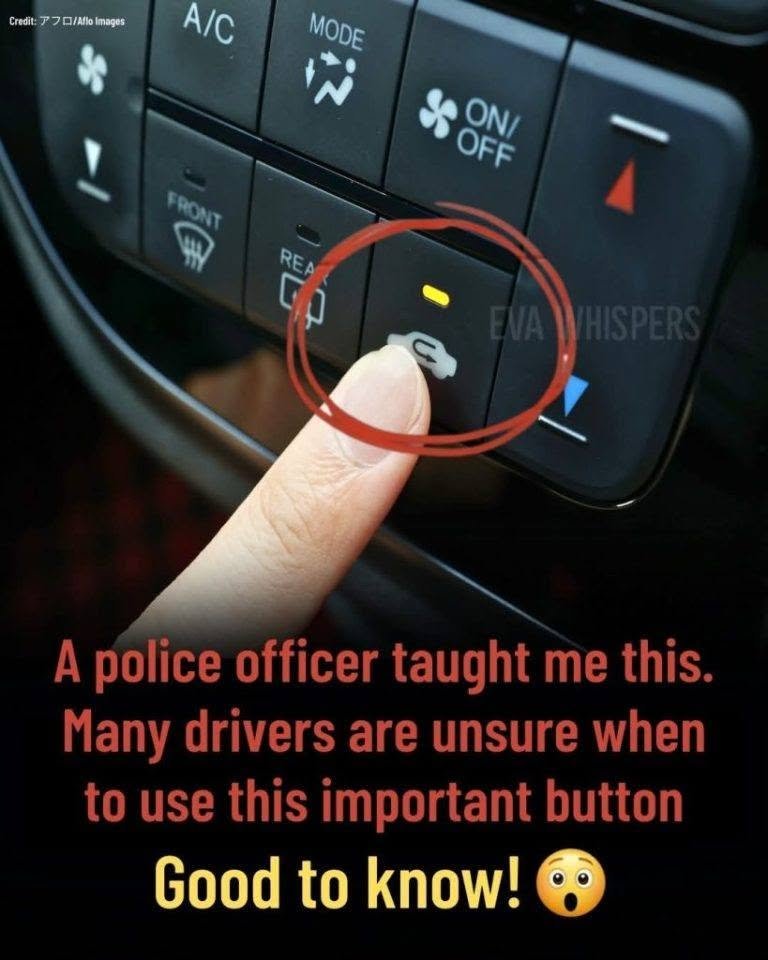
Recirculation button—that little car icon with a curved arrow inside it, usually found near your A/C controls. Many drivers never touch it, or don’t know what it does, but using it correctly can significantly impact your health, comfort, and even fuel efficiency.
Here’s why that ignored button actually matters, and when to use it.
What It Does
When activated, the recirculation button closes a vent that pulls outside air into the cabin. Instead, the system recirculates and re-cools the air already inside the car.
Why It Matters: 4 Key Reasons
1. It Blocks Harmful Exhaust Fumes (Your Health)
This is the most critical reason. In heavy traffic, tunnels, or when sitting behind older diesel vehicles, the air outside is filled with particulate matter, carbon monoxide, and other pollutants that can be several times more concentrated than on an open road.
-
The Fix: Hit the recirculation button. It cuts off the intake of these toxic fumes, preventing you and your passengers from breathing them in for extended periods.
2. It Maximizes A/C Cooling and Saves Fuel
If you’re letting the A/C constantly pull in hot, humid outside air and cool it down, you’re making the system work much harder.
-
The Fix: On scorching days, turn on the A/C and immediately hit recirculate. The system will now re-cool already-chilled cabin air, dropping the temperature faster and reducing the load on your engine and compressor. This translates to slightly better fuel efficiency and less strain on your car’s A/C system.
3. It Prevents Allergy Flare-Ups
During peak pollen season, the outdoor air is full of tree, grass, or ragweed pollen. Drawing that air into the car concentrates allergens in a tiny space.
-
The Fix: Recirculate acts as a barrier. Combine it with a clean cabin air filter, and your car becomes a refuge from seasonal allergies.
4. It Stops Foul Odors
Whether you’re driving past a cattle farm, a skunk, or through a dusty construction zone, the recirculation button is the fastest way to seal the cabin from overwhelming stench.
Critical Warning: When NOT to Use It
You should never use recirculation constantly, especially for long trips with multiple passengers, and here’s why:
-
Risk of Window Fogging: Recirculated air traps humidity from your breath. In cold or rainy weather, this almost instantly causes windows to fog up dangerously from the inside.
-
Oxygen Depletion and CO₂ Buildup: With the vent closed, oxygen levels in a tightly sealed car slowly drop while carbon dioxide rises. This can lead to drowsiness, headaches, and a dangerous loss of driver alertness on a long highway drive.
The Golden Rule: Switch back to fresh air mode every hour or so for a few minutes on a long journey to exchange the air, and always use fresh air with the defroster to clear foggy windows.
Would you be interested in a short guide on the other commonly misunderstood car buttons that serve surprisingly practical purposes?