
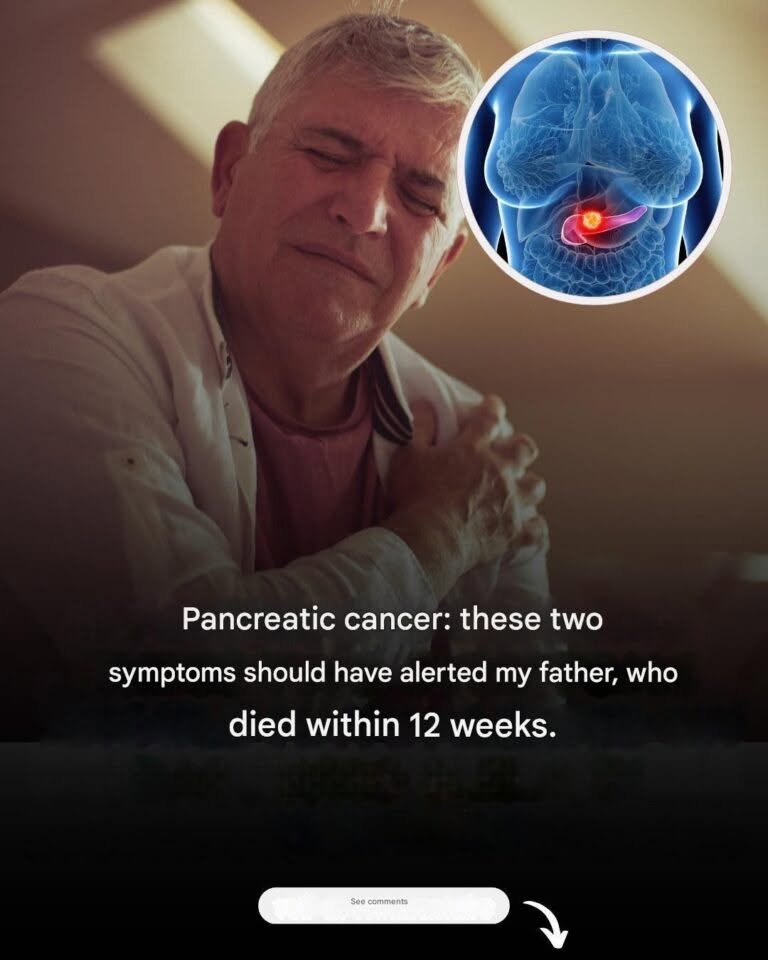
Because pancreatic cancer is notoriously difficult to detect early—and is often fatal because it is found too late—doctors and researchers focus heavily on identifying the earliest possible warning signs.
While symptoms usually don’t appear until the tumor has grown large enough to press against other organs or block the bile duct, there are two specific early signs that often appear before the more classic symptoms (like jaundice or severe back pain). Recognizing these could save your life.
1. New-Onset or Rapidly Worsening Diabetes
The pancreas serves two major functions: it produces enzymes for digestion, and it produces hormones (insulin and glucagon) that regulate blood sugar. When cancer begins to take root in the pancreas, even a very small tumor can disrupt the function of the insulin-producing cells.
-
What it looks like: You suddenly get diagnosed with Type 2 diabetes despite being at a healthy weight, having no family history, or being over the age of 50. Alternatively, someone who has had well-controlled diabetes for a decade suddenly finds their blood sugar wildly out of control, requiring new medication despite no changes in diet or lifestyle.
-
Why it’s often missed: Doctors often chalk this up to aging, weight gain, or normal Type 2 diabetes. However, research published in the Journal of the National Cancer Institute suggests that the onset of diabetes can be an early red flag for pancreatic cancer, sometimes occurring 1 to 2 years before the cancer is diagnosed.
-
The takeaway: If you are over 50 and receive a sudden diabetes diagnosis without typical risk factors, ask your doctor if you should be screened for pancreatic abnormalities.
2. A Deep, “Boring” Pain in the Mid-Back
When people think of pancreatic pain, they think of a stomach ache. But because the pancreas is located deep in the back of the abdomen, the earliest pain often radiates backward, not forward.
-
What it looks like: A dull, persistent ache in the middle of the back (often right where a bra strap sits, or between the shoulder blades). It is often described as a “boring” pain, meaning it feels like it is drilling deep through the body.
-
The tell-tale sign: The pain often worsens when you lie flat on your back or right after eating a heavy meal, and it feels better when you lean forward.
-
Why it’s often missed: People assume it’s a pulled muscle, arthritis, or a spinal issue. They spend weeks visiting chiropractors or taking anti-inflammatories, which do nothing to help. If you have no history of back injuries and the pain won’t go away with rest, it is a major internal red flag.
The Danger of “Silent” Symptoms
These two signs are critical because they usually occur before the “textbook” symptoms appear, such as:
-
Painless jaundice (yellowing of the skin and eyes)
-
Unexplained, dramatic weight loss
-
Floating, greasy, foul-smelling stools
-
Nausea and vomiting
Because the pancreas is hidden deep behind the stomach, a tumor can grow and even spread (metastasize) to other organs without causing a noticeable lump or severe pain. This is why roughly 80% of pancreatic cancer cases are diagnosed at late stages, when surgery is no longer an option.
What You Should Do
It is incredibly important not to panic: new-onset diabetes and back pain are extremely common in the general population, and 99% of the time they are not caused by cancer.
However, if you (or a loved one) are over the age of 50 and experience both of these symptoms at the same time, or if these symptoms are accompanied by unexplained fatigue, loss of appetite, or stomach issues, you must advocate for yourself. Ask your primary care doctor for an abdominal ultrasound, a CT scan, or an MRI. Blood tests alone are not enough to rule out pancreatic cancer. Early detection offers the only real chance for a cure.