
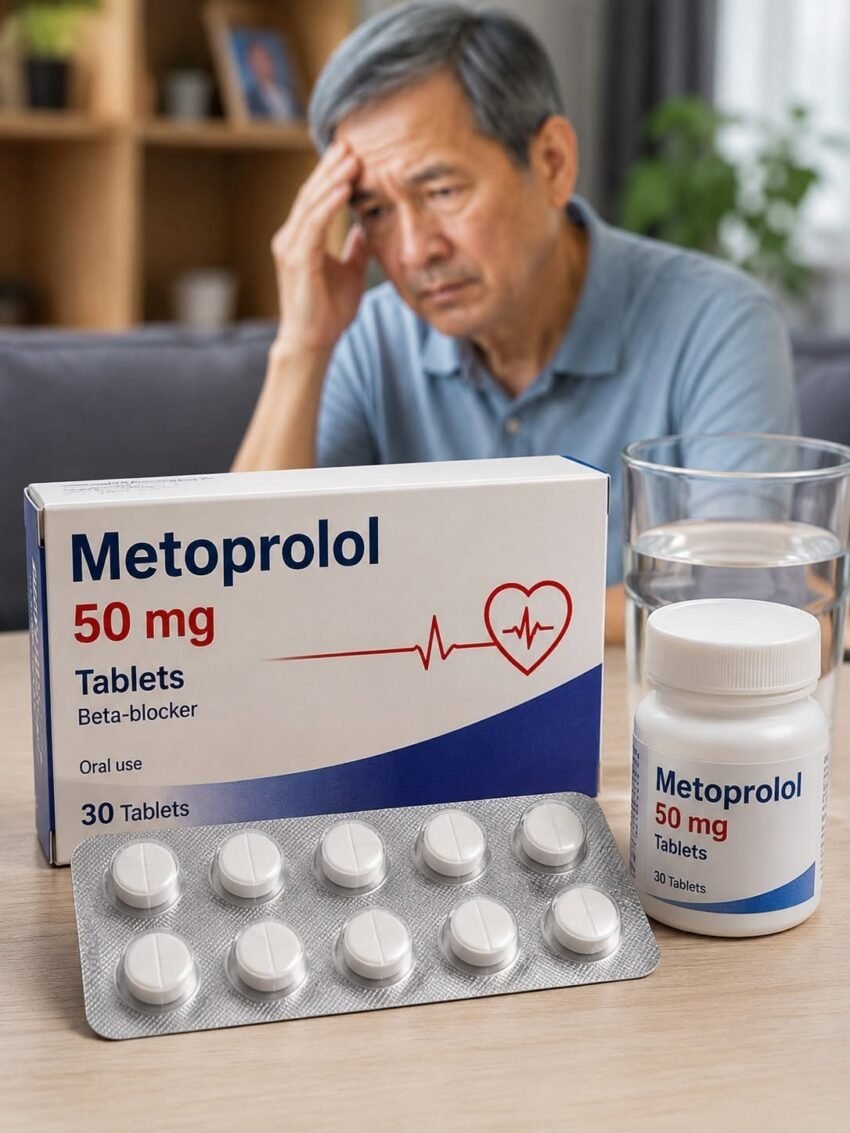
Here are 10 real, medically recognized side effects of metoprolol, ranging from common to rare but serious.
1. Fatigue and Low Energy
Because metoprolol slows the heart rate and lowers blood pressure, many people feel unusually tired, sluggish, or weak — especially when first starting the medication or after a dose increase.
2. Dizziness or Lightheadedness
This is often from a drop in blood pressure, particularly when standing up quickly (orthostatic hypotension). It can also make you feel faint.
3. Slow Heart Rate (Bradycardia)
Metoprolol is supposed to slow the heart, but sometimes it slows too much. A heart rate that drops too low — generally below 50–55 beats per minute, especially with symptoms — should be reported to a doctor.
4. Cold Hands and Feet
Beta blockers can reduce circulation to the extremities, causing coldness, numbness, or a tingling sensation in the fingers and toes.
5. Weight Gain
Some people gain a modest amount of weight, often because of fluid retention or a mild reduction in metabolic rate. This can be more noticeable in people taking it for heart failure.
6. Depression or Mood Changes
Beta blockers — especially older, lipophilic ones like metoprolol — can cross the blood-brain barrier and, in some people, contribute to depressed mood, nightmares, or general emotional blunting.
7. Vivid Dreams or Sleep Disturbances
Nightmares, insomnia, and unusually vivid dreams are relatively common, again because metoprolol can affect the central nervous system.
8. Shortness of Breath or Wheezing
Because it blocks beta receptors, metoprolol can cause bronchospasm in susceptible people — especially those with asthma or COPD. This is why it’s used cautiously, if at all, in people with significant reactive airway disease.
9. Sexual Dysfunction
Erectile dysfunction, reduced libido, or difficulty achieving orgasm can occur. This is a well-known but under-discussed side effect, possibly because patients are embarrassed to bring it up and doctors sometimes don’t ask.
10. Masking Low Blood Sugar Symptoms (Hypoglycemia Unawareness)
In people with diabetes, especially those on insulin or sulfonylureas, metoprolol can blunt the typical warning signs of low blood sugar — such as a fast heartbeat, shakiness, and anxiety — making hypoglycemia harder to recognize.
Two important notes:
-
Do not stop metoprolol suddenly. Stopping abruptly can cause “rebound” high blood pressure, rapid heart rate, chest pain, or even a heart attack in some people. It needs to be tapered under medical supervision.
-
Some of these side effects improve over time. The body often adjusts within a few weeks. Dosing, formulation (immediate vs. extended release), and individual response all matter.
If you or someone you know is experiencing side effects, the best move is to discuss them openly with the prescribing clinician — not to stop the drug on your own.