
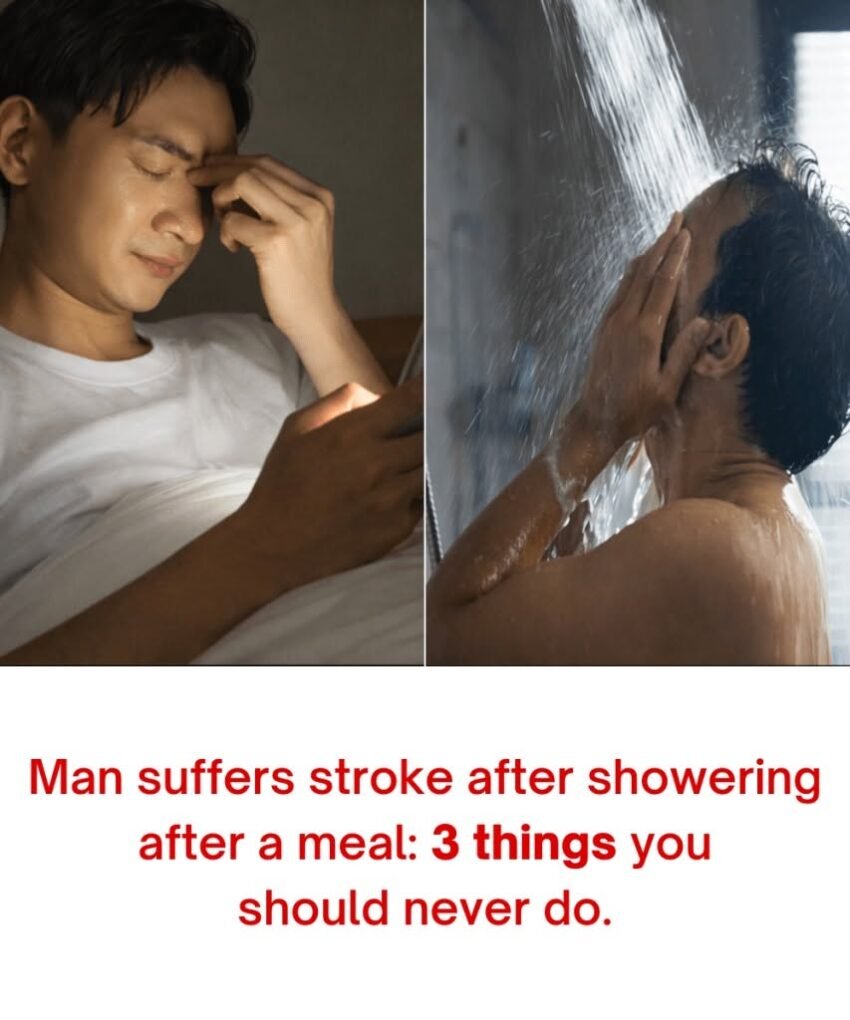
It’s a debate that has gone on for decades: Is it dangerous to take a shower or bath right after eating? While it is incredibly common in many cultures to shower before dinner or right after a quick meal, some health experts and traditional medicine systems (like Ayurveda and Traditional Chinese Medicine) warn against it.
Showering immediately after a large meal is generally not life-threatening for healthy individuals, but it can cause discomfort and may put certain people at risk. Here is the science behind this common habit, along with 3 major ways it can affect your body:
1. It Disrupts Your Digestion (The “Blood Flow Steal”)
Your digestive system requires a massive amount of blood flow to break down food and absorb nutrients. After you eat, your body automatically dilates the blood vessels around your stomach and intestines to send extra blood to that area (a process called postprandial hyperemia).
When you step into a warm or hot shower, the heat causes the blood vessels on the surface of your skin (especially in your arms and legs) to dilate as well. This is your body’s way of trying to cool itself down.
-
The Risk: Your body now has to split its resources. Blood is diverted away from the digestive tract and pulled toward the skin’s surface to regulate your temperature. This can slow down digestion, leading to bloating, stomach cramps, indigestion, or a feeling of heavy lethargy after you get out of the shower.
2. It Can Cause Dizziness, Lethargy, or Fainting (Vasovagal Response)
The combination of a full stomach and hot water can cause a sudden drop in blood pressure. Because blood is pooling in both your digestive tract and the surface of your skin, there is temporarily less blood returning to your brain and heart.
-
The Risk: This can trigger a feeling of extreme sluggishness, lightheadedness, or even a vasovagal syncope episode (fainting). For older adults, people with naturally low blood pressure, or those on blood pressure medication, showering in very hot water right after eating can make them dangerously dizzy and increase the risk of a slip or fall in the bathroom.
3. It Can Trigger Acid Reflux or Nausea
When you lie down in a bathtub or bend over to wash your legs in the shower, you are physically compressing your stomach and changing the angle of your esophagus. If your stomach is completely full, this physical pressure can easily push stomach acid back up into your throat.
-
The Risk: If you suffer from GERD (acid reflux) or are prone to heartburn, showering right after a meal can trigger a flare-up. Additionally, the motion of vigorously washing yourself can cause mild nausea in people with sensitive stomachs.
The “Cold Shower” Factor
Interestingly, a cold shower is actually worse for your digestion than a warm one. Exposure to cold water causes your blood vessels to suddenly constrict (narrow) to preserve core body heat. This sudden constriction forces blood away from the skin and extremities and rushes it toward the core. This sudden shift in blood pressure can cause extreme stomach cramping or spasm while the stomach is trying to digest.
The Golden Rule: How Long Should You Wait?
If you are a healthy individual, taking a lukewarm (not steaming hot) shower 20–30 minutes after a light snack is usually perfectly fine.
However, if you have eaten a large, heavy meal, health experts generally recommend waiting at least 30 to 45 minutes to an hour before hopping in the tub or shower.
The ideal routine? If you must shower around mealtime, it is much safer and more comfortable to shower before you eat, or wait until your meal has had time to settle. This ensures your brain and stomach get the blood flow they need, you won’t feel dizzy, and you can wash up without the risk of an upset stomach.