
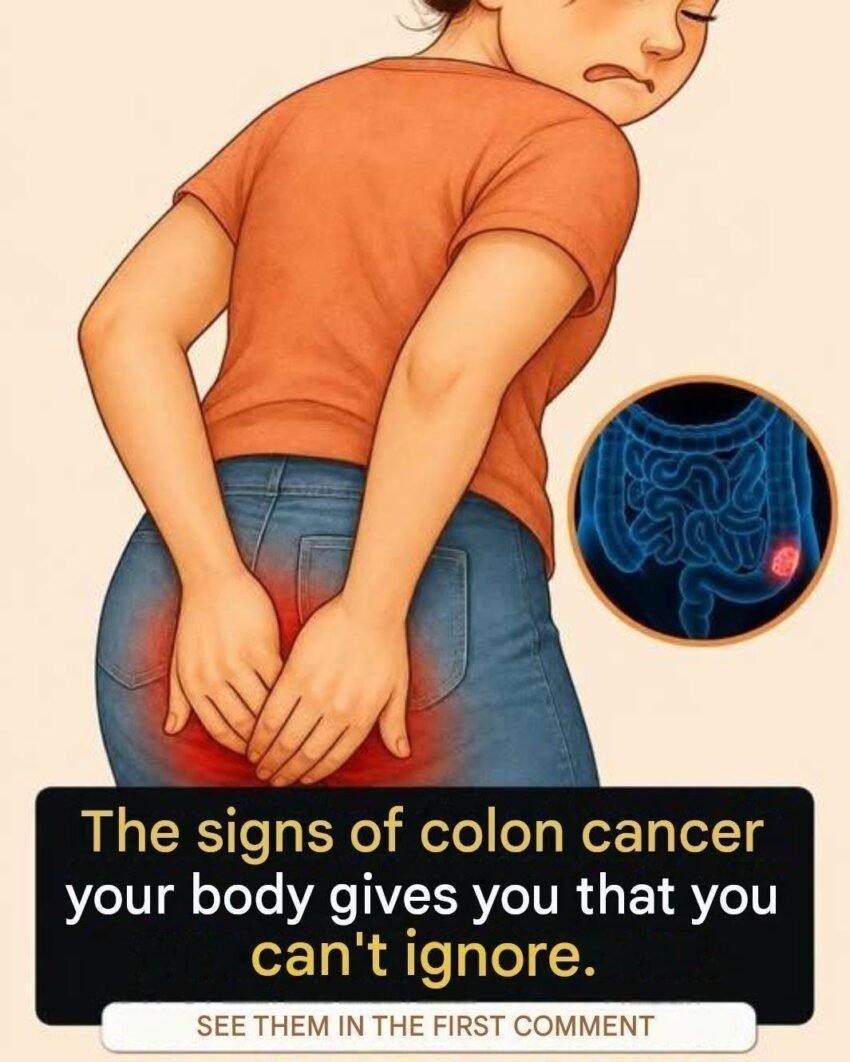
It is important to approach this topic with caution, as many symptoms of colon cancer overlap with common, benign digestive issues (like hemorrhoids, IBS, or food intolerances). However, because early detection saves lives, it is vital to know the warning signs.
Colon cancer (colorectal cancer) often grows silently for years. When symptoms do appear, they usually depend on the cancer’s size and exact location in the large intestine.
Here are the most common warning signs that may indicate you have colon cancer:
1. A Persistent Change in Bowel Habits
This is one of the earliest and most common signs. If your bathroom routine changes and does not go back to normal within a few weeks, it warrants a doctor’s visit. This can look like:
-
Chronic Constipation: Difficulty passing stool that wasn’t normal for you before.
-
Chronic Diarrhea: Loose, watery stools that persist for more than a few days.
-
Narrow “Pencil” Stools: If a tumor is blocking the colon, stool has to squeeze through a narrow opening, resulting in thin, ribbon-like stools.
-
The Feeling of Incomplete Evacuation: Feeling like you still have to go to the bathroom even after you have just gone (tenesmus).
2. Blood in the Stool or Rectal Bleeding
Finding blood is always a reason to see a doctor immediately.
-
Bright Red Blood: Often visible on the toilet paper or in the bowl. While commonly caused by hemorrhoids, if it is mixed in with the stool or accompanied by other symptoms, it could be from a tumor in the lower colon or rectum.
-
Dark, Tarry, or Black Stool (Melena): If a tumor is bleeding higher up in the colon, the blood gets partially digested as it travels through the gut, turning the stool a dark, black, sticky color resembling tar.
3. Unexplained Weight Loss
If you are losing weight without trying—meaning you haven’t changed your diet or exercise routine—this is a major red flag. Cancer cells consume a lot of the body’s energy. Additionally, tumors can release chemicals that change the way your body metabolizes food, causing you to burn calories faster. Losing 10 pounds or more without trying is a classic sign of many cancers, including colon cancer.
4. Persistent Abdominal Discomfort
This is often described as a general “unwell” feeling in the gut that doesn’t go away. You may experience:
-
Cramping: Persistent stomach cramps unrelated to your period or a stomach bug.
-
Gas and Bloating: Excessive, painful bloating that is out of the ordinary.
-
A Feeling of Fullness: Feeling full quickly when eating, or feeling like there is a physical mass or obstruction in your abdomen.
5. Iron-Deficiency Anemia
This is a “silent” symptom that is often only caught by a blood test. If a tumor bleeds slowly over a long period of time, you lose red blood cells faster than your body can replace them. This leads to anemia, which causes:
-
Extreme, crushing fatigue (even after a full night’s sleep).
-
Pale skin.
-
Shortness of breath or dizziness when standing up.
If a routine blood test shows you are anemic, especially if you are a man or a post-menopausal woman, doctors will usually recommend a colonoscopy to check for internal bleeding.
6. Weakness and Fatigue
Even without anemia, the constant low-grade inflammation caused by a growing tumor can leave you feeling utterly exhausted. This is not normal tiredness; it is a bone-tired weariness that rest does not fix.
⚠️ The Most Important Thing to Know: “The Silent Phase”
Here is the scary truth about colon cancer: In its earliest, most curable stages, there are usually ZERO symptoms. You can feel completely fine, have normal bowel movements, and have a tumor growing in your colon.
That is why medical guidelines state that everyone should begin regular screening at age 45, even if they feel perfectly healthy. A colonoscopy doesn’t just detect cancer; it can prevent it by allowing the doctor to remove pre-cancerous polyps before they turn deadly.
When to See a Doctor Immediately
Do not panic if you have one day of diarrhea or a single episode of blood from a hemorrhoid. However, you should call your doctor if:
-
Any of the above symptoms last more than two weeks.
-
You see any blood in your stool.
-
You have a family history of colon cancer (first-degree relative like a parent or sibling), which means you may need to be screened before age 45.