
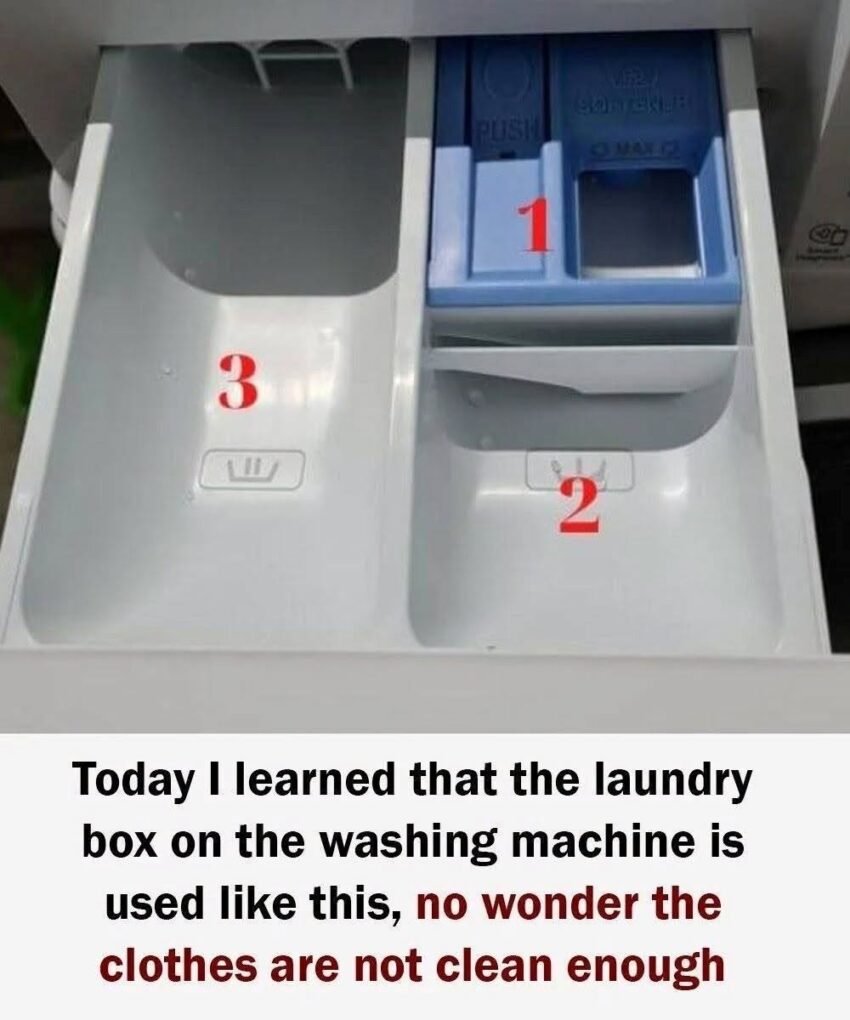
Most people have been doing laundry for years, but the detergent drawer (that little pull-out tray with mysterious symbols) remains one of the most misunderstood parts of the washing machine. Misusing it can lead to clothes that don’t get clean, residue left on fabric, or a washing machine that ends up smelling like mildew.
Here is the right way to use your washing machine’s detergent drawer, broken down by compartment, type of detergent, and maintenance.
1. Decoding the Compartments
Almost all front-loading washers and many modern top-loaders (especially HE models) use a drawer with three or four compartments. Look for the symbols or Roman numerals:
-
Symbol: “I” or “1” (Pre-Wash / Soak)
-
What it’s for: Detergent used for the “Pre-Wash” cycle or heavily soiled clothes.
-
The Rule: Only put detergent here if you have actually selected a “Pre-Wash” or “Soak” cycle on your machine. If you put detergent here during a normal cycle, it will be washed away into the drain before the main wash starts.
-
-
Symbol: “II” or “2” (Main Wash)
-
What it’s for: Your standard laundry detergent (liquid or powder). This is the compartment you will use 90% of the time.
-
The Rule: This detergent is released at the very beginning of the main wash cycle, after the machine has drained the pre-wash water.
-
-
Symbol: A Flower, a Star, or “Softener” (Fabric Softener)
-
What it’s for: Liquid fabric softener.
-
The Rule: Never fill past the “MAX” line. Fabric softener is thick; the machine uses a siphon to suck it out. If you overfill it, it will siphon out immediately and drain away before the rinse cycle, leaving your clothes without softener and leaving a sticky residue in the drawer.
-
-
Symbol: A Snowflake or “Bleach” (Liquid Bleach)
-
Note: Some machines do not have this; you must add bleach directly to the drum before clothes.
-
What it’s for: Liquid chlorine bleach only. Do not put powdered bleach or laundry boosters here, as they can clog the mechanism.
-
The Rule: Fill only to the “MAX” line. The machine will automatically dilute and dispense this during the wash cycle to prevent it from ruining your clothes.
-
2. Liquid vs. Powder vs. Pods
The type of detergent you use dictates where it goes:
-
Liquid Detergent: Goes in the Main Wash (II) compartment. You can pour it directly into the drawer. If the machine has a removable flap/dam inside the drawer for liquid, make sure it is pushed down or positioned correctly.
-
Powder Detergent: Goes in the Main Wash (II) compartment. If there is a removable flap/dam, remove it or flip it up so the powder has a larger opening to fall through.
-
Laundry Pods / Sheets: Never put these in the drawer. Pods and dissolvable sheets must go directly into the empty drum at the back or bottom before you load your clothes. The drawer dispenser does not have enough water flow to fully dissolve a pod, which will leave a sticky, plasticky mess on your clothes.
3. The Biggest Mistake: Overusing the Drawer for “Lazy” Dosing
A common modern hack is to pour detergent directly into the drum on top of clothes and skip the drawer entirely. Do not do this with front-loaders.
-
Why? Front-loaders use very little water. If you pour thick liquid detergent directly on clothes, it doesn’t dilute fast enough. It can stain delicate fabrics or leave blue/white spots on your laundry.
-
The Right Way: If you want to dose directly into the drum (for example, if your drawer is broken or you are using a booster), you must dilute the detergent with water first, or use a dosing ball placed on top of the clothes.
4. Cleaning the Drawer (Crucial for Front-Loaders)
Because front-loading washers use cold water and sealed doors, the detergent drawer is the number one breeding ground for black mold and mildew. If your washer smells musty, it’s probably the drawer.
How to maintain it:
-
Remove it: There is usually a release tab in the fabric softener compartment. Press it down and pull the entire drawer completely out.
-
Disassemble: Take out the removable siphon caps (the plastic pieces inside the softener and bleach compartments).
-
Soak and Scrub: Soak all parts in hot, soapy water (or a mix of water and white vinegar). Use an old toothbrush to scrub away the slimy residue and mold.
-
Clean the Cavity: While the drawer is out, shine a flashlight into the empty slot of the washing machine. You will likely see mold. Wipe the inside of the machine cavity with a rag soaked in bleach or white vinegar.
-
Leave it open: After every wash cycle, leave the detergent drawer slightly ajar and the washer door open. This allows the moisture to evaporate, preventing mold from growing back.
Summary Checklist
-
Pre-Wash (I): Leave empty unless using a pre-wash cycle.
-
Main Wash (II): Liquid or powder detergent. (Pods go in the drum).
-
Softener (Flower): Liquid softener only. Never exceed MAX line.
-
Bleach (Snowflake): Liquid bleach only. Never exceed MAX line.
-
Maintenance: Take the drawer out and scrub it monthly.