
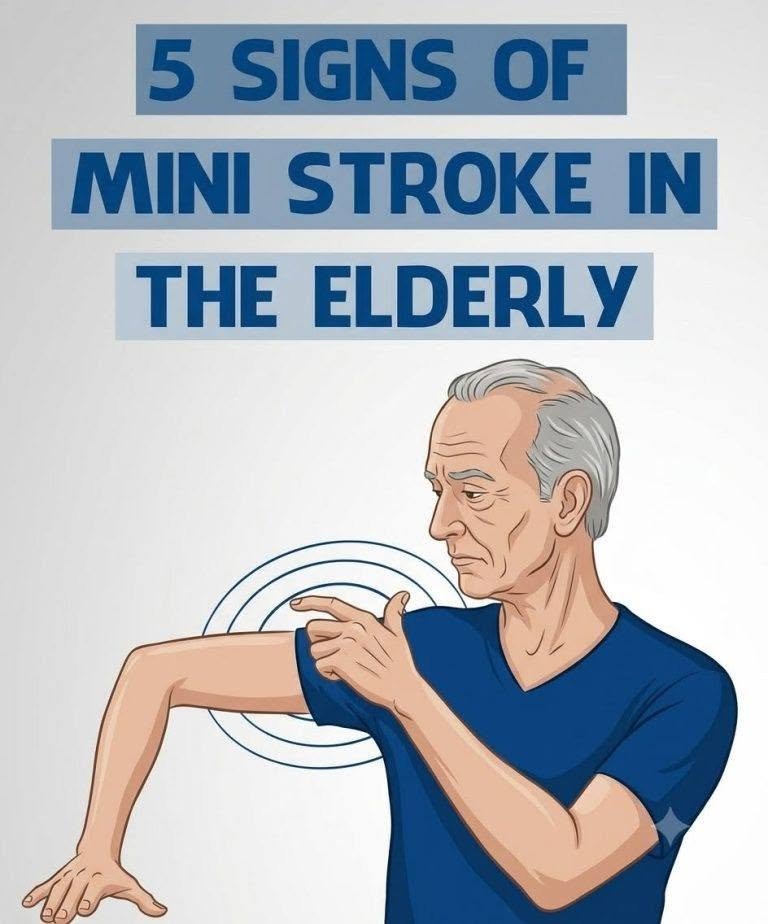
Here are 9 symptoms of a Transient Ischemic Attack (TIA), often called a “mini-stroke,” that you should never ignore.
A TIA happens when there is a temporary blockage of blood flow to the brain. Unlike a full-blown stroke, the symptoms usually last only a few minutes to a couple of hours, and they leave no permanent damage. However, doctors call them “Warning Strokes” for a reason: roughly 1 in 3 people who have a TIA will go on to have a full, major stroke, often within days or weeks.
The scariest part is that because the symptoms disappear quickly, people often brush them off as stress, a migraine, or “just getting older.” Knowing these signs can save a life.
Important: If you or someone around you experiences ANY of these, even if the symptoms go away completely after 5 minutes, call 911 or go to the emergency room immediately.
1. Sudden Numbness or Weakness on One Side
This is one of the most recognizable signs. You might suddenly feel your arm, leg, or face go “dead” or weak, usually strictly on the left side or the right side of the body. You may try to lift both arms, and one will drift downward.
2. Facial Drooping (A Crooked Smile)
The muscles in your face may suddenly stop cooperating. When you try to smile, one side of your mouth might not lift. You might also notice that you have difficulty closing one eye, or your eyelid looks droopy.
3. Sudden Confusion and Trouble Speaking
This is often mistaken for fatigue or brain fog. You might know exactly what word you want to say, but your mouth can’t form it. Or, you might speak in slurred, garbled words that sound like you are intoxicated. You may also have trouble understanding what other people are saying to you.
4. Vision Problems in One or Both Eyes
A TIA can disrupt the blood flow to the optic nerve. You might experience sudden blurred vision, double vision, or a strange “black curtain” dropping down over one eye. Unlike a headache aura, this comes on abruptly without any pain.
5. Sudden, Severe Headache with No Known Cause
While headaches are common, a stroke-related headache hits like a thunderclap—it is instantly the worst headache of your life. If it is accompanied by vomiting, dizziness, or altered consciousness, it is a medical emergency, especially if you have no history of migraines.
6. Dizziness, Loss of Balance, or Trouble Walking
If the back of the brain (cerebellum) is temporarily starved of blood, your coordination shuts down. You might suddenly feel like the room is spinning, or you might stumble, weave, or find that you cannot walk in a straight line. You may feel like your legs are suddenly incredibly heavy.
7. Sudden, Unexplained Falls
This ties directly into the symptom above. Sometimes, especially in older adults, the brain doesn’t register the dizziness as pain or spinning—the person just suddenly collapses. If a person drops to the floor and can’t explain why (they didn’t trip over a rug or have a heart issue), it warrants an immediate brain scan.
8. Difficulty Swallowing
A mini-stroke can affect the nerves that control the muscles in your throat. You might suddenly cough, choke, or feel like a pill or a piece of food is “stuck” in your throat when swallowing saliva. You might also drool unexpectedly.
9. Sudden Behavioral or Emotional Changes
The brain is the seat of your personality. A lack of blood flow to the frontal lobe can cause rapid, unexplainable mood swings. A usually calm person might burst into tears, or someone might become suddenly aggressive, paranoid, or completely apathetic and “spaced out.”
The “BE FAST” Method
To quickly assess if someone is having a stroke or a mini-stroke, use the BE FAST acronym:
-
B – Balance: Are they having trouble standing or walking?
-
E – Eyes: Is their vision blurry or lost?
-
F – Face: Ask them to smile. Does one side droop?
-
A – Arms: Ask them to raise both arms. Does one drift down?
-
S – Speech: Ask them to repeat a simple sentence. Are the words slurred or strange?
-
T – Time: If you see ANY of these signs, Time to call 911 immediately. Do not drive them yourself; paramedics can begin life-saving treatment on the way to the hospital.
Why You Must Act Fast
Because a mini-stroke resolves on its own, human nature tempts us to just “sleep it off.” Do not do this. A TIA is the universe giving you a second chance to prevent a catastrophic, disabling stroke. Doctors can perform ultrasounds of your neck, heart tests, and MRIs to find the cause (like a clogged carotid artery or a blood clot) and start medication (like blood thinners or statins) to stop the big one from happening.