
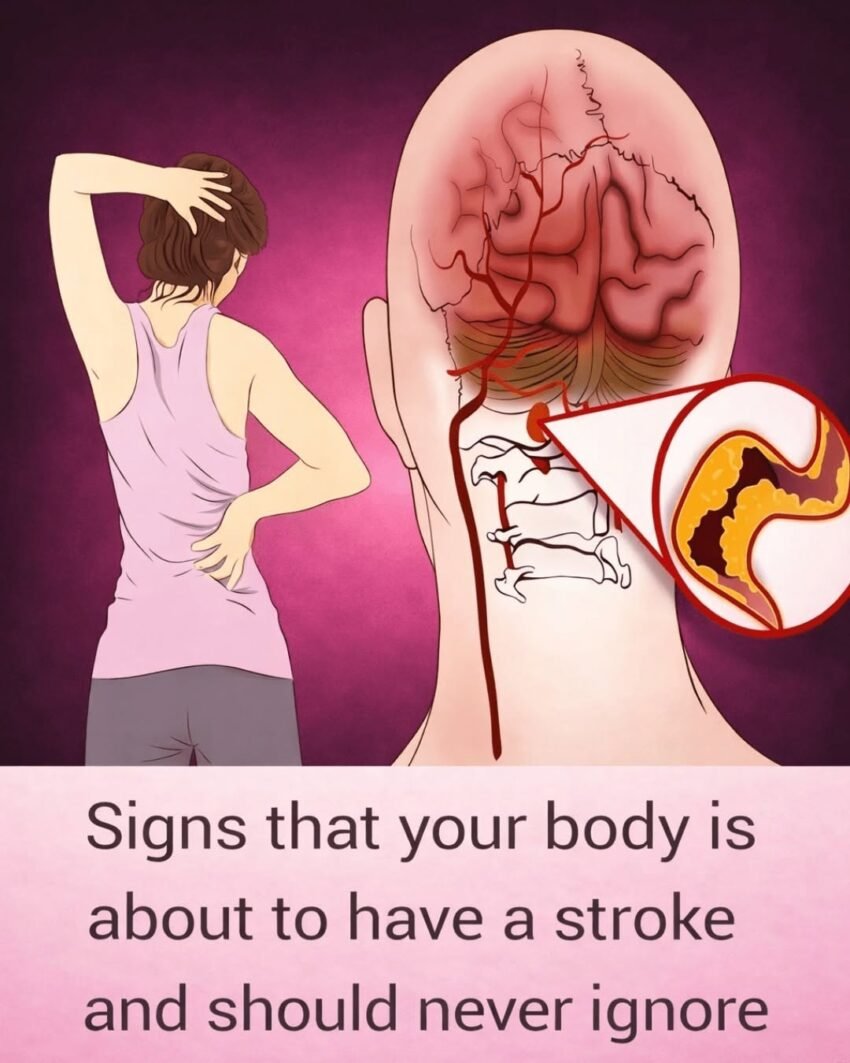
Recognizing the early warning signs of a stroke can save a life—possibly your own. Strokes happen when blood flow to part of the brain is cut off, and brain cells begin to die within minutes. The faster you get medical attention, the better the chances of survival and reducing long-term disability.
While the B.E. F.A.S.T. acronym is the most widely recognized tool for spotting a stroke, there are several other subtle warning signs that should never be ignored.
Here are the 10 early warning signs everyone should know:
The “B.E. F.A.S.T.” Core Symptoms
These are the classic, sudden symptoms caused by a blockage or bleed in the brain:
1. Sudden Loss of Balance
A stroke can affect the brain’s coordination centers. The person may suddenly stumble, feel dizzy, or have trouble walking. They may complain of a sudden spinning sensation (vertigo) or be unable to stand up straight.
2. Sudden Vision Changes (Eyes)
Blurred vision, double vision, or sudden loss of vision in one or both eyes can occur. The person may suddenly have trouble seeing out of one eye, or they may lose the peripheral vision on one side of their body.
3. Facial Drooping (Face)
One side of the face may suddenly feel numb or droop. Ask the person to smile. If their smile is uneven, lopsided, or if one eye is drooping, it is a major red flag.
4. Arm Weakness (Arms)
The person may feel sudden weakness, numbness, or paralysis in one arm (or leg). Ask them to raise both arms. Does one arm drift downward? Are they unable to lift one arm at all?
5. Speech Difficulty (Speech)
Speech may become slurred, garbled, or completely lost. The person may be unable to understand what you are saying to them. Ask them to repeat a simple sentence (e.g., “The sky is blue today”). If they cannot repeat it correctly, call for help.
6. Time to Call Emergency Services (Time)
If you observe any of the above signs, call emergency services (911) immediately. Note the time the symptoms first started. There is a “golden window” of roughly 3 to 4.5 hours where clot-busting drugs can be administered to reverse the stroke.
The Subtle, Often-Missed Warning Signs
Sometimes, strokes present with less obvious symptoms, particularly in women. Do not dismiss these:
7. Sudden, Severe “Thunderclap” Headache
A stroke caused by a brain bleed (hemorrhagic stroke) can cause a headache that is described as the “worst headache of your life.” It strikes suddenly and intensely, unlike a typical tension headache or migraine.
8. Sudden Confusion or Cognitive Difficulty
The person may suddenly seem disoriented, not knowing where they are or what they are doing. They may have sudden trouble understanding language, doing simple math, or performing a familiar task.
9. Sudden Nausea or Vomiting
Because a stroke often affects the brainstem or the areas controlling equilibrium, it can cause a sudden wave of intense nausea, vomiting, or hiccups, especially if accompanied by dizziness or balance issues.
10. Sudden Difficulty Swallowing
Medically known as dysphagia, a stroke can weaken the throat muscles. The person may suddenly choke, cough, gag, or drool when trying to drink water or eat food.
What to Do If You Suspect a Stroke
Act F.A.S.T. and do not wait.
-
Do not drive the person to the hospital yourself unless absolutely necessary. Call an ambulance. Paramedics can begin life-saving treatment on the way to the hospital and will know which nearby hospital has a dedicated Stroke Center.
-
Do not give them food, water, or medication. Because they may have difficulty swallowing, offering an aspirin or a glass of water can cause them to choke or aspirate liquid into their lungs.
-
Note the time. The single most important piece of information for a doctor is the exact time the symptoms started (the “last known well” time).
-
Stay calm and keep them calm. Have them lie down with their head slightly elevated, loosen tight clothing, and wait for help.
The “Mini-Stroke” Caveat (TIA)
A Transient Ischemic Attack (TIA) is often called a “mini-stroke.” The symptoms are identical to a stroke but usually last only a few minutes to an hour and cause no permanent damage. A TIA is an emergency. It is a massive warning sign that a major, disabling stroke is likely to happen in the near future. Never ignore symptoms just because they went away.