
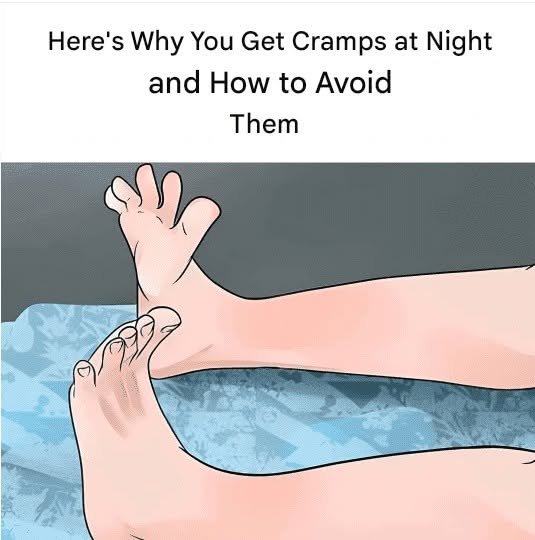
Waking up in the middle of the night with a sudden, searing knot in your calf or foot is a jarring and painful experience. Nighttime leg cramps—known medically as nocturnal leg cramps—are incredibly common, especially in adults over 50, but they can happen at any age.
While the exact, single cause of why they happen at night remains a topic of medical debate, researchers and doctors have identified several primary physiological and lifestyle triggers that explain why your muscles seize up while you sleep.
Here is a breakdown of why we get cramps at night:
1. The Shortening of the Calf Muscle (Positional Theory)
This is the most widely accepted biomechanical explanation for why cramps happen specifically at night.
-
When you sleep, your feet often relax into a position called plantarflexion. This means your toes are pointed slightly downward, and your calf muscles are in a shortened, relaxed state.
-
If you move suddenly in your sleep or stretch your leg, that already-shortened calf muscle can be stretched too quickly. The muscle spindle (the nerve receptor in the muscle) misfires, causing the muscle to contract violently and involuntarily. It locks up and cannot relax, resulting in a charley horse.
-
Why this matters: The reason calf cramps are so common is simply because of how we position our ankles and feet under the weight of our bedsheets at night.
2. Dehydration and Electrolyte Imbalances
Your muscles rely on a precise balance of minerals (electrolytes) to contract and relax properly. These include potassium, magnesium, calcium, and sodium.
-
If you are mildly dehydrated or have sweated a lot during the day (or in a hot bedroom at night), your body may be depleted of these essential salts.
-
When potassium or magnesium levels dip too low, the nerve signals to your muscles can become hyper-excitable. This means the nerves fire too easily, causing the muscle to cramp and stay contracted.
-
Note: While this is a classic explanation, severe imbalances are usually only seen in people taking certain diuretics (water pills), those with specific illnesses, or extreme athletes. Mild dehydration, however, can still leave muscles more prone to twitching and cramping.
3. Muscle Fatigue and Overexertion
If you spent the day on your feet, walked long distances, wore high heels, or did a strenuous leg workout, your muscles are exhausted.
-
A tired muscle is a muscle that cannot efficiently manage its energy stores or regulate its contractions.
-
When you finally lie down to rest, the overworked muscle fibers struggle to fully relax, making them highly susceptible to spontaneous cramping during the night.
4. The Opposite Problem: Prolonged Sitting or Inactivity
Paradoxically, too little movement can cause cramps, too. If you sit at a desk all day without moving, or if you have poor posture that shortens your hip flexors and hamstrings, the muscles in your legs become tight and shortened.
-
When you finally stretch them out in bed, the sudden elongation of a tight, shortened muscle can trigger a reflexive cramp, just like the foot-positioning issue mentioned above.
5. Age and Nerve Changes
As we age, we lose muscle mass. The remaining muscle fibers have to work harder to support the body, making them more susceptible to fatigue. Additionally, the nervous system undergoes changes with age, and the nerve endings that control muscle contraction can degrade, leading to involuntary, misfired signals to the muscles.
6. Medications and Underlying Conditions
Sometimes, nighttime cramps are a side effect of something else going on in the body:
-
Medications: Statins (for cholesterol), certain blood pressure medications (diuretics), and some asthma medications are notorious for causing muscle cramps as a side effect.
-
Medical Conditions: Diabetes, thyroid disorders, peripheral artery disease (PAD), and nerve compression in the spine can all manifest as nighttime leg cramps.
-
Pregnancy: Hormonal changes, weight gain, and changes in blood circulation make nocturnal leg cramps extremely common in the second and third trimesters.
What to Do If a Cramp Strikes in the Middle of the Night
When it happens, the goal is to force the muscle to lengthen.
-
Flex your foot, don’t point your toe. Forcefully pull your toes and the ball of your foot up toward your shin (dorsiflexion). This actively stretches the cramped calf muscle and tells it to release.
-
Stand up. If you can bear it, put your weight on the affected leg and press the heel firmly into the floor. Gravity and the stretch will often break the spasm.
-
Apply heat. Once the acute spasm releases, use a heating pad or a warm towel on the muscle to encourage blood flow and relaxation. If the muscle is sore the next day, a cold pack can help with inflammation.
How to Prevent Them
To reduce the frequency of nighttime cramps, try these evidence-based habits:
-
Stretch before bed: Do gentle calf and hamstring stretches for 5 minutes before getting under the covers.
-
Loosen the sheets: Heavy, tightly tucked blankets can push your toes downward into that “pointed” position. Keep your feet free, or sleep with your feet hanging slightly off the end of the bed.
-
Hydrate: Drink a glass of water during the day, especially if you’ve been active or in the heat.
-
Check your shoes: Avoid wearing unsupportive footwear or high heels for long periods.
-
Consider Magnesium: While the science is mixed, many people find relief from nightly cramps by taking a magnesium glycinate or citrate supplement before bed. (Always check with a pharmacist or doctor before starting a new supplement, especially if you have kidney issues).