
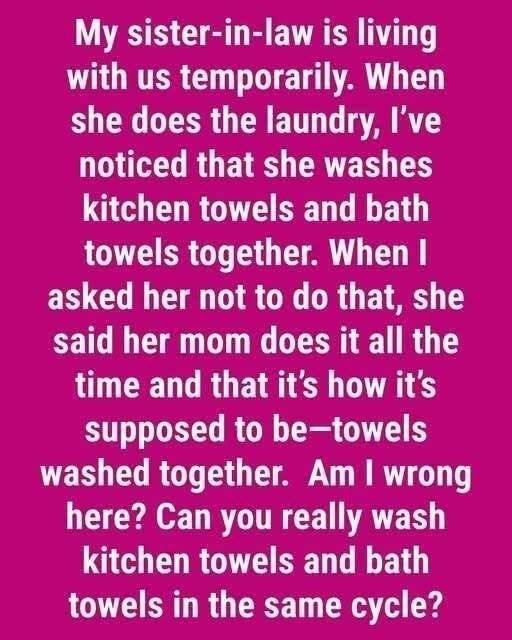
The short answer is: Technically, yes, you can wash them together, but from a hygiene, efficiency, and textile-care standpoint, it is highly recommended that you keep them separate.
While throwing everything into one load might save time and water in the short term, mixing kitchen towels with bath towels can lead to cross-contamination, ruined fabrics, and towels that don’t get fully clean.
Here is a breakdown of why you should wash them separately, and how to do it correctly if you absolutely must combine them.
🦠 Reason 1: The “Yuck Factor” and Cross-Contamination
The primary reason to separate them is hygiene.
-
Bath Towels: These absorb dead skin cells, body oils, soap residue, and moisture. The bathroom environment is warm and humid, making bath towels a breeding ground for bacteria and mildew if not dried quickly.
-
Kitchen Towels: These are exposed to raw meat juices (like salmonella or E. coli), cleaning chemicals, grease, and food particles.
If you wash them together, the heavy bacterial load from the kitchen can transfer onto the bath towels you use to dry your face and body. Furthermore, the greasy food residue from kitchen towels can coat the fibers of your bath towels, making them feel slimy and less absorbent over time.
🧵 Reason 2: Fabric Type and Lint
Kitchen towels and bath towels are usually made of entirely different materials, which require different care.
-
Bath Towels: Usually made of thick, plush cotton terry cloth. They produce a massive amount of lint.
-
Kitchen Towels: Often made of flat-woven cotton, flour sack material, or microfiber.
If you wash them together, the lint from your bath towels will pill and cling all over your kitchen towels and microfiber cloths. Additionally, microfiber should never be washed with cotton, as the cotton lint ruins the electrostatic charge of the microfiber that allows it to pick up dust and grime.
🧪 Reason 3: Different Water Temperatures and Detergents
To be properly sanitized, these towels need different treatments:
-
Kitchen Towels: Because they carry foodborne pathogens and grease, they need the harshest treatment: hot water, a heavy-duty detergent (like Tide or Persil), and an oxygen-based bleach (like OxiClean) to cut through grease and kill bacteria.
-
Bath Towels: While they should also be washed in warm or hot water to kill body bacteria, they require a milder detergent. Heavy-duty detergents and bleach can strip the natural oils from the cotton, making bath towels stiff, scratchy, and less absorbent. Bath towels also benefit from a vinegar rinse to remove soap buildup, which doesn’t mix well with heavy kitchen grime.
✅ The Golden Rules for Washing Kitchen Towels
To keep your kitchen towels safe and effective:
-
Separate heavily soiled towels: The towel you used to wipe up raw chicken juice should not be washed with the towel you use to dry clean dishes.
-
Wash frequently: Kitchen towels should be washed every 1 to 3 days. If they smell even slightly sour, bacteria are already multiplying.
-
Use the Sanitize cycle: If your washer has a “Sanitize” or “Steam” setting, use it. The water needs to reach at least 140°F (60°C) to kill foodborne pathogens.
-
Skip the fabric softener: Never use dryer sheets or liquid fabric softener on kitchen towels. It leaves a waxy coating that makes them water-repellent and traps bacteria in the fibers.
-
Let them dry completely: Never fold a kitchen towel that is even slightly damp. Mildew grows rapidly.
✅ The Golden Rules for Washing Bath Towels
To keep them fluffy and fresh:
-
Wash every 3 to 4 uses: If a bath towel doesn’t dry completely between uses, it will develop a musty smell and harbor bacteria.
-
Use half the detergent: Using too much detergent leaves residue in the terry cloth loops. This is actually the #1 reason bath towels become stiff and scratchy.
-
Use Vinegar instead of softener: Add ½ to 1 cup of white distilled vinegar to the rinse cycle. It strips away soap residue and body oils, leaving towels fluffy and odor-free without coating the fibers.
-
Shake them out: Before putting them in the dryer, give them a hard shake to fluff up the loops, which helps them dry faster and stay soft.
⚠️ If You Absolutely Must Wash Them Together
If you live in an apartment with limited laundry access, are on vacation, or simply want to save water and must combine them, follow these strict rules to avoid ruining your laundry:
-
Sort by Use, Not Just Color: Do not mix heavily soiled kitchen towels (used for raw meat or heavy grease) with body towels. Only mix kitchen towels used for drying clean hands or clean dishes.
-
Pre-treat the Kitchen Towels: Spray heavily soiled kitchen towels with a stain remover or soak them in a sink with hot water and a little dish soap to break up the grease before putting them in the washer.
-
Use the Hottest Water Setting: You must compromise on the bath towels’ softness to ensure sanitation. Use the hot water setting.
-
Use Heavy-Duty Detergent: Use a strong detergent like Tide Hygienic Clean to cut through the food oils.
-
Skip the Dryer Sheets: As mentioned, fabric softener ruins the absorbency of both types of towels. Use wool dryer balls instead to combat static.
-
Sanitize the Machine: Once the mixed load is done, run an empty cycle with bleach or a washing machine cleaner to sanitize the drum before you wash your regular clothes.
The Verdict: For the sake of your health and the lifespan of your linens, give kitchen towels and bath towels their own separate laundry days. Your bath towels will stay fluffier, your kitchen towels will get cleaner, and you won’t risk wiping your face with a towel that brushed up against last night’s raw chicken.