
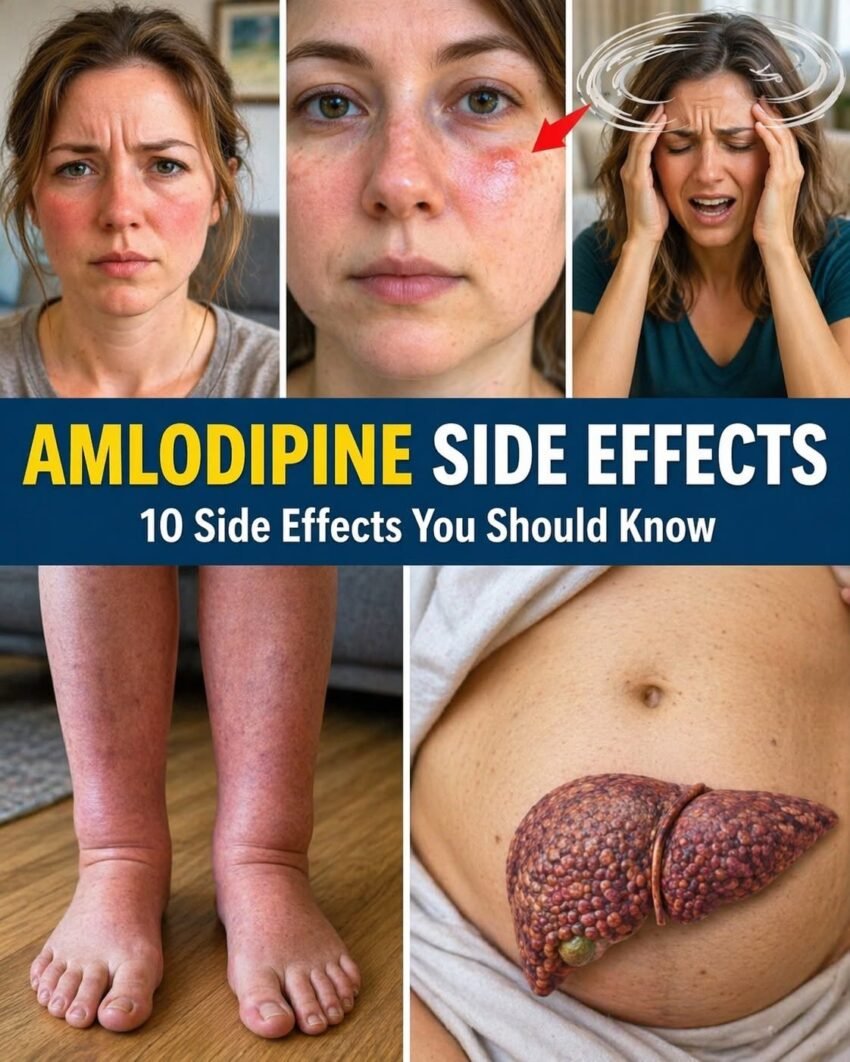
Amlodipine (brand name Norvasc) is a widely prescribed calcium channel blocker used to treat high blood pressure (hypertension) and chest pain (angina). It works by relaxing and widening the blood vessels, making it easier for the heart to pump.
For most people, amlodipine is highly effective and well-tolerated. However, because it directly affects the circulatory system, it can cause some distinct side effects. While some of these are merely annoying, a few should never be ignored because they can indicate a serious reaction or a complication of your blood pressure.
Here is a breakdown of the amlodipine side effects you should not ignore today, followed by the more common (but manageable) ones.
🚨 Serious Side Effects: Do Not Ignore These (Seek Immediate Medical Help)
If you experience any of the following, you should contact your doctor or seek emergency medical care immediately:
1. Severe Dizziness or Fainting (Syncope)
Because amlodipine lowers blood pressure, it can sometimes lower it too much. If you stand up and feel like you are about to black out, or if you actually faint, your blood pressure may be dropping dangerously low.
2. Worsening Chest Pain or a Heart Attack
In rare cases, especially when first starting the medication or increasing the dose, amlodipine can cause a sudden drop in blood pressure that triggers a reflex increase in heart rate. This can paradoxically worsen angina (chest pain) or, in very rare cases, precipitate a heart attack. Never ignore crushing chest pain, pain radiating to the jaw/arm, or shortness of breath.
3. Rapid, Pounding, or Irregular Heartbeat (Arrhythmias)
While amlodipine is often used to help certain heart conditions, some patients may experience palpitations or a racing heart. If your heart feels like it is fluttering, skipping beats, or racing uncontrollably, it requires immediate medical evaluation.
4. Severe Allergic Reaction (Anaphylaxis)
Though rare, any medication can cause a severe allergy. Do not ignore swelling of the face, lips, tongue, or throat, difficulty breathing, or severe hives.
5. Yellowing of the Skin or Eyes (Jaundice)
This is a sign of liver toxicity or inflammation. While very rare with amlodipine, if your skin takes on a yellow tint, your urine turns dark, or you experience severe upper abdominal pain, stop the medication and seek medical help immediately.
⚠️ Distressing Side Effects You Should Discuss with Your Doctor Today
These symptoms are rarely life-threatening, but they can severely impact your quality of life, damage your health if left unchecked, or require a simple adjustment to your prescription.
6. Severe Swelling (Edema) in the Ankles, Feet, or Legs
This is the most common reason people stop taking amlodipine. Because the medication dilates blood vessels, fluid can leak into the surrounding tissues due to gravity. If your socks are leaving deep marks, your shoes don’t fit, or your legs feel heavy and tight, do not ignore it. Severe swelling can lead to skin breakdown and limits mobility. Your doctor can often fix this by lowering your dose or adding another blood pressure medication.
7. Profound Fatigue or Lethargy
Feeling a little tired when starting a blood pressure medication is normal. But if you are so exhausted you cannot perform your daily tasks, your body may not be tolerating the dose.
8. Shortness of Breath
Ironically, while amlodipine is used to treat some forms of heart failure, the swelling (edema) mentioned above can sometimes accumulate in the lungs (pulmonary edema), making it hard to breathe. If you find yourself getting winded just walking to the mailbox or lying flat in bed, call your doctor immediately.
9. Severe Gum Overgrowth (Gingival Hyperplasia)
A lesser-known side effect of amlodipine is the swelling and overgrowth of the gums. If your gums are growing over your teeth, becoming very red, or bleeding easily, it requires a dental visit and a conversation with your prescribing doctor. It is reversible if caught early, but if ignored, it can require oral surgery.
10. Flushing and Feeling Overheated
Because amlodipine opens up blood vessels, it can cause a hot, red flush on your face and neck, similar to a hot flash. If this is accompanied by dizziness, it might mean your blood pressure is dropping too quickly.
🌡️ Common, Non-Emergency Side Effects (Usually Temporary)
These are side effects you should mention at your next routine appointment, but they usually do not require an emergency call unless they become severe:
-
Mild Headache: Common when first starting the drug as your blood vessels adjust to the new pressure.
-
Mild Nausea or Stomach Pain: Often resolves after a week or two.
-
Drowsiness: Usually fades as your body adjusts.
-
Flushing: A feeling of warmth in the face without severe dizziness.
What You Should Do Today
1. Check Your Ankles
Take a look at your feet and ankles right now. Press your thumb into your shin or ankle for five seconds. If it leaves a deep dent (pitting edema), call your doctor today.
2. Monitor Your Blood Pressure and Heart Rate
If you have a home blood pressure cuff, take a reading. A blood pressure reading that is consistently below 100/60 (or symptoms of dizziness) means your dose might be too high. Check your pulse; if it is unusually fast or very irregular, make the call.
3. Do Not Stop Abruptly
If you are experiencing a non-emergency side effect like ankle swelling or flushing, do not stop taking amlodipine cold turkey today. Stopping blood pressure medication suddenly can cause a dangerous “rebound” spike in your blood pressure.
4. Call Your Prescribing Doctor or Pharmacist
A quick phone call is often all it takes. Tell them your symptoms. Pharmacists are an excellent resource and can tell you if what you are experiencing is normal or if you need to be seen right away.