
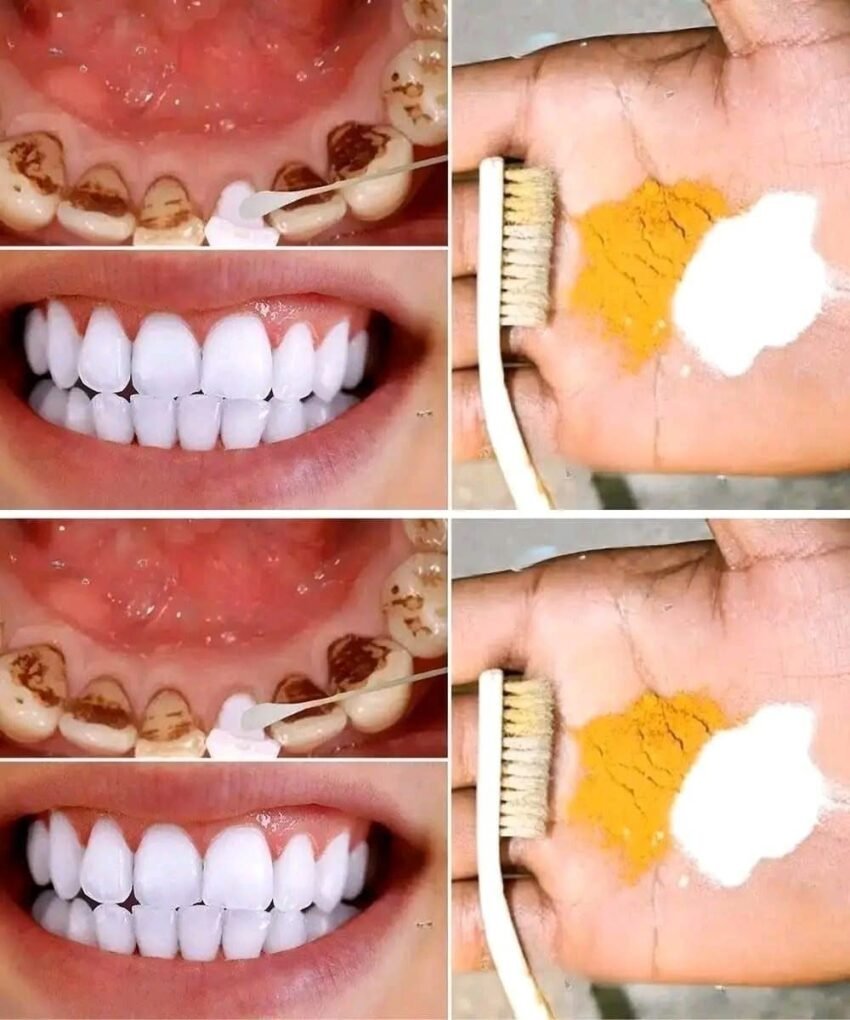
Turmeric and baking soda have both become viral sensations in the world of DIY natural beauty, and teeth whitening is no exception. But do they actually work together to whiten teeth, or is this a trend that could land you in the dentist’s chair?
Here is the honest, science-backed breakdown of using turmeric and baking soda for at-home teeth whitening, including how to do it safely if you choose to try it.
The Science: Can Turmeric and Baking Soda Whiten Teeth?
To understand this combo, you have to look at what each ingredient does:
-
Baking Soda (Sodium Bicarbonate): This is the workhorse of the duo. It is a mild abrasive that physically scrubs away surface stains (from coffee, tea, wine, and smoking). It is also alkaline, which helps neutralize the acids in your mouth that erode enamel. It is a proven, dentist-approved ingredient for stain removal.
-
Turmeric (Curcumin): Despite its intensely yellow-orange color, turmeric is actually used in some cultures as a natural tooth polish. However, it does not bleach the teeth. There is zero scientific evidence that turmeric chemically whitens teeth. In fact, dentists warn that because turmeric is highly pigmented, it can temporarily stain dental work (like composite bonding or dentures) and may actually leave a yellow tint on natural teeth if not rinsed off thoroughly.
The Verdict: Baking soda is doing the real whitening work. The turmeric is mostly added for its anti-inflammatory benefits for the gums and as a health trend, but it does not contribute to whitening.
How to Use Turmeric and Baking Soda Safely
If you want to use this paste, the goal is to harness the gentle scrubbing power of the baking soda while avoiding the potential yellow staining of the turmeric.
The Basic Recipe:
-
What you need: 1 teaspoon of baking soda, ½ teaspoon of turmeric powder, and a few drops of water or coconut oil to form a paste.
-
How to do it:
-
Mix the ingredients in a small bowl until it forms a thick, gritty paste.
-
Dip a soft-bristled toothbrush into the paste.
-
Gently brush your teeth in small, circular motions for 2 minutes. Do not scrub aggressively; let the baking soda do the work.
-
Spit, and then rinse your mouth vigorously with water 4 to 5 times.
-
Follow up immediately by brushing your teeth with your regular fluoride toothpaste to remove any residual turmeric from the surface of your teeth and protect your enamel.
-
How often? Do not do this daily. Baking soda is abrasive. Use this paste once or twice a week at most.
🚨 Critical Warnings Before You Try This Today
1. The Turmeric Can Stain Worse Than the Coffee Did
Many people who try this trend panic because their teeth look yellower immediately after. Natural teeth are porous, and turmeric powder is microscopic. If you do not brush with regular toothpaste afterward, your teeth (and your toothbrush, and your sink) will be bright yellow. It is incredibly messy.
2. High Abrasiveness Damages Enamel
Baking soda has a Relative Dentin Abrasivity (RDA) score. While baking soda alone is actually lower on the abrasion scale than many commercial whitening toothpastes, mixing it into a gritty paste and scrubbing too hard or too often can wear away your enamel. Once enamel is gone, it never grows back, leading to permanently yellower teeth (as the yellow dentin underneath shows through) and severe sensitivity.
3. Never Use This if You Have Braces, Bonding, or Crowns
Turmeric will not permanently stain natural teeth if cleaned properly, but it can permanently discolor the materials used in composite fillings, dental bonding, veneers, and clear braces brackets.
4. It Doesn’t Change the Inside of the Tooth
If your teeth are deeply stained from medication (like tetracycline) or are naturally a darker shade, this paste will do nothing. It only removes surface debris.
The Better Alternative for DIY Whitening
If you want to use baking soda to whiten your teeth, skip the turmeric.
-
The Dentist-Approved Method: Simply dip a damp toothbrush in a little baking soda and brush gently, or buy a commercial ADA-approved toothpaste that lists baking soda as an ingredient (like Arm & Hammer).
-
For Real Whitening: If you want to actually change the color of your teeth, you need hydrogen peroxide or carbamide peroxide (found in white strips or custom dentist trays). Natural remedies cannot penetrate the enamel to bleach the tooth structure.
The Bottom Line: While turmeric has amazing health benefits for cooking and anti-inflammation, adding it to baking soda for teeth whitening is more of a messy gimmick than a miracle cure. If you want to protect your enamel and brighten your smile, stick to a soft toothbrush, fluoride toothpaste, and proper dental cleanings.