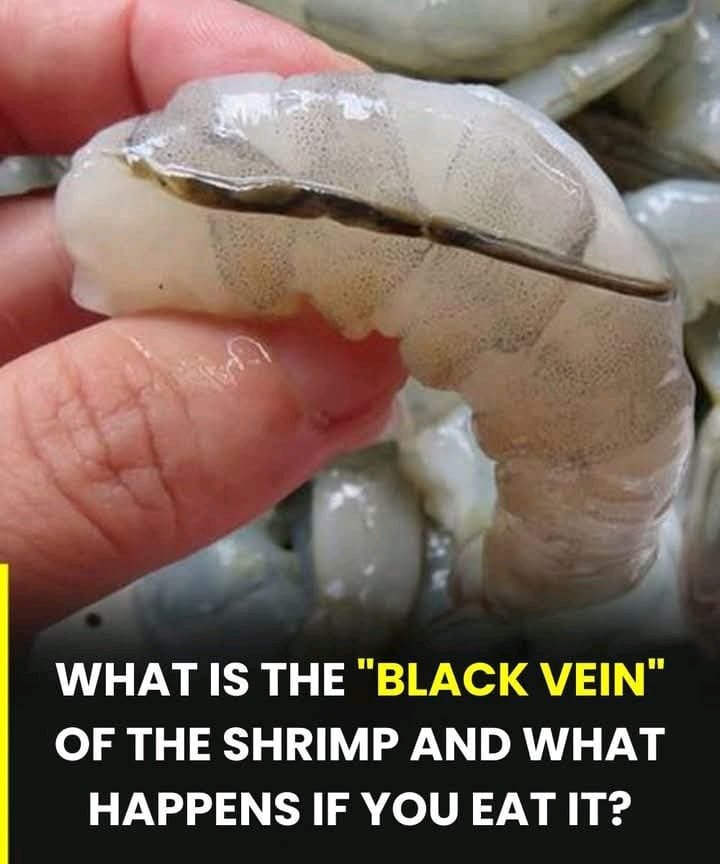
The “Vein” of the Shrimp: The Culinary Detail That Few Know and Many Discuss
Walk into any kitchen—home or professional—and you will find a fierce divide. Half the cooks insist that “deveining” shrimp is mandatory hygiene. The other half claims it is an aesthetic obsession with no real health benefit. Both sides are partially correct, and both sides are missing the full picture.
Here is what actually lives inside that dark line, why it matters, and when you can safely ignore it.
1. It Is Not a Vein. It Is an Intestine.
The misconception: Most people believe the dark thread running along the back of a shrimp is a blood vessel or a nerve cord.
The reality: It is the digestive tract. Specifically, it is the midgut.
What is inside: At the moment the shrimp was caught and killed, this tract contained whatever the shrimp last ate. Shrimp are bottom feeders and detritivores. Their diet consists of plankton, algae, sand, and—unfortunately—the organic debris floating in the water column.
The translation: You are not removing a vein. You are removing the shrimp’s colon, often still filled with its last meal.
2. The “White Vein” vs. The “Black Vein”
The black vein: This is the sand vein. It is dark, prominent, and contains grit and partially digested material. It is visually unappealing and can contain residual sediment.
The white vein: Sometimes you will see a pale, translucent or white thread. This is not feces. This is actually the shrimp’s nervous system or connective tissue. It is harmless, contains no waste, and is nearly invisible when cooked.
The rule: Black vein = remove. White vein = ignore.
3. The Health Risk: Overstated but Not Zero
The official stance: The USDA and FDA do not classify the shrimp vein as a food safety hazard if the shrimp is fully cooked.
The logic: Any pathogenic bacteria present in the digestive tract will be killed at cooking temperatures (145°F / 63°C internal).
The exception: If you are eating raw or semi-raw shrimp (ceviche, amaebi sushi, shrimp sashimi), the vein must be removed. Consuming raw digestive contents from a bottom feeder is a genuine vector for bacterial infection and parasites.
The texture issue: Even when cooked, the vein can retain a gritty, sandy texture. It is not necessarily dangerous, but it is unpleasant.
4. Why Some Chefs Never Devein
There is a persistent myth that restaurants never bother deveining shrimp because it is “all protein.”
The truth: High-end restaurants do devein, meticulously. However:
-
Small shrimp (51/60 count or smaller): The vein is often so thin and empty that it collapses during cooking and becomes undetectable. Many chefs skip it for small shrimp because the act of cutting into the shrimp damages the meat more than leaving the vein.
-
Large shrimp (16/20 count or jumbo): The vein is thick, visible, and often gritty. Reputable kitchens always remove it.
The cost factor: Deveining is labor-intensive. Some budget operations skip it to save time. This is not a culinary preference; it is a cost-cutting measure.
5. The “Mud Line” Myth
Some fishermen and seasoned cooks refer to the vein as the “mud line.”
The claim: Wild shrimp have darker, dirtier veins because they eat natural forage, while farmed shrimp have cleaner, smaller veins because they eat pelletized feed.
The reality: This is partially true. Farmed shrimp are often fed formulated diets, and their digestive tracts can appear lighter or less filled. However, farmed shrimp are also raised in ponds with sediment. A clean vein is not a guarantee of quality; it is a guarantee of recent feeding schedules.
6. How to Remove It Properly (Without Wasting Meat)
Most home cooks destroy the shrimp when deveining.
The correct method:
-
Do not butterfly: You do not need to cut deep. You only need to score the surface.
-
Shallow score: Run the tip of a paring knife along the back, just deep enough to expose the tract.
-
Lift and pull: Use the knife tip to lift the vein and pull it out in one piece. Alternatively, use a specialized deveining tool or a wooden pick.
-
Rinse quickly: A fast rinse under cold water removes any loosened grit. Do not soak; shrimp absorb water and become mushy.
The alternative: For peeled shrimp, you can sometimes catch the vein with the tip of the peeler and pull it out as you remove the shell.
7. The Tail: A Separate Debate
While discussing shrimp anatomy, the tail (telson) deserves mention.
The etiquette: In Western fine dining, leaving the tail on is considered attractive plating. The diner is expected to hold the tail.
The practicality: The tail contains no meat and no flavor. Leaving it on adds nothing but visual appeal and a handle.
The shortcut: If you are cooking for a casual meal or adding shrimp to a pasta or stir-fry, remove the tails before cooking. It saves your guests the trouble of digging through sauce to extract a shell fragment.
Summary: To Devein or Not to Devein?
| Scenario | Recommendation |
|---|---|
| Large shrimp, wild-caught, visible dark line | Always devein. Grit is guaranteed. |
| Small shrimp, salad/shrimp cocktail | Optional. Vein likely unnoticeable. |
| Raw shrimp preparation (sushi, ceviche) | Mandatory devein. Health risk. |
| You are serving guests | Devein. Visual appeal matters. |
| You are cooking for texture/texture-sensitive eaters | Devein. The grit is off-putting. |
The Final Takeaway
The shrimp “vein” is not toxic. It is not blood. It is the intestinal tract, and it is generally safe to eat when cooked. However, “safe” and “appetizing” are not the same thing. Removing the vein is an act of respect for your ingredient and your diners—not because it will make you sick, but because you are removing what was, moments ago, undigested sediment from the ocean floor.