
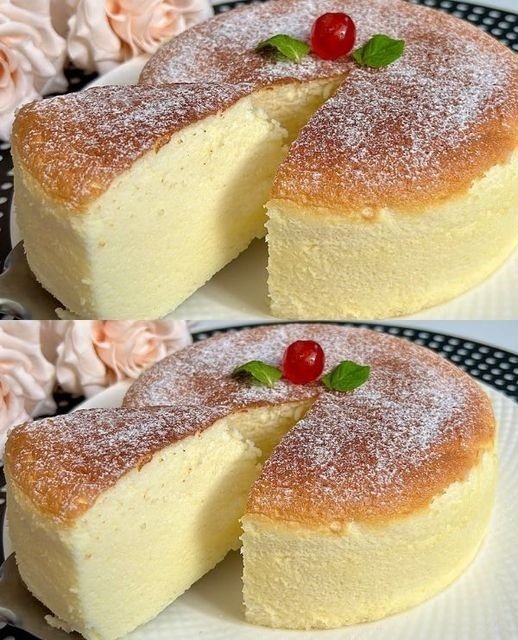
The Easiest Flourless Cake Recipe You’ll Ever Make
There is a specific anxiety that comes with baking without flour. It feels like tightrope walking without a net. Flour provides structure, familiarity, and forgiveness. Remove it, and suddenly the egg is doing all the work.
But here is the secret: Flourless cakes are not harder. They are just different. And this particular recipe—using natural yogurt, cornstarch, and a hot water bath—is arguably easier than a standard sponge. It requires no stand mixer gymnastics, no separating and folding anxiety, and no specialty ingredients.
This is the cake you make when you want something elegant, gluten-free, and impossible to screw up.
What This Cake Actually Is
This is not a dense, fudgy flourless chocolate cake. This is a yogurt soufflé cake—a hybrid between a cheesecake and a Japanese sponge. It relies on:
-
Cornstarch: Provides just enough structure to hold the crumb without activating gluten.
-
Natural yogurt: Lends acidity, tenderness, and moisture. It also reacts with the baking powder for lift.
-
Egg whites whipped separately: The engine of the cake. This is what gives it height and an almost cloud-like texture.
-
A water bath: The insurance policy. Gentle, even steam heat prevents cracking and keeps the custard-like center creamy.
The result is a cake that is simultaneously light and rich, stable but delicate, and entirely flour-free.
Why This Recipe Works (The Science in 30 Seconds)
-
Cornstarch instead of flour: Starch gelatinizes when heated, creating a tender crumb. Unlike flour, it adds no toughness and no gluten.
-
Yogurt acidity: Tenderizes the egg proteins so the cake does not turn rubbery.
-
Boiling water bath: Surrounds the cake with moist, steady heat. The oven temperature stays even, and the cake rises slowly without dome-cracking.
-
Separated eggs: Whipped whites give volume; yolks give richness. This is the same principle as a chiffon cake, but without the flour to weigh it down.
Before You Start: The Critical Setup
This recipe has one non-negotiable requirement: You must bake this cake in a water bath.
If you skip this step, you will have a thin, dry, cracked disc. If you use a water bath, you will have a tall, creamy, restaurant-quality cake.
How to set it up:
-
Use a springform pan (7–8 inches / 18–20 cm).
-
Wrap the OUTSIDE of the pan tightly in heavy-duty aluminum foil. Use two layers. This prevents water from seeping into the seams.
-
Place the wrapped pan inside a larger roasting pan or baking dish.
-
Pour boiling water into the outer pan until it reaches halfway up the sides of the springform pan.
-
Carefully transfer the entire assembly to the oven.
Ingredient Notes (The Non-Negotiables)
| Ingredient | Why It Matters | Substitution? |
|---|---|---|
| Natural yogurt | Full-fat recommended. Greek yogurt works but produces a denser cake. | Plain whole-milk yogurt is best. Avoid flavored or sweetened. |
| Cornstarch | The only structural starch here. Do not swap for flour. | Potato starch or arrowroot may work but texture will differ. |
| Baking powder | Provides secondary lift. | Yes, but ensure it is gluten-free if needed. |
| Vanillin | Traditional European crystalline vanilla. | Vanilla extract (1 tsp) works perfectly. |
| Eggs | Large, room temperature. Cold eggs do not whip as high. | No substitute. |
The Method (Abbreviated Overview)
-
Yolk base: Whisk yolks, yogurt, 40g sugar, cornstarch, baking powder, salt, and vanillin until smooth.
-
Whites: Whip egg whites with 40g sugar to stiff peaks.
-
Fold: Gently fold whites into yolk base in three additions. Do not deflate.
-
Bath: Pour batter into prepared pan. Place in water bath.
-
Bake: 320°F (160°C) for 50–60 minutes. Surface should be golden and spring back.
-
Cool: Crucial step. Turn off oven, crack door, let cake cool slowly for 15 minutes. Then remove from water bath and cool completely on rack. It will deflate slightly—this is normal.
-
Dust: Powdered sugar just before serving.
The Mindset Shift
Flourless cakes do not behave like flour cakes. They will puff dramatically in the oven and settle as they cool. This is not failure; this is the nature of an egg-structured cake. Do not panic. Do not open the oven door during baking. Do not skip the slow cool-down.
If you follow the water bath and the gentle cooling, you will be rewarded with a cake that tastes like it came from a patisserie window—even though you made it in your home kitchen with yogurt and cornstarch and a pot of boiling water.
[Full step-by-step instructions would follow here, with timing, visual cues, and troubleshooting.]