Stop Throwing Them Away. Boil Eggshells and Say Goodbye To…
Every morning, millions of kitchens produce the same waste: eggshells. They crack, they scatter, and they are tossed directly into the trash. This is a reflex. It is also a mistake.
Boiling eggshells transforms them from kitchen scraps into one of the most versatile, nutrient-dense, and cost-free resources available to the home cook and gardener. Depending on how you use them, you can say goodbye to expensive garden fertilizers, bitter coffee, clogged drains, and even joint pain.
Here is what happens when you stop throwing shells away and start boiling them instead.
1. Say Goodbye to Wasted Calcium (Your Plants Will Thank You)
What happens: Eggshells are nearly pure calcium carbonate—the same compound found in limestone and antacid tablets.
The problem: Throwing shells in the trash sends that calcium to a landfill. Tossing them in the garden whole sends it to the squirrels.
The solution: Boil the shells.
The method:
-
Rinse 12–20 clean eggshells.
-
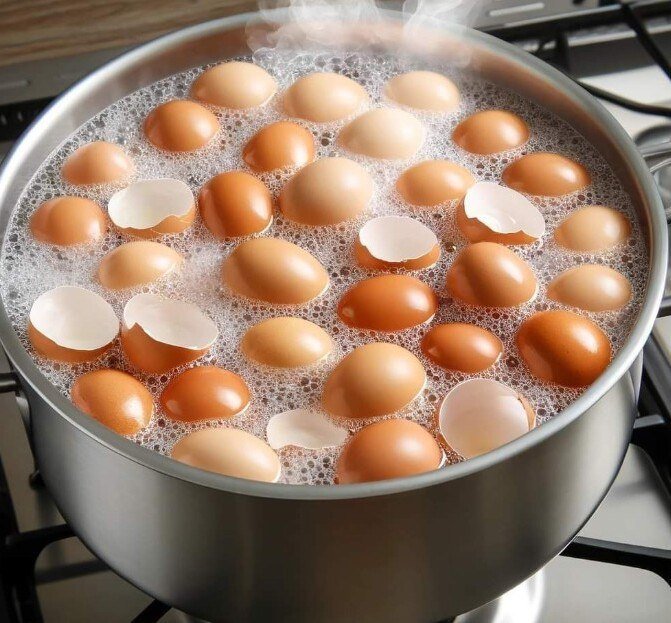
Add them to a large pot with 1 gallon (4 liters) of water.
-
Bring to a boil, then reduce heat and simmer for 10–15 minutes.
-
Let the water cool overnight. Strain out the shells.
What you made: Eggshell calcium water. This is a completely free, zero-waste liquid fertilizer.
What it fixes: Blossom end rot in tomatoes and peppers (caused by calcium deficiency). Weak cell walls in plants. Stunted root growth.
How to use: Water your plants with this calcium-infused water once every two weeks. The calcium is water-soluble and immediately available to roots—unlike crushed shells, which take years to break down.
2. Say Goodbye to Bitter Coffee
What happens: Coffee is naturally acidic. Acidic coffee tastes sharp, bitter, and can upset sensitive stomachs.
The old trick: A pinch of salt. A dash of cinnamon.
The better trick: Washed, boiled eggshells.
The method:
-
Save and boil your eggshells as above. Air-dry them thoroughly.
-
Add a few small, clean fragments to your coffee grounds before brewing.
-
Brew as normal.
The science: The alkaline calcium carbonate in the shell neutralizes some of the coffee’s acidity. It does not make the coffee taste like eggs. It makes the coffee smoother, rounder, and less bitter.
The bonus: Used shells from brewing can then go straight to the compost.
3. Say Goodbye to Expensive Calcium Supplements (For Chickens and Dogs)
What happens: Laying hens require massive amounts of calcium to produce thick-shelled eggs. Without it, they lay rubbery eggs or deplete calcium from their own bones.
The expensive solution: Oyster shell supplements sold at farm supply stores.
The free solution: Boiled, dried, crushed eggshells.
The method:
-
Boil shells to sterilize them.
-
Bake at 250°F (120°C) for 10 minutes to dry completely.
-
Crush into small flakes (not powder).
-
Offer free-choice to your hens.
For dogs: A fine powder of boiled, baked eggshells provides a natural, highly bioavailable calcium source for homemade dog food. Dosage: Approximately 1/2 teaspoon per pound of fresh food. Consult your veterinarian.
4. Say Goodbye to Drain Clogs (The Natural Abrasive)
What happens: Kitchen sinks accumulate grease, soap scum, and food sludge.
The chemical solution: Harsh drain cleaners that damage pipes and harm aquatic life.
The mechanical solution: Boiled eggshells.
The method:
-
Save a handful of boiled, cooled shells.
-
Crush them coarsely.
-
Run hot tap water.
-
Pour the crushed shells down the drain.
-
Run the disposal (if applicable) or flush vigorously with more hot water.
Why it works: The shells act as a mild abrasive, scouring the inside of pipes and disposal blades. They trap and push out softer sludge. They also deodorize naturally.
The warning: Do not do this with raw, unboiled shells. Raw shells carry salmonella risk. Boiling sterilizes them.
5. Say Goodbye to Household Abrasive Cleaners
What happens: You need to scrub a stubborn pot, a stained mug, or a greasy stovetop.
The store-bought solution: Barkeeper’s Friend, Soft Scrub, or powdered cleansers.
The homemade solution: Powdered eggshell.
The method:
-
Boil shells. Dry them thoroughly in a low oven.
-
Grind them in a clean coffee grinder until they become a fine powder.
-
Mix with a little dish soap and water to form a paste.
What it does: The microscopic sharp edges of the ground shell cut through baked-on grease without scratching glass, ceramic, or stainless steel—provided the powder is fine enough.
Do not use on: Non-stick coatings. The abrasion will destroy the surface.
6. Say Goodbye to Garden Slugs (Without Poison)
What happens: Slugs and snails devour tender seedlings overnight.
The common advice: Crushed eggshells create a sharp barrier.
The problem: Raw shells do not work. They are too large, too dull, and slugs simply glide over them.
The solution: Boiled, dried, and finely crushed shells do not work either—for barriers.
Wait. So how do eggshells help with slugs?
They do not. This is a persistent garden myth. However, eggshell tea (the calcium water from step 1) strengthens plant cell walls, making leaves tougher and less appealing to chewing pests. Stronger plants survive slug attacks. Weaker plants do not.
7. Say Goodbye to Facial Scrub Chemicals
What happens: Microplastic beads have been banned in facial scrubs. Alternatives are expensive.
The DIY solution: Finely powdered eggshell.
The method:
-
Sterilize shells by boiling and baking.
-
Grind to an ultra-fine powder (think confectioners’ sugar texture).
-
Mix with coconut oil or aloe vera to form a paste.
The caution: Do not use coarse grit on your face. The skin on your face is thin. Only use powder that dissolves into a smooth paste. Test on your hand first. If it feels scratchy, grind it again.
Summary: What to Do With Your Next Eggshell
| Step | Action | Benefit |
|---|---|---|
| 1 | Rinse shell immediately | Prevents odor and bacteria |
| 2 | Boil for 10 minutes | Sterilizes, extracts calcium |
| 3 | Save the water | Liquid plant fertilizer |
| 4 | Dry the shells | Prepares for storage |
| 5 | Crush or grind | Garden grit, pet supplement, cleaner |
The Final Takeaway
The reflex to throw away eggshells is a relic of an era when resources were cheap and consequences were invisible. Boiling them unlocks a cascade of second uses—from smoother coffee to stronger tomatoes, from cleaner drains to healthier chickens.
The only thing you are saying goodbye to is waste.