
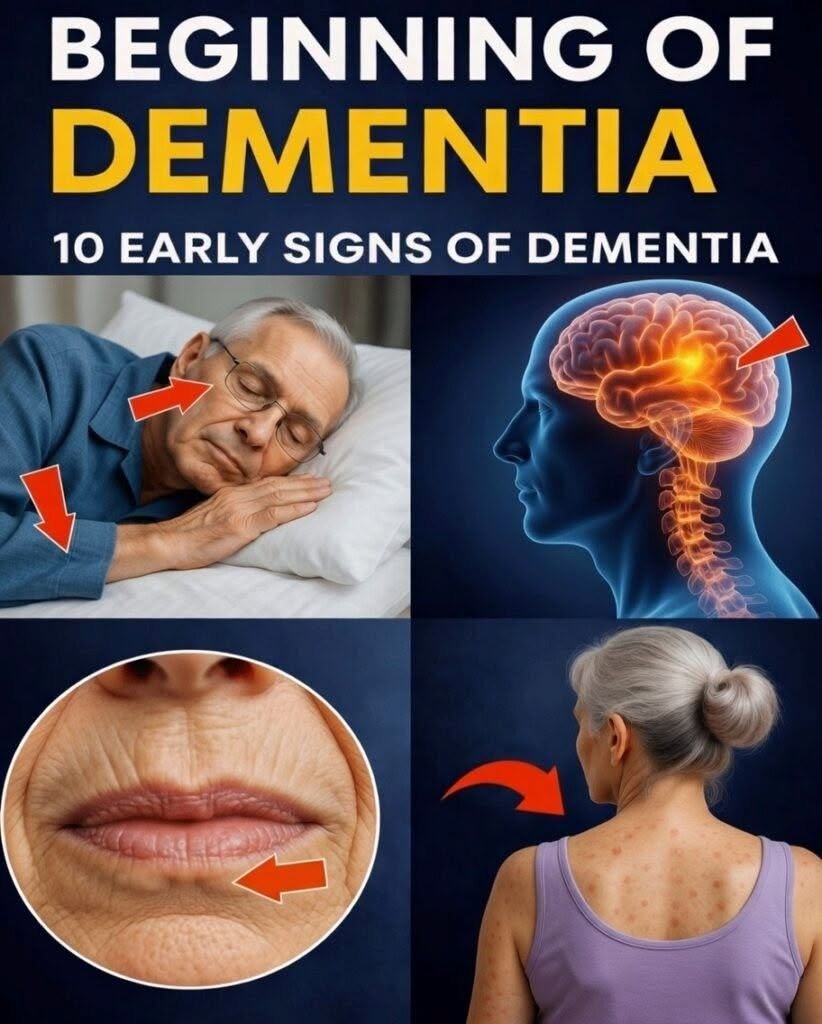
10 Early Signs of Dementia You Should Recognize and Simple Habits to Support Your Brain Health
Dementia is not a single disease but an umbrella term for conditions—most commonly Alzheimer’s—that impair memory, thinking, and daily functioning. Recognizing early signs can open the door to evaluation, treatment, and planning. Here are 10 early warning signs, followed by everyday habits that support brain health.
10 Early Signs to Watch For
-
Memory loss that disrupts daily life — Forgetting recently learned information, repeating questions, or relying on reminders more than before.
-
Difficulty with planning or problem-solving — Trouble following a familiar recipe, managing bills, or working with numbers.
-
Challenges with familiar tasks — Getting lost driving to a known place or forgetting how to use a household appliance.
-
Confusion with time or place — Losing track of dates, seasons, or where they are and how they got there.
-
Trouble understanding visual images and spatial relationships — Difficulty judging distance, reading, or recognizing their reflection.
-
New problems with words — Struggling to follow a conversation, finding the right word, or calling things by the wrong name.
-
Misplacing things and losing the ability to retrace steps — Putting items in unusual places and accusing others of stealing.
-
Decreased or poor judgment — Poor money decisions, neglecting hygiene, or falling for scams.
-
Withdrawal from work or social activities — Pulling away from hobbies, church, or family gatherings due to difficulty keeping up.
-
Changes in mood and personality — Confusion, suspicion, depression, fear, or anxiety in familiar situations.
Important: These signs are not a diagnosis. Many are also caused by treatable conditions—thyroid problems, vitamin B12 deficiency, depression, medication side effects, sleep apnea, or infections. See a doctor for a proper evaluation.
Simple Habits to Support Brain Health
Move your body
-
Aim for 150 minutes of moderate activity weekly (brisk walking, swimming, cycling).
-
Strength training 2x per week; balance work like tai chi or yoga helps too.
Feed your brain
-
Mediterranean or MIND-style eating: leafy greens, berries, nuts, olive oil, fish, whole grains, beans.
-
Limit ultra-processed foods, added sugar, and excess alcohol.
Protect your sleep
-
7–9 hours nightly; treat sleep apnea.
-
Keep a consistent sleep-wake schedule.
Stay socially connected
-
Regular time with friends, family, clubs, or volunteering is strongly protective.
Keep learning
-
New skills, languages, instruments, puzzles, or classes build cognitive reserve.
Manage heart health
-
Control blood pressure, blood sugar, and cholesterol.
-
Don’t smoke; limit alcohol.
Reduce stress and support mood
-
Mindfulness, prayer, hobbies, and therapy when needed.
-
Treat depression and anxiety—they affect cognition.
Stay organized and engaged
-
Routines, calendars, lists, and physical activity reduce cognitive load.
-
Hearing and vision checks—uncorrected sensory loss is a risk factor.
When to See a Doctor
-
Symptoms interfere with daily life.
-
Changes are noticed by family or friends.
-
Rapid worsening over weeks to months.
-
Accompanied by personality changes, falls, or hallucinations.
Bottom line: Early recognition allows for evaluation of reversible causes and better long-term planning. Meanwhile, the same habits that protect your heart also protect your brain—starting today, at any age.