
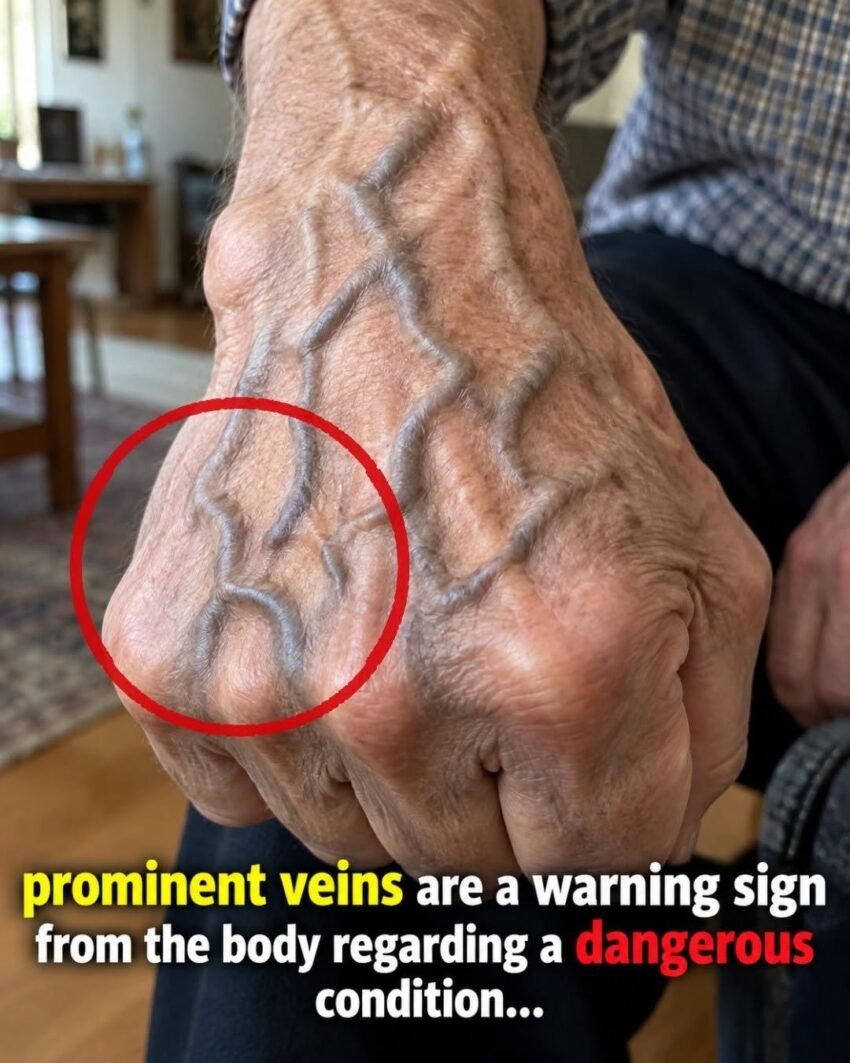
What’s Actually Happening
Visible blue veins after 60 are usually normal. They appear because:
-
Skin thins with age — the dermis loses collagen and elastin, making veins more visible
-
Subcutaneous fat decreases — less padding over the veins
-
Vein walls weaken — valves that prevent backflow become less effective
-
Blood pools — gravity and weaker vein walls cause veins to enlarge
The blue color is an optical effect — deoxygenated blood absorbs red light and reflects blue, so veins look blue through the skin.
When It’s Just Cosmetic
-
Spider veins (telangiectasia) — small, web-like, usually harmless
-
Varicose veins — bulging, twisted, often on legs; common and often genetic
-
Visible hand/forearm veins — very common in thinner, older adults
These are usually not dangerous on their own.
When It Is Worth Investigating
See a doctor if visible veins come with:
-
Swelling in the leg, ankle, or foot
-
Pain, heaviness, or throbbing in the legs
-
Skin changes — discoloration, itching, dryness, or ulcers near the ankle
-
A vein that becomes hard, hot, red, and tender → possible superficial thrombophlebitis
-
Sudden swelling in one leg → possible deep vein thrombosis (DVT) — a medical emergency
-
Chest pain or shortness of breath with leg swelling → seek emergency care immediately
-
Bleeding from a vein that won’t stop
What the Clickbait Gets Wrong
Headlines like “What Your Blood Flow Is Screaming” imply that visible veins are a hidden warning of impending disaster. In reality:
-
Most visible veins in older adults are benign and cosmetic
-
There’s no single “screaming” sign — circulation problems show up through clusters of symptoms, not one vein
-
The fear-based framing is designed to drive clicks, not inform
What Actually Helps Circulation
-
Movement — walking, ankle pumps, calf raises
-
Elevation — legs above heart level when resting
-
Compression stockings — if recommended by a doctor
-
Hydration and healthy weight
-
Not sitting or standing in one position for long periods
-
Quitting smoking
Bottom Line
Visible blue veins after 60 are usually a normal part of aging, not a medical alarm. They’re worth a doctor’s look if they’re painful, swollen, changing, or accompanied by skin or breathing symptoms.