
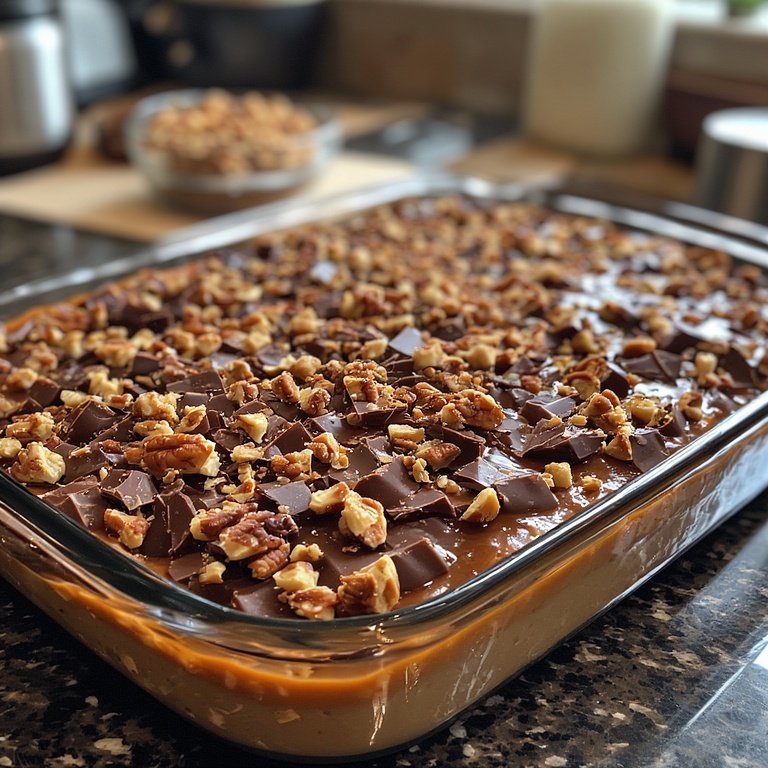
This is a recipe that understands the fundamental law of texture: crunch is not a suggestion, it is a requirement.
These bars are built in three distinct acts—a deep, buttery shortbread, a layer of chewy salted caramel, and a topcoat of chocolate that shatters when bitten. The “crunch” comes from two sources: the crisp base and the tempered snap of the chocolate cap.
Do not rush the chilling. Do not skip the salt.
Caramel Chocolate Crunch Bars
Shortbread • Salted Caramel • Dark Chocolate
Yield: 16 small bars or 9 generous squares
Pan: 8×8 inch square pan, lined with parchment (let the ends overhang—you will thank me later)
The Components
For the Shortbread Crunch Base:
-
1 ½ cups (180g) all-purpose flour
-
½ cup (100g) granulated sugar
-
¼ tsp salt
-
¾ cup (170g) unsalted butter, cold, cut into small cubes
-
1 tsp vanilla extract
For the Caramel Layer:
-
½ cup (115g) unsalted butter
-
½ cup (100g) granulated sugar
-
¼ cup (55g) dark brown sugar, packed
-
¼ cup (60ml) heavy cream
-
1 tbsp light corn syrup (or golden syrup)
-
1 tsp vanilla extract
-
½ tsp flaky sea salt (plus more for finishing)
For the Chocolate Top:
-
8 oz (225g) semi-sweet or dark chocolate (60–70%), finely chopped
-
1 tbsp coconut oil or unsalted butter (for shine and clean snap)
Method
1. The Shortbread Foundation
Preheat oven to 350°F (175°C) .
In a food processor, pulse the flour, sugar, and salt. Add the cold butter cubes and vanilla. Pulse until the mixture looks like damp sand and holds together when pinched. (No food processor? Rub cold butter into dry ingredients with your fingertips until it resembles coarse meal.)
Press, do not pour. Dump the mixture into your lined pan. Press it down firmly with your knuckles or the flat bottom of a measuring cup. You want it compact, not crumbly—this is the floor of the building.
Bake for 18–22 minutes, until the edges are golden and the center is pale but set. Do not overbake; it will continue to crisp as it cools. Set aside to cool slightly while you make the caramel.
2. The Caramel Layer
In a medium, heavy-bottomed saucepan, combine the butter, both sugars, heavy cream, and corn syrup.
Cook over medium heat, stirring constantly, until the butter melts and the sugar dissolves. Once it begins to bubble, stop stirring. Let it boil gently, undisturbed, for 5–7 minutes. Swirl the pan occasionally, but do not stir.
You are looking for amber. The color of old honey. The smell of toasted sugar.
Remove from heat. Stir in the vanilla and the ½ tsp flaky salt. The mixture will bubble violently—this is correct.
Pour immediately over the warm shortbread base. Tilt the pan to spread evenly. Do not touch it with a spatula; let it find its own level.
Refrigerate for at least 1 hour. The caramel must be completely firm before the chocolate goes on.
3. The Chocolate Crown
Once the caramel is cold and set, make the chocolate layer.
Melt the chopped chocolate and coconut oil (or butter) together in a double boiler or in 20-second bursts in the microwave, stirring between each burst. Stop when most of the chocolate is melted and a few lumps remain; stir until the residual heat melts them completely.
Let the chocolate cool slightly —it should be fluid but not hot. Hot chocolate will melt the caramel and ruin the clean strata.
Pour the chocolate over the cold caramel. Spread gently and quickly. Tilt the pan to level it.
While the chocolate is still wet, sprinkle a few extra grains of flaky sea salt over the surface. This is not garnish; it is the final harmonic.
Refrigerate again for 1–2 hours, until the chocolate is completely set and snappy.
4. The Cut
Lift the block out of the pan using the parchment overhang. Place on a cutting board.
Use a sharp, heavy knife. Warm the blade under hot water and wipe it dry between cuts. This prevents the chocolate from shattering.
Cut into 16 squares or 9 rectangles. Wipe the blade after each pass.
Three Technical Notes
1. On Corn Syrup:
It is not here to make the caramel sweet; it is here to prevent crystallization. If you refuse corn syrup on principle, substitute golden syrup or honey. The texture will be slightly softer, but the flavor will be excellent.
2. On Chocolate Choice:
Do not use milk chocolate. It is too soft and too sweet. The dark chocolate is the counterpoint to the rich caramel and buttery base. If you must, use a high-quality 55% dark, but 70% is the ideal.
3. On Storage:
These bars like the cold. Keep them in the refrigerator. They soften at room temperature. Serve them cold or cool—the crunch is loudest when the chocolate is cold.
A Final Observation
These bars are not humble. They do not pretend to be healthful or restrained. They are three layers of deliberate indulgence, and each layer requires patience. The shortbread must be pressed. The caramel must boil to the precise shade of amber. The chocolate must set until it snaps.
But when you bite through the glossy top, through the salted caramel, into the buttery crust, and you hear that crack—you will understand that some things are worth the waiting.
They keep, chilled, for a week. They will not last that long.