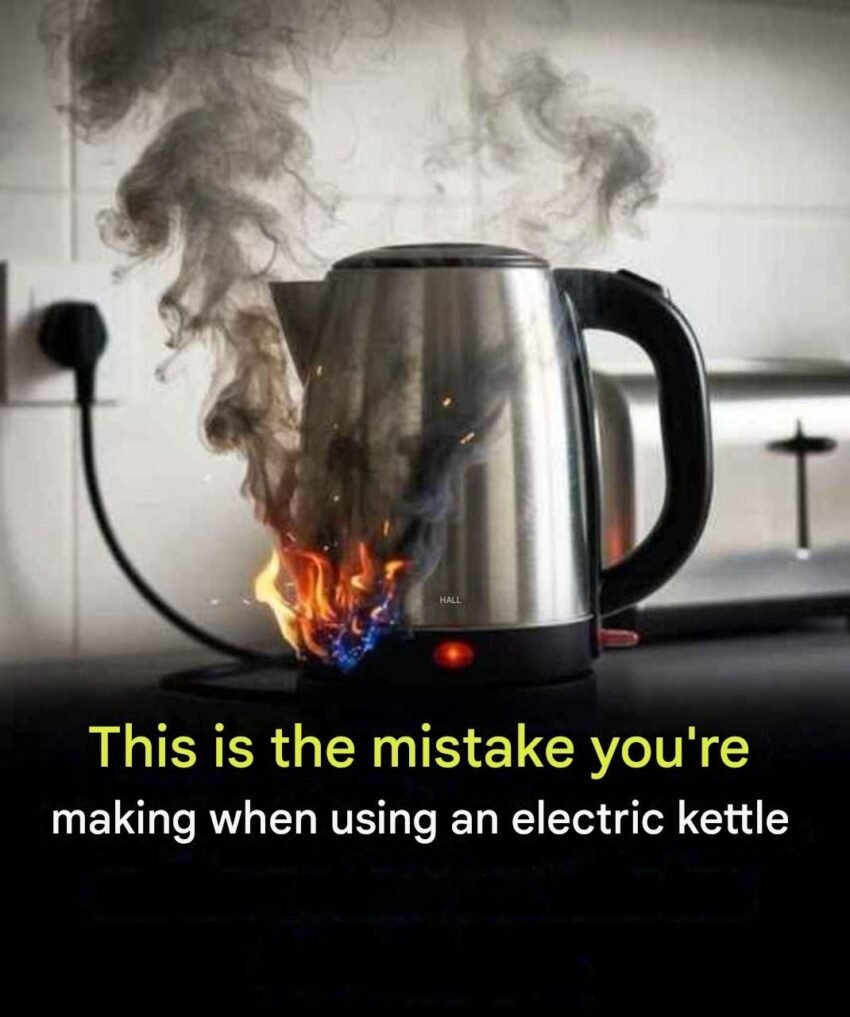
It seems harmless — boil water, make tea, repeat.
But under specific conditions, daily kettle use can pose low‑grade but real health risks — especially depending on what your kettle is made of and how you maintain it.
Here’s what’s actually worth knowing.
⚠️ 1. Plastic Kettles — Microplastics + Endocrine Disruptors
The risk:
Cheaper kettles often have plastic inner chambers or plastic parts touching boiling water.
Repeated heating causes microplastic shedding and leaching of BPA / BPS.
What happens:
-
One 2020 study found that polypropylene baby bottles (same plastic) release millions of microplastics per liter when heated.
-
Kettles with nylon or polycarbonate parts do the same.
Who should care:
-
Anyone using a clear plastic or old‑style electric kettle with plastic interior.
-
Especially critical for formula‑feeding parents boiling water in plastic kettles.
Fix:
Switch to stainless steel or glass kettle — no plastic in water path.
🪨 2. Limescale — Not Toxic, But Not Inert
The risk:
Hard water leaves calcium carbonate deposits.
Limescale itself isn’t poisonous — but:
-
It harbors bacteria — porous surface traps biofilms.
-
It lowers efficiency — kettle works harder, longer boil times.
-
It can shed flakes into your coffee/tea — gritty, not harmful, but unpleasant.
Rare risk:
If you have kidney disease or are prone to calcium oxalate stones, extremely hard water may contribute. Most people fine.
Fix:
Descale monthly with 1:1 white vinegar + water boil, soak 1 hour, rinse well.
Or citric acid descaler.
🔩 3. Cheap Stainless Steel — Nickel & Chromium Leaching
The risk:
Not all “stainless steel” is equal.
200‑series stainless (often from no‑name brands) can leach nickel and chromium into acidic or boiling water — especially first few uses.
Who should care:
People with nickel allergy (contact dermatitis from jewelry, belt buckles).
Also relevant if you boil lemon water, apple cider vinegar, or other acidic liquids in the kettle.
Fix:
Buy from reputable brands (KitchenAid, Breville, Hamilton Beach, Oster) — they use 304/18/8 stainless steel (food‑grade, low nickel migration).
🧊 4. Re‑boiling Water — “Stale” Taste, Not Danger
The myth:
“Re‑boiled water concentrates minerals/arsenic/nitrates.”
Reality:
For normal tap water, no health risk. Dissolved solids don’t become toxic.
Taste changes slightly (dissolved oxygen boils off, CO₂ absorbed from air = flat taste).
Exception:
If your water has high nitrate (well water, agricultural runoff), repeated boiling can concentrate nitrates — but you’d need to boil off half the volume, daily, for years. Unlikely for most.
🔥 5. Burns & Scalds — Most Common Real Danger
The actual #1 risk:
Kettles cause more scald injuries than almost any other kitchen appliance.
-
Tilting kettles with loose lids
-
Curly cords pulled by children
-
Steam burns when opening lid immediately after boil
Fix:
-
Cordless kettle with 360° base (no cord trailing)
-
Keep handles dry
-
Let sit 30 seconds before opening lid
🧠 Summary: Real vs. Hype
| Concern | Real Risk? | Who Should Care | Fix |
|---|---|---|---|
| Plastic kettles | ✅ Yes | Everyone (microplastics) | Switch to glass or stainless |
| Limescale bacteria | ⚠️ Low | Immunocompromised, elderly | Descale regularly |
| Nickel leaching | ⚠️ Low | Nickel allergy, cheap no‑name kettles | Buy 304 stainless kettle |
| Re‑boiled water toxins | ❌ No | Virtually no one | Ignore this myth |
| Scalds | ✅ Yes | Parents, clumsy pourers | Cordless, stable base |
✅ Bottom Line
-
Plastic kettles are the main legitimate concern.
-
Stainless steel or glass = fine.
-
Descale occasionally.
-
Don’t worry about re‑boiling.
-
Don’t buy $10 kettles from unknown brands.
Would you like specific brand/model recommendations for safe, plastic‑free kettles — or a descaling frequency guide by water hardness?