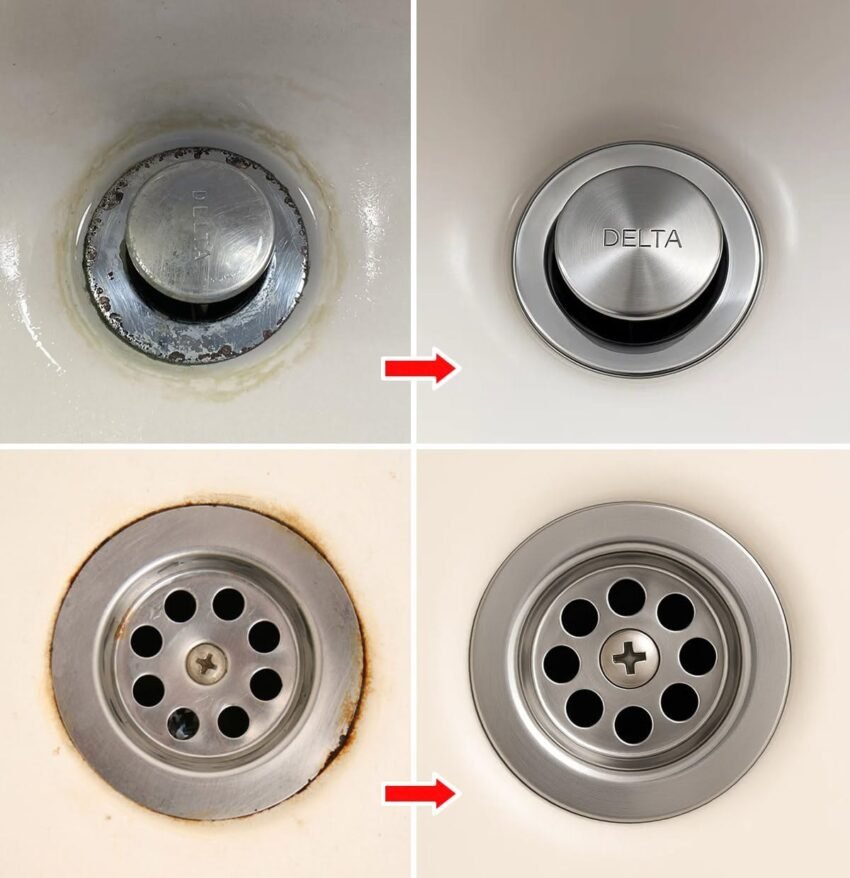
Those dark circles around faucets are usually a combination of hard water buildup, soap scum, mold, or corroded metal. The fix depends on what’s causing it. Here’s how to identify and remove it for good.
Step 1: Identify What You’re Dealing With
| Appearance | Likely Cause |
|---|---|
| Black, slimy, comes off when scrubbed | Mold or mildew |
| Hard, crusty, white or grayish buildup with dark staining in crevices | Hard water mineral deposits trapping dirt |
| Dark gray or black staining that won’t scrub off | Corrosion or oxidation of the faucet’s finish |
| Sticky, dark ring that feels waxy | Soap scum combined with body oils and dirt |
Step 2: The Solutions by Cause
For Mold & Mildew (Black, Slimy, Removable)
What to use: White vinegar or hydrogen peroxide.
-
Soak cotton balls or strips of paper towel in undiluted white vinegar or 3% hydrogen peroxide.
-
Press them firmly around the base of the faucet so they stay in contact with the dark ring.
-
Leave for 1-2 hours (vinegar) or 30 minutes (peroxide).
-
Remove, scrub with an old toothbrush, and rinse.
-
To prevent recurrence, dry around the faucet after every use—mold needs moisture to grow.
For Hard Water Mineral Deposits (Crusty, Whitish-Gray with Dark Staining)
What to use: White vinegar or a descaling cleaner.
-
Same cotton ball method as above with undiluted white vinegar.
-
For stubborn deposits, make a paste of baking soda and vinegar, apply to the ring, and let it fizz for 15 minutes before scrubbing.
-
For heavy buildup, use a commercial descaler like CLR or Lime-Away, following the product instructions carefully. Test on an inconspicuous spot first to ensure it won’t damage the finish.
For Soap Scum (Dark, Waxy, Sticky Ring)
What to use: Dish soap and baking soda, or a degreasing cleaner.
-
Make a thick paste of blue Dawn dish soap and baking soda.
-
Apply generously around the faucet base and scrub with a toothbrush or non-scratch scrub pad.
-
The dish soap cuts through the oils in soap scum, and the baking soda provides gentle abrasion.
-
Rinse thoroughly and dry.
For Corrosion or Damaged Finish (Dark Gray/Black, Won’t Scrub Off)
This is the toughest scenario. The dark ring isn’t something on the faucet—it’s the metal itself oxidizing because the protective finish has worn away. This is common with older chrome or nickel fixtures.
-
Try first: A metal polish like Flitz, Brasso, or Bar Keepers Friend Soft Cleanser. Apply with a soft cloth and buff gently. This can sometimes remove light oxidation.
-
If the finish is gone: The only permanent fix is replating or replacing the faucet. A temporary cosmetic cover-up is a faucet trim ring or escutcheon plate (sold at hardware stores), which sits around the base and hides the damage.
Step 3: The Prevention Routine
Once you’ve removed the dark ring, keep it from returning:
-
Wipe down the faucet base after every use. A dry microfiber cloth takes five seconds and prevents moisture, soap, and mineral buildup.
-
Apply a thin coat of car wax (yes, car wax) to the faucet base after cleaning. Buff it off. This creates a water-repellent barrier that lasts for weeks.
-
Fix any drips. A faucet that weeps even slightly keeps the base perpetually damp, inviting mold and mineral rings.
-
Ventilate the room. Run the bathroom fan during and after showers to reduce humidity.
Do you know what your faucet’s finish is (chrome, brushed nickel, oil-rubbed bronze)? That can help me recommend the safest specific cleaner to avoid damaging it.