
The Truth: Vinegar is a Restorer, Not a Bleach
Vinegar (acetic acid) cannot chemically bleach fabric the way chlorine or oxygen bleach can. What it does is reverse the number one enemy of bright whites: the dingy, grey-yellow film caused by leftover detergent, hard-water minerals, and fabric softener residue.
-
What it fixes: The dull, rough, slightly greyish film that makes white towels and sheets look permanently dirty. It strips away that coating, restoring fabrics to their original brightness.
-
What it doesn’t fix: Deep-set organic stains (grass, wine, sweat) or the natural yellowing of cotton from age. These require the oxidative power of an oxygen-based bleach, not an acid.
The “Milk-White” Method
To get that luminous, pure white, you need to use vinegar as part of a pre-treatment or rinse cycle, not as the main cleaner. Here is the practical, fabric-safe protocol.
You Will Need:
-
White distilled vinegar (not apple cider or wine vinegar)
-
Your regular good-quality detergent
-
(Optional but transformative for actual stain removal): An oxygen bleach like sodium percarbonate
Step 1: The Deep Strip (In the Wash Cycle)
-
Load your white laundry. Don’t overfill the machine; clothes need room to agitate so the vinegar can work its way through the fibres.
-
Add your normal amount of detergent to the dispenser.
-
Add 1/2 cup of white distilled vinegar directly into the fabric softener compartment, or into the drum during the initial rinse cycle. Never mix undiluted vinegar directly onto dry clothes.
-
Wash on the hottest setting safe for the fabric. The heat is crucial—it melts away body oils and allows the vinegar to cut through alkaline detergent build-up.
Step 2 (Crucial): The Sunlight Rinse
-
If possible, line-dry these whites in direct sunlight. The UV rays act as a natural, gentle optical brightener. The combination of the acid-stripped residue-free fabric + sun is what truly achieves the “pure as milk” luminosity. It’s physics meeting chemistry.
For Stubborn, Greyish Laundry – The Reset Soak
If your whites are already heavily coated in that grey residue, a single wash won’t do it.
-
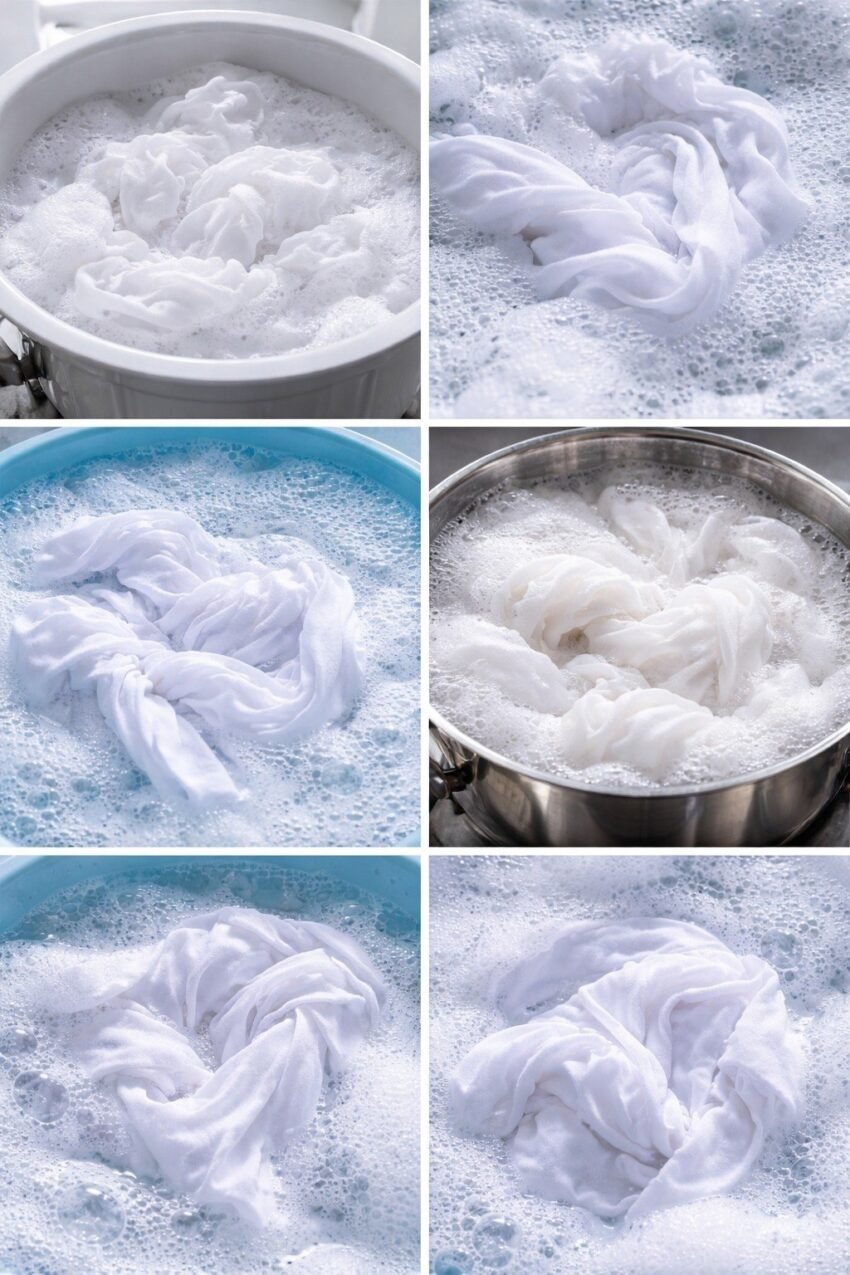
Fill a tub or machine with hot water.
-
Add 1 cup of white vinegar and the normal amount of detergent.
-
Submerge the whites completely and let them soak for a few hours or overnight.
-
Drain, then run a full wash cycle with detergent and another vinegar rinse. This often shocks the fabric back to near-original whiteness.
The Crucial Don’ts (Where “Vinegar Only” Goes Wrong)
-
Don’t mix vinegar and chlorine bleach. This creates toxic chlorine gas. Ever.
-
Don’t use vinegar every single wash on delicate elastic. Over many months, the acid can degrade rubber and elastic fibres in socks and underwear, so use this method for your whites specifically, not as your default for every dark, stretchy garment.
-
Don’t expect miracles on underarm yellowing. That yellow is a complex protein oxidation stain. Vinegar won’t touch it. You need an enzymatic stain remover or a paste of baking soda and hydrogen peroxide applied directly to the area before washing.
The “secret ingredient” narrative is almost true: vinegar is the key that unlocks the original whiteness buried under chemical residue. But for a truly pure, milky white that rivals optical brighteners, the full recipe is detergent (to clean) + hot water (to melt oils) + vinegar (to strip residue) + sun (to optically brighten). That’s the chemistry of perfect whites.