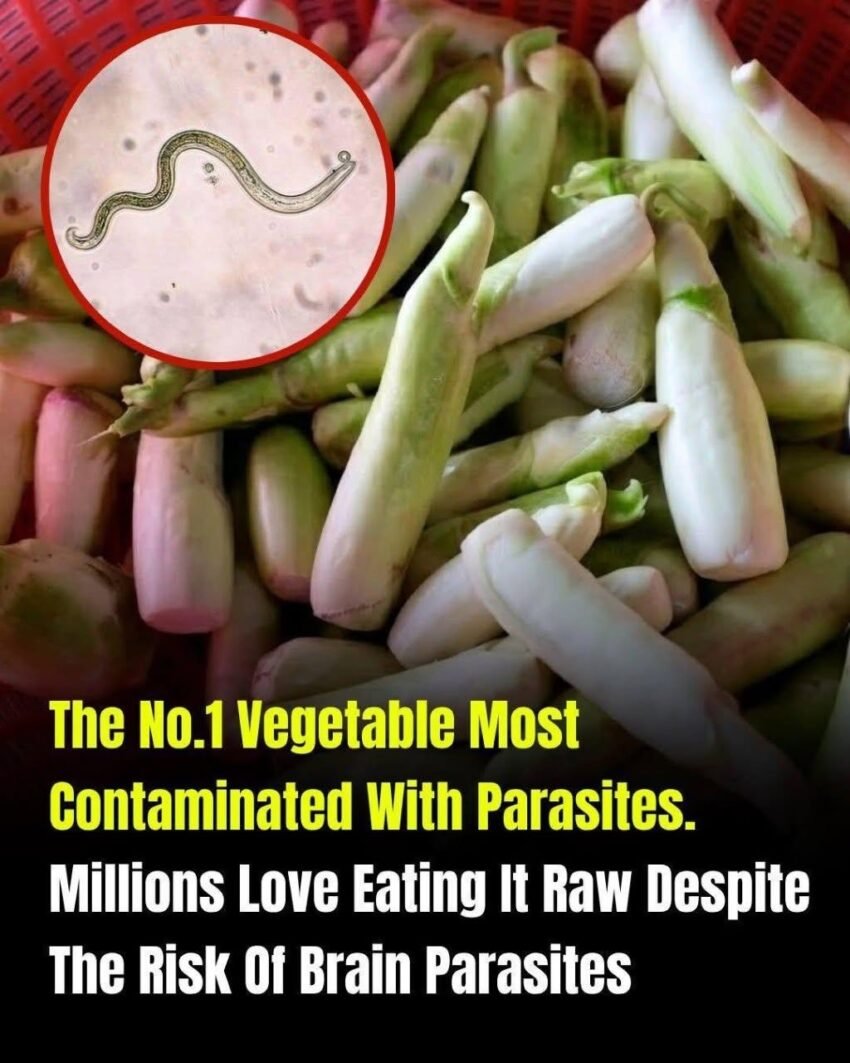
Here’s why watercress tops the list and what you need to know to protect yourself.
The Top Offender: Watercress
Watercress is a semi-aquatic leafy green that grows in slow-moving, natural spring water. This very growing environment makes it uniquely vulnerable to a specific and dangerous parasite.
The Main Parasite: The Liver Fluke (Fasciola hepatica)
The biggest risk from watercress isn’t a worm you might pick up from soil, but the liver fluke, a flatworm that causes a disease called fascioliasis. The life cycle requires specific snails and grazing mammals (like sheep and cattle), and watercress is the perfect vector.
How It Happens:
The parasite’s microscopic larvae (cercariae) are released from infected water snails. They encyst (form a protective capsule) directly onto the stems and leaves of the watercress plant. When you eat this raw, unwashed watercress, the larvae hatch in your intestines, burrow through your gut wall, and migrate to your liver, where they mature into adult flukes, causing chronic inflammation, pain, and liver damage.
It’s a significant enough global health issue that the World Health Organization classifies fascioliasis as a neglected tropical disease.
The “Hidden Risks” Experts Warn About
It’s not that watercress is always unsafe—commercially grown watercress in controlled, inspected aquatic beds is generally fine. The danger lies in the “hidden risks”:
Wild Foraging: This is the number one risk factor. Picking wild watercress from streams, creeks, or natural springs—especially in rural or farming areas where sheep and cattle graze upstream—is extremely dangerous.
Imported Produce: In some regions, watercress may be imported from areas with less stringent water quality controls.
The Washing Myth: The parasitic cysts are incredibly sticky. A simple rinse under the tap is not guaranteed to remove them. They bond tightly to the plant’s surface.
Runner-Up: Leafy Greens Grown in Soil
While watercress has its liver fluke niche, the vegetables most commonly associated with typical intestinal worms (like roundworm, pinworm, and tapeworm) globally are leafy greens that grow close to the soil, such as:
Lettuce
Spinach
Cabbage
Radish sprouts
The Main Parasites: Roundworm (Ascaris), whipworm (Trichuris), and hookworm.
The Cause: Contamination comes from soil that has been fertilized with untreated human or animal waste (night soil). The nooks and crannies of leafy greens trap contaminated soil particles, making them difficult to wash perfectly.
How to Protect Yourself (Expert Consensus)
You don’t need to be afraid of vegetables, but you should be smart about them. The same advice applies across the board:
Never, ever eat wild-foraged watercress raw. Cooking destroys the fluke larvae instantly. If you must forage, boil it thoroughly or use it only in fully cooked soups and stir-fries.
Buy Commercial: Purchase watercress grown on regulated, inspected farms, often sold in sealed bags at supermarkets. These operations carefully control water quality.
Wash Aggressively: For all leafy greens, don’t just rinse. Separate the leaves and soak them in a bowl of clean water, swishing them vigorously to dislodge dirt and debris. A soak in salt water or a few drops of food-grade hydrogen peroxide can offer an extra layer of safety. Rinse again.
Cook When Possible: Heat is the ultimate safety net. If you’re in a region with questionable food safety infrastructure, favor cooked vegetables and salads over raw ones.
Let me know if you want the details on that aggressive vegetable washing method or the specific signs of a liver fluke infection.