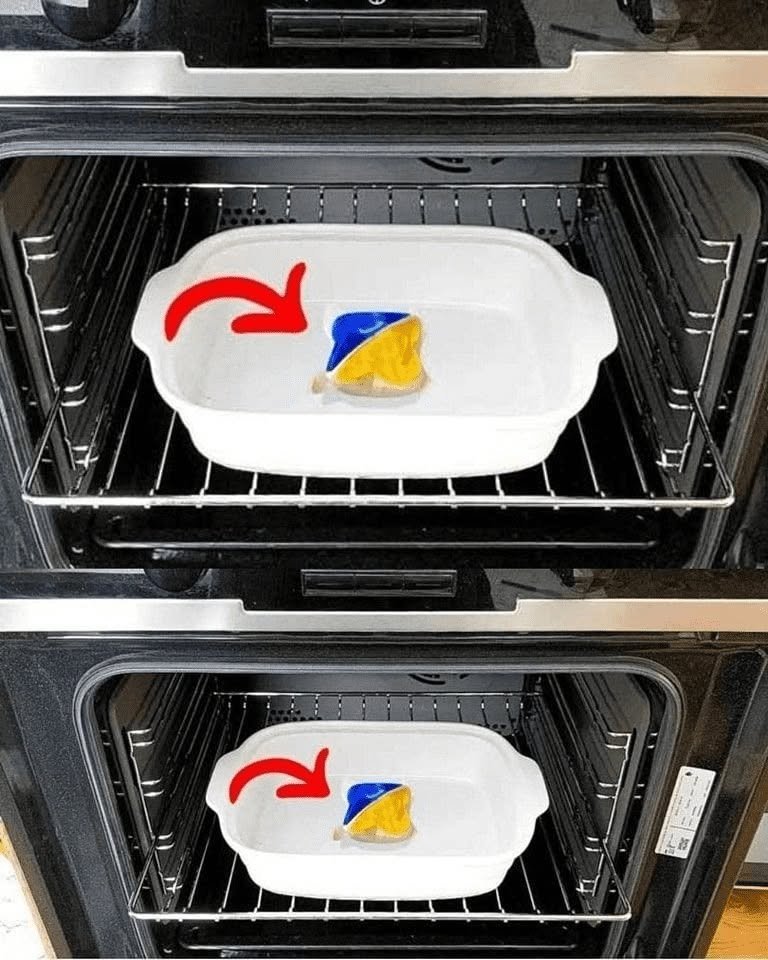
The oven is one of those cleaning tasks that feels monumental, but there’s a method that dissolves even the most carbonized, burnt-on grease with almost no scrubbing. The trick is time, the right paste, and a strategic overnight strategy. This works for the entire interior—racks, glass door, and that dreaded burnt-on floor.
Here is the effortless, no-fume, no-elbow-grease method.
The Overnight Baking Soda & Vinegar Method (The Gold Standard)
What You Need:
-
Baking soda (a full box, roughly 1 cup)
-
White vinegar (in a spray bottle)
-
Rubber gloves
-
Plastic spatula or old credit card (for scraping, never metal)
-
Microfiber cloths
-
Large plastic bags or a bathtub lined with old towels (for the racks)
Step 1: Remove the Racks
Take the oven racks out. These are the hardest part to scrub, so we’ll treat them separately. Place them in a large heavy-duty garbage bag or a bathtub lined with old towels. Coat them with a paste of baking soda and water, and pour white vinegar over them. The bag will trap the fizzing action. Seal it and leave it overnight or for at least 8 hours. The next day, the burnt-on grime will wipe off with a non-scratch sponge.
Step 2: Make the Cleaning Paste
In a small bowl, mix about ¾ cup of baking soda with just enough warm water to form a spreadable paste—similar to pancake batter. It should be thick enough to cling to vertical surfaces but loose enough to spread.
Step 3: Coat the Interior (Avoid the Heating Elements)
Wearing gloves, spread the baking soda paste all over the interior surfaces of the oven:
-
The floor (where the worst burnt-on stuff lives)
-
The walls
-
The ceiling
-
The inside of the glass door
Crucially, avoid:
-
The heating elements (gas or electric)
-
The gas vent or any openings
-
The oven light
-
The door gasket (the rubber seal around the edge)
Use a paintbrush or a silicone spatula to get the paste into corners. For heavily burnt spots, apply a thicker layer.
Step 4: Let Time Do the Work
Close the oven door and leave the paste to sit for a minimum of 12 hours, ideally overnight. The alkaline baking soda slowly breaks down the polymerized grease and carbon, softening it chemically so you don’t have to scrub it mechanically. This is the “effortless” secret. Do not turn the oven on.
Step 5: The Next Morning — Wipe and Scrape
The paste will have dried and turned crusty, pulling grime with it. Put on your gloves. Using a damp microfiber cloth, start wiping away the dried paste. For stubborn spots, use a plastic spatula or an old credit card to gently scrape off the softened, carbonized residue. It should lift away in chunks with zero effort. Never use metal tools—they’ll scratch the enamel.
Step 6: The Vinegar Finish
Pour white vinegar into a spray bottle. As you wipe, spray any remaining baking soda residue. It will foam on contact. This final acid rinse neutralizes any remaining alkaline powder and leaves a streak-free, gleaming finish. Wipe thoroughly with a clean, damp cloth until all traces are gone.
Step 7: The Glass Door (If Still Cloudy)
If the inside glass still has a hazy, brown film, make a paste of baking soda and a tiny bit of water, and use a non-scratch scrub sponge or a pumice stone designed for glass (sold as “glass cooktop cleaner” stones) very gently on the stubborn spots. The overnight paste will have done 90% of the work.
The “Even the Burned-On Bits” Part
For the oven floor where pans have boiled over and carbonized into black crusts, apply an extra-thick mound of the baking soda paste directly on the burn. After the overnight sit, gently lift it with the plastic scraper. If a small patch remains, sprinkle it with dry baking soda, spritz with vinegar, and let that fizz sit directly on the spot for 30 minutes, then scrape.
How to Keep It Effortless Going Forward
-
Line the bottom: Place a silicone oven liner on the lowest rack (not directly on the floor of an electric oven—check your manual). It catches drips and goes in the dishwasher.
-
Wipe spills immediately: A quick sprinkle of salt on a fresh spill absorbs it and makes it easy to wipe once the oven cools slightly.
-
Steam clean lightly: Once a month, place an oven-safe dish filled with water and a few lemon slices in a 250°F (120°C) oven for 30 minutes. The steam loosens light grime, and a quick wipe is all that’s needed.
This method works because it removes the one thing nobody ever has enough of: the need to scrub. Time and chemistry do the work while you sleep. In the morning, you’re essentially just wiping away the evidence.