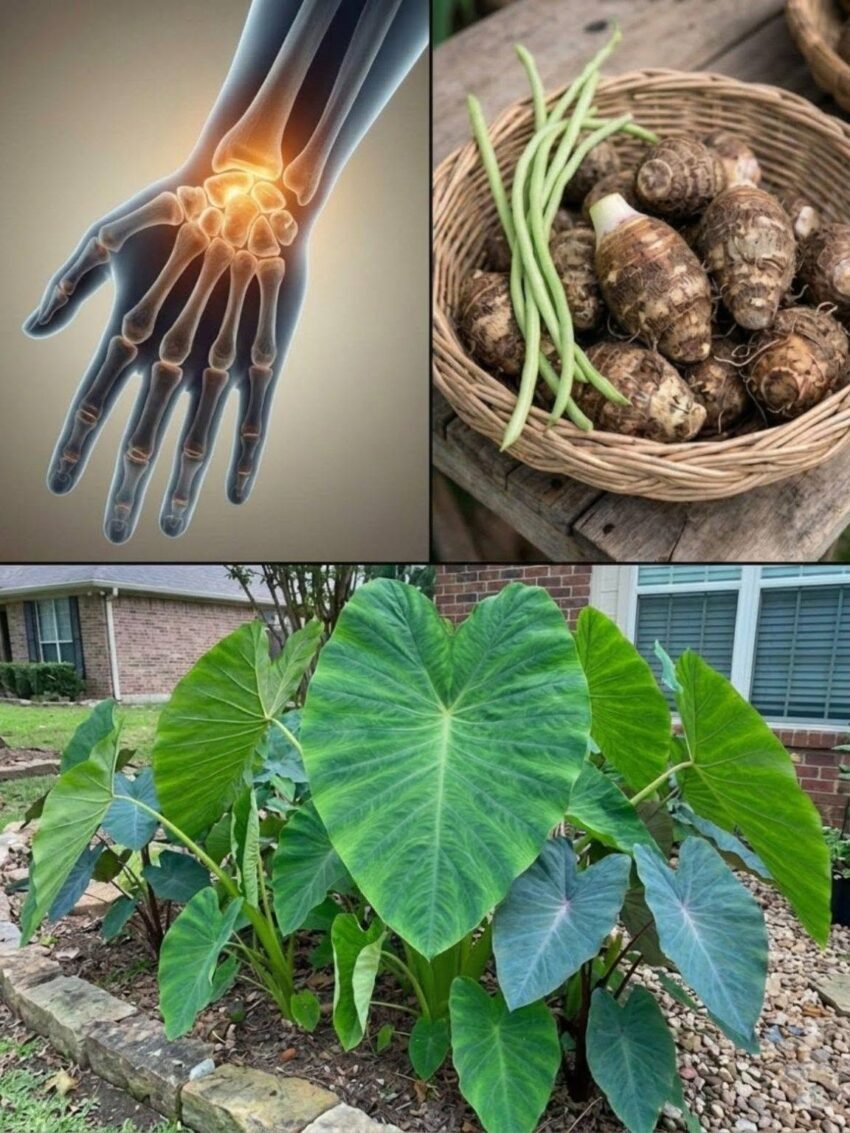
At first glance, taro looks like just another lush tropical plant with oversized heart-shaped leaves. But in many places, it has always been more than that. People know it as food, of course, but in traditional home care, taro has also been used in simple remedies for sore joints, swelling, and body aches.
That is probably why this plant still catches attention today. The idea is simple: a warm taro preparation, usually made from the cooked root, is sometimes used as a comforting compress when the wrist feels stiff, overworked, or mildly swollen.
Still, this is one of those remedies that needs a little honesty. Taro is interesting, and it does have a place in traditional practice, but it is not a miracle fix. And raw taro is not something to handle carelessly.
Why People Use Taro in Traditional Remedies
When taro is mentioned in folk remedies, it is usually connected to joint discomfort, swelling, or body pain after strain.
That makes sense when you think about how these remedies are used. They are not usually dramatic or complicated. They are practical. A warm poultice placed over a tired wrist or aching joint is less about instant healing and more about easing discomfort in a simple, accessible way.
In traditional use, taro is often associated with:
- wrist stiffness
- mild swelling
- overworked joints
- sore hands after repetitive movement
- general body aches
The appeal is not hard to understand. It is a familiar plant, it is widely available in many regions, and once cooked, it becomes soft enough to turn into a gentle warm paste.
Ingredients
For a simple warm taro compress, you only need a few things:
- 1 medium taro corm
- water for boiling
- a clean cloth or gauze
That is enough for one small application.
How to Prepare a Warm Taro Compress
This remedy should always start with cooked taro, not raw.
Step 1: Peel and wash the taro
Clean the corm well before using it. If your skin is sensitive, wearing gloves while peeling is a good idea.
Step 2: Boil until very soft
Cut the taro into chunks and boil it until it becomes fully soft and easy to mash.
Step 3: Mash into a paste
Drain the cooked taro and mash it into a smooth, thick paste.
Step 4: Let it cool slightly
It should feel warm, not hot. The goal is comfort, not heat irritation.
Step 5: Wrap it in cloth
Place the warm mash inside a clean cloth or gauze so it can be used like a soft compress.
How to Use It
Lay the warm wrapped compress over the sore wrist and leave it there for a short time.
Most people would use something like this in the evening, after a long day of repetitive work, lifting, writing, or anything else that leaves the hands and wrists feeling tight and tired.
It can also be used when the wrist feels mildly swollen or stiff from overuse.
The warmth is a big part of why this remedy feels good. Sometimes that alone can make the area feel calmer and less tense.
Why This Remedy Still Appeals to People
Part of the reason taro remains part of traditional wellness is that it sits in an interesting space between food and remedy.
It is familiar. It does not feel exotic or intimidating. And once cooked, it has a soft, soothing texture that naturally lends itself to poultices and compresses.
There is also the ritual itself. Boiling the root, mashing it, wrapping it, and placing it over an aching wrist creates a slow, comforting kind of care. That matters more than people sometimes realize.
A lot of traditional remedies survive not because they promise miracles, but because they offer simple relief in a way that feels grounding and manageable.