
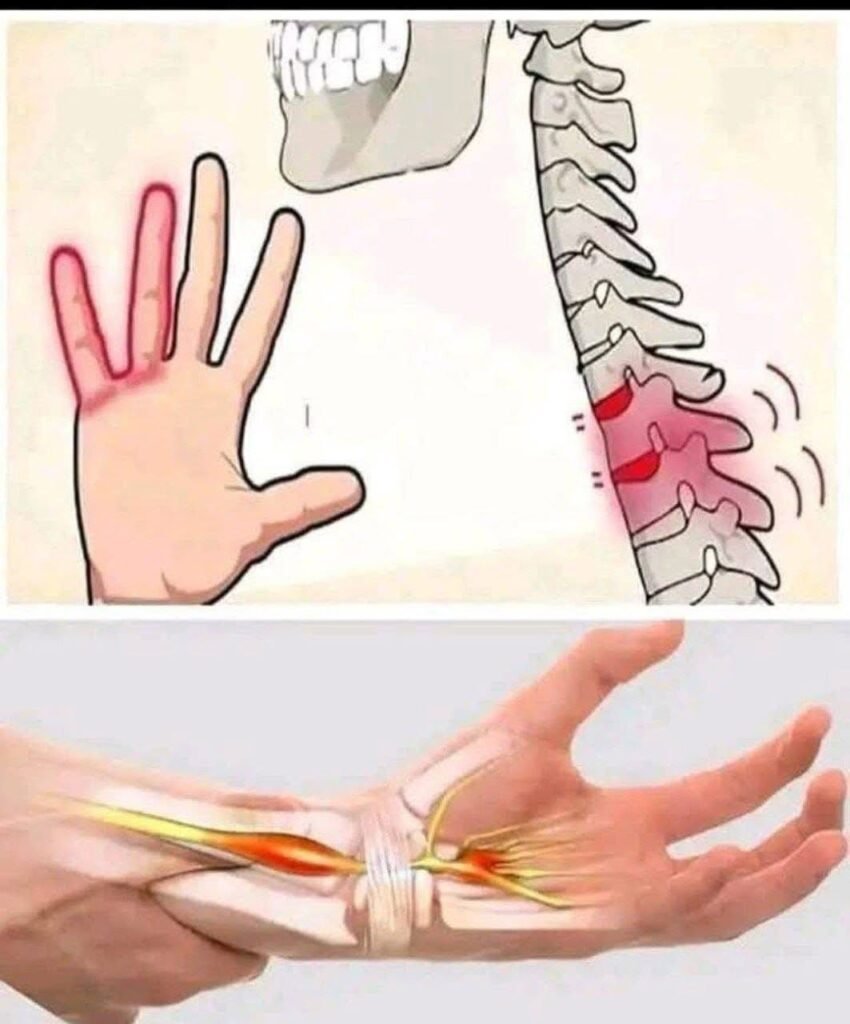
Numbness and tingling in the hands—specifically in a distinct pattern—is a hallmark sign of Carpal Tunnel Syndrome (CTS) .
Let’s break down exactly what it is, why it happens, and the clear signs that distinguish it from other causes of hand numbness.
What Is Carpal Tunnel Syndrome?
It’s a compression neuropathy. Imagine a tunnel in your wrist, formed by small carpal bones on the bottom and sides, and a thick, unyielding ligament (the transverse carpal ligament) as the roof. Through this rigid, narrow tunnel run nine flexor tendons and one critical nerve: the median nerve.
CTS occurs when there is increased pressure within this tunnel, compressing the median nerve and choking off its blood supply. The nerve becomes ischemic and starts sending aberrant signals—tingling, burning, numbness, and eventually, permanent damage.
The “Textbook” Symptom Pattern
This is what separates CTS from all other hand numbness. The median nerve provides sensation to a very specific part of the hand.
-
The Fingers Affected: The thumb, index finger, middle finger, and the thumb-side half of the ring finger. The pinky finger is almost never involved in pure CTS. If your pinky is numb, you’re looking at a different nerve (ulnar nerve) or a systemic issue.
-
The Nocturnal Pattern: Symptoms are almost always worse at night. The classic story is waking up at 2 or 3 a.m. with a hand that feels swollen, burning, and numb. The patient instinctively shakes or flicks the hand (the “Flick Sign”) to try to restore feeling. This happens because we sleep with our wrists flexed, which maximally increases pressure inside the tunnel.
-
The Daytime Trigger: Gripping a steering wheel, holding a book, a hairdryer, or a phone to the ear with the wrist bent for extended periods will bring on the tingling.
-
Late-Stage Warning: In advanced, untreated CTS, the numbness can become constant, and you lose the pain and temperature sensation. This is dangerous because you can burn yourself and not feel it. Worse, the muscles at the base of the thumb (the thenar eminence) begin to visibly waste away (thenar atrophy). You’ll notice a flattened, hollowed-out palm below the thumb, and you’ll lose grip strength—you may start dropping objects like coffee cups or have difficulty pinching.
Why You? The Risk Factors
It’s rarely one thing, but a combination of anatomy and physiology.
-
Anatomy: You may simply be born with a smaller, more cramped carpal tunnel.
-
Repetitive Stress: High-force, repetitive hand and wrist movements, especially with vibration (power tools) or prolonged extreme flexion/extension (typing with poor ergonomics).
-
Fluid Retention States: Pregnancy (often resolves postpartum), hypothyroidism, and kidney failure.
-
Inflammatory Conditions: Rheumatoid arthritis and diabetes (which also makes nerves more susceptible to compression).
The Action Plan: Staging the Severity
Carpal Tunnel is a progressive condition. Your treatment depends entirely on the stage.
-
Mild/Intermittent (Symptoms only at night):
-
The Gold Standard First Step: A neutral-position wrist splint worn rigidly every night. Do not sleep without it. This prevents the wrist from flexing and gives the nerve 8 hours of decompression. It often resolves symptoms entirely in early stages.
-
Ergonomic Correction: Ensure your workstation keeps your wrists in a neutral, straight line, not cocked upward.
-
Nerve Gliding Exercises: Gentle, specific exercises that slide the median nerve through the carpal tunnel can reduce adhesions and improve blood flow. A hand therapist can teach you these.
-
-
Moderate (Daily symptoms, intermittent numbness):
-
Corticosteroid Injection: An ultrasound-guided injection of cortisone into the carpal tunnel. This is both diagnostic and therapeutic. If it provides relief (even temporarily), it confirms the diagnosis. It can reduce the inflammation of the tendon sheaths, creating more room for the nerve. This effect can last for months.
-
-
Severe (Constant numbness, weakness, thenar atrophy):
-
Nerve Conduction Study (EMG/NCS): This is mandatory at this stage. It objectively measures how severely the nerve signal is being blocked.
-
Carpal Tunnel Release Surgery: This is not exploratory; it’s definitive. The surgeon cuts the transverse carpal ligament (the roof of the tunnel) to permanently release the pressure. This is a 10-minute procedure with a very high success rate, but it is essential to do it before the thenar muscles atrophy, as muscle wasting is irreversible.
-
What You Should NOT Do
-
Don’t delay with “wait and see” if the numbness is constant. A compressed nerve that is left to die will not fully regenerate. The window for complete recovery is finite.
-
Don’t rely on generic wrist braces that have a metal bar forcing the wrist into extension. You need a neutral splint.
The presence of that specific thumb-and-first-three-finger numbness at night is your clear signal. It’s not “poor circulation” or “just sleeping funny.” It’s a mechanical compression that you can address in stages, with excellent results if you act in time.