
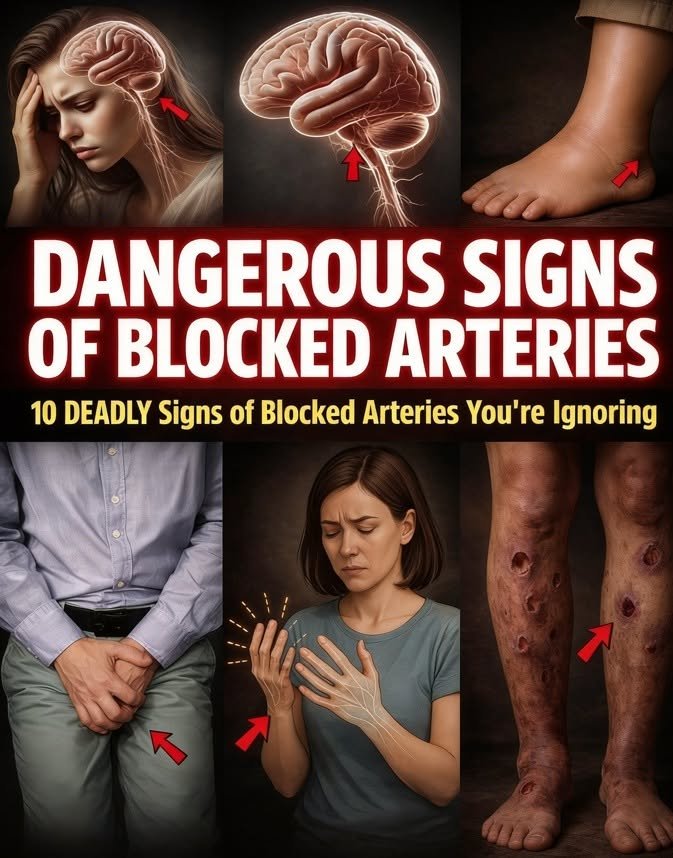
Blocked arteries, medically known as atherosclerosis, occur when plaque (made up of cholesterol, fat, calcium, and other substances) builds up on the inner walls of your blood vessels. Over time, this narrows the arteries and restricts the flow of oxygen-rich blood to your organs and tissues.
The scary reality is that blocked arteries often develop silently over decades. Many people do not realize they have a problem until a medical emergency occurs, like a heart attack or stroke. However, your body frequently sends out subtle warning signs long before a crisis. If you know what to look for, you can seek medical help early.
Here are 10 warning signs of blocked arteries that are often overlooked:
1. Erectile Dysfunction (ED)
For men, this is often one of the very earliest indicators of vascular disease. The arteries that supply blood to the penis are much smaller than those leading to the heart or brain. If plaque is building up in the cardiovascular system, these tiny blood vessels are usually the first to fail. If you are experiencing ED, especially if you are under 50, it is a strong reason to get your heart and arteries checked.
2. Calf Pain or Cramping When Walking (Claudication)
If your legs hurt, cramp, or feel heavy when you walk or climb stairs, but the pain goes away when you rest, this could be a sign of Peripheral Artery Disease (PAD). This happens when the arteries in your legs are so clogged with plaque that the muscles cannot get enough oxygenated blood during exercise. It is often mistaken for “getting old” or arthritis.
3. Unexplained Fatigue or Exhaustion
If your heart is struggling to pump blood through narrowed arteries, your body has to work much harder to function. Extreme, unexplained fatigue—especially during activities that used to be easy (like making the bed or walking to the mailbox)—can be a symptom of reduced blood flow. This symptom is particularly common and often overlooked in women.
4. Shortness of Breath
If you find yourself getting winded doing mundane tasks, it might not be because you are out of shape. When the coronary arteries are blocked, the heart cannot pump efficiently, causing blood to back up into the lungs. This leads to breathlessness, even when lying flat. If you wake up in the middle of the night gasping for air, tell your doctor immediately.
5. Dizziness or Lightheadedness
Feeling faint, woozy, or losing your balance can be a sign that the arteries leading to your brain (carotid arteries) are narrowed, or that your heart isn’t pumping enough blood to your brain. If you feel like the room is spinning when you stand up or exert yourself, do not dismiss it as simple dehydration.
6. Jaw Pain or Throat Tightness
We typically associate heart issues with pain in the left arm, but blocked coronary arteries can cause referred pain in the jaw, neck, or throat. If you experience a tightness, pressure, or aching in your jaw or throat that comes on when you exert yourself and goes away when you rest, it could be angina (a warning sign of an imminent heart attack).
7. A Visible “Waxy” Lump on the Skin (Xanthomas)
Look at your skin, especially around your eyes, knuckles, elbows, or knees. If you notice small, soft, yellowish, waxy bumps, these are called xanthomas. They are literal deposits of cholesterol building up under the skin. If you see these, your blood cholesterol is likely dangerously high, meaning plaque is almost certainly building up in your arteries.
8. Cold or Numb Hands and Feet
If your hands or feet always feel icy cold to the touch, or if you experience a tingling or numbness in your extremities, it could be due to poor circulation. When arteries are narrowed, warm, oxygen-rich blood has a hard time reaching the far ends of your body.
9. Slow-Healing Wounds on the Feet or Legs
If you get a small cut, blister, or sore on your foot or lower leg and it takes weeks or months to heal (or doesn’t heal at all), it is a major red flag. Without adequate blood flow, the body cannot deliver the nutrients and immune cells needed to repair tissue. This is a classic and serious symptom of Peripheral Artery Disease.
10. Upper Back or Stomach Pain
Blockages in the lower part of the heart or the abdominal aorta can sometimes present as severe upper back pain or deep stomach pain. Because the heart sits on the diaphragm, a struggling heart can send pain signals to the back, shoulders, or abdomen. If this pain is accompanied by nausea or sweating, seek emergency care.
What Should You Do Today?
If you recognized yourself in one or more of these symptoms, early awareness is your best defense.
-
Don’t Panic: Many of these symptoms can be caused by conditions other than blocked arteries (such as nerve issues, vitamin deficiencies, or chronic fatigue).
-
Schedule a Physical: Make an appointment with your primary care doctor. Describe your symptoms honestly and completely.
-
Ask for a Lipid Panel: A simple blood test can check your cholesterol and triglyceride levels.
-
Request an Ankle-Brachial Index (ABI): If you have leg pain, this quick, painless test compares the blood pressure in your ankle to the blood pressure in your arm to check for blockages.
-
Know Your Numbers: High blood pressure, high LDL (“bad”) cholesterol, diabetes, and smoking are the four biggest contributors to blocked arteries. Managing these aggressively—often with simple medications and lifestyle changes—can halt the progression of the disease and literally add years to your life.