
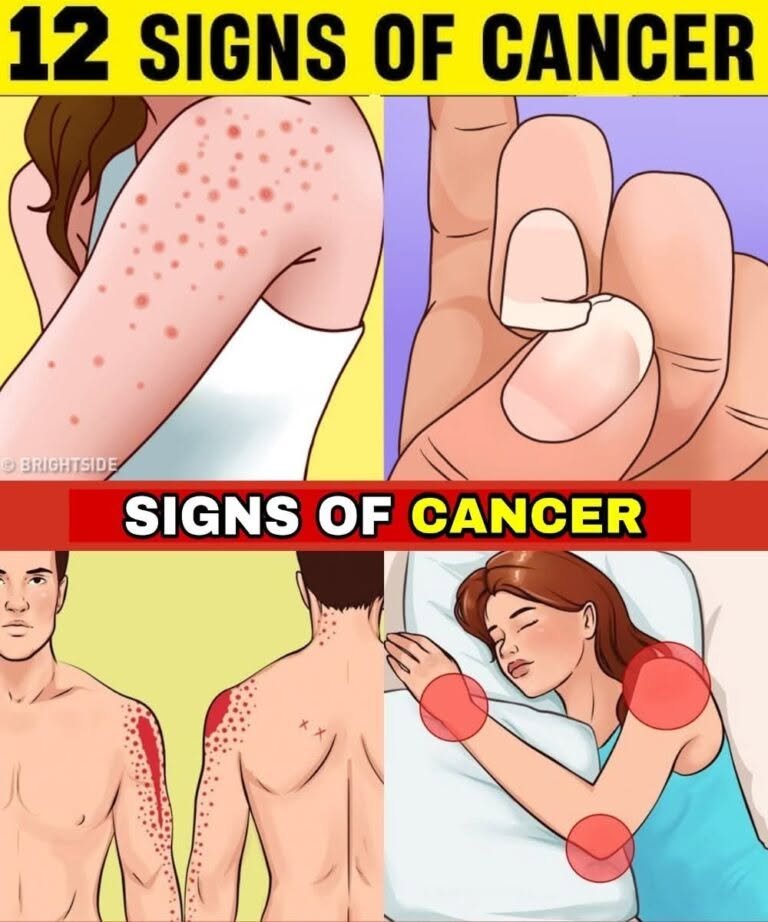
Here are 12 early warning signs that your body may be developing cancer cells. These signs don’t automatically mean cancer, but they are worth checking with a doctor, especially if they last more than two to three weeks or get worse over time.
1. Unexplained Weight Loss
Losing weight without trying, especially a noticeable amount like 4–5 kg or more, can be one of the first signs of several cancers, including stomach, pancreas, lung, or oesophageal cancer.
Why it happens:
Cancer cells can change how the body uses energy, causing it to burn calories faster than normal.
2. Persistent Fatigue
Feeling exhausted all the time, even after rest, is common in many illnesses — but it can also be an early sign of cancers such as leukaemia, colon cancer, or stomach cancer.
What to watch for:
Fatigue that doesn’t improve with sleep and interferes with daily life.
3. A Lump or Thickening Under the Skin
A new lump anywhere on the body — breast, neck, armpit, groin, or testicle — should always be checked.
Why it matters:
Some lumps are harmless, but others may be tumours. Breast cancer and lymphoma often present this way.
4. Changes in Bowel or Bladder Habits
Persistent constipation, diarrhoea, narrower stools, or a feeling that the bowel doesn’t empty completely can be signs of colon or rectal cancer.
Frequent or painful urination, blood in the urine, or difficulty passing urine can signal bladder or prostate cancer.
5. Unexplained Bleeding or Discharge
Blood where it shouldn’t be is always a warning sign.
Examples include:
-
Blood in the stool or urine
-
Coughing up blood
-
Unusual vaginal bleeding
-
Blood from the nipple
-
Rectal bleeding
This can occur in lung, colon, bladder, cervical, or breast cancer.
6. A Sore That Doesn’t Heal
A cut, sore, or ulcer that doesn’t heal within a few weeks can be a sign of skin cancer, especially if it’s on sun-exposed skin.
Mouth sores that won’t heal, particularly in smokers or heavy drinkers, can signal oral cancer.
7. Changes in a Mole or Skin Spot
A mole that changes in size, shape, colour, or texture — or starts itching, crusting, or bleeding — can be an early sign of melanoma.
Remember the ABCDE rule:
-
A — Asymmetry
-
B — Border irregularity
-
C — Colour changes
-
D — Diameter larger than 6 mm
-
E — Evolving or changing
8. Persistent Cough or Hoarseness
A cough that lasts more than three weeks, especially in a non-smoker, should not be ignored.
Hoarseness or voice changes lasting more than a few weeks can be linked to lung, throat, or thyroid cancer.
9. Difficulty Swallowing
Persistent trouble swallowing, a feeling of food sticking, or pain when swallowing can be a sign of oesophageal, throat, or stomach cancer.
10. Persistent Pain
Unexplained pain that doesn’t go away and has no obvious injury or cause can sometimes be an early sign of bone, ovarian, or testicular cancer.
11. Fever or Night Sweats
Recurring fevers, especially at night, or drenching night sweats can be early symptoms of lymphoma or leukaemia.
12. Indigestion or Persistent Nausea
Frequent indigestion, heartburn, bloating, or nausea that doesn’t settle can sometimes signal stomach, ovarian, or pancreatic cancer.
What to Do If You Notice These Signs
Don’t panic
Most of these symptoms are caused by something far less serious than cancer, such as infection, stress, diet, or hormone changes.
But don’t ignore them
If a symptom:
-
lasts longer than 2–3 weeks
-
gets worse
-
doesn’t respond to normal treatment
-
or runs alongside unexplained weight loss or bleeding
Then see a doctor for a proper check.
Bottom Line
Your body often gives early signals when something is wrong. The earlier cancer is found, the easier it is to treat. Persistent, unexplained changes are worth taking seriously — not with fear, but with action.