
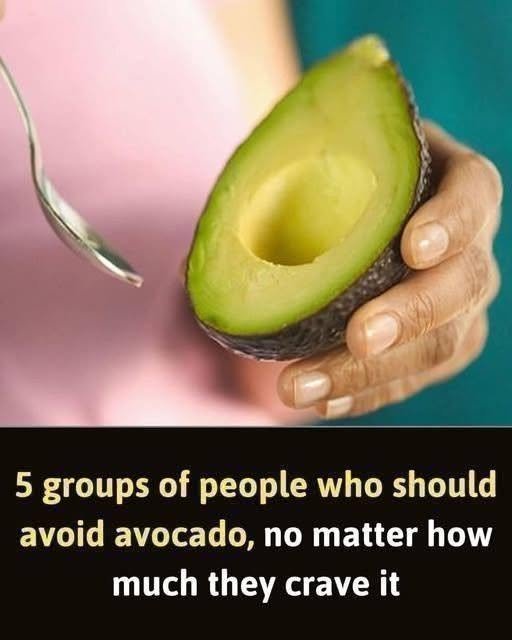
While avocados are rightly celebrated as a nutrient-dense superfood full of healthy fats and potassium, their unique chemistry means they aren’t for everyone. For certain groups, eating an avocado can trigger anything from a migraine to a dangerous spike in blood potassium.
Here are 5 groups of people who should avoid or strictly limit avocados.
1. People with Latex-Fruit Syndrome
This is the most critical and lesser-known group. Avocados contain proteins called chitinases that are structurally identical to the allergenic proteins in natural rubber latex.
-
The Mechanism: If you have a latex allergy, your immune system can’t tell the difference between the latex protein and the avocado protein. It mistakes the fruit for an enemy and launches an attack, a phenomenon called cross-reactivity.
-
The Danger: This isn’t a mild intolerance; it’s a true IgE-mediated allergy. Symptoms can include immediate itching or tingling in the mouth, hives, swelling of the lips and tongue, abdominal pain, and in severe cases, anaphylaxis.
-
The Connection: If you’re allergic to latex, you have a 30-50% chance of reacting to avocado. You may also react to bananas, kiwis, and chestnuts, which share the same protein.
2. People Taking MAOIs (Antidepressants)
Avocados contain a naturally occurring amino acid called tyramine, which can be dangerous for people on a specific, older class of antidepressants known as Monoamine Oxidase Inhibitors (MAOIs), like phenelzine or tranylcypromine.
-
The Mechanism: MAOI drugs work by blocking the enzyme (monoamine oxidase) that breaks down tyramine in your body. If you eat a tyramine-rich food like an overripe avocado while on an MAOI, tyramine can build up to toxic levels.
-
The Danger: This can trigger a sudden, dangerous spike in blood pressure known as a hypertensive crisis, which requires emergency medical treatment. While MAOIs are less commonly prescribed today in favor of SSRIs, anyone taking them must be on a strict low-tyramine diet.
3. People with Moderate to Severe Kidney Disease (CKD)
This restriction is about the electrolyte potassium. Avocados are famously loaded with it (a whole avocado contains around 975 mg, nearly a third of the daily recommended intake). While healthy kidneys excrete excess potassium effortlessly, diseased kidneys cannot.
-
The Mechanism: In Chronic Kidney Disease (CKD), the kidneys lose the ability to filter potassium from the blood efficiently.
-
The Danger: This leads to hyperkalemia, or high blood potassium. This is a silent but deadly condition because it disrupts the electrical signals that control your heartbeat. It can lead to dangerous cardiac arrhythmias, muscle weakness, and sudden cardiac arrest. Many nephrologists advise their patients to completely avoid avocado.
4. People with a Histamine Intolerance
Even though avocado isn’t high in histamine itself, it’s a powerful histamine liberator. For people with a compromised ability to break down histamine (often due to low levels of the DAO enzyme), avocados can be a nightmare.
-
The Mechanism: Liberator foods don’t contain the chemical but force your body’s own mast cells to dump histamine into the bloodstream.
-
The Result: This can trigger a pseudo-allergic reaction that mimics a real allergy. Symptoms can include a pounding headache or migraine, skin flushing, hives, a runny nose, digestive distress, and brain fog. If you suffer from chronic migraines or Mast Cell Activation Syndrome (MCAS), avocado is often one of the first foods you’re told to eliminate.
5. People Trying to Lose Weight (Without Portion Control)
This isn’t a “never eat” situation, but a “strictly measure” warning. The “healthy food halo” around avocados is so bright it often blinds people to their caloric density.
-
The Mechanism: A single medium avocado contains about 240-320 calories and 20-30 grams of fat. While it’s excellent, satiating fat, it’s still highly concentrated energy.
-
The Trap: Smashing half an avocado on toast is fine. Eating an entire bowl of guacamole with chips, or adding an entire avocado to your daily smoothie on top of your normal diet, creates a significant caloric surplus. If your goal is fat loss, you cannot treat avocados as a “free food” like celery or cucumber. Limit intake to a quarter or half an avocado per serving.
A Final Note on a Common Misconception: People with IBS are often wrongly told to avoid avocado. The reality is nuanced: a small serving (1/4 of an avocado) is low FODMAP and safe for most. It’s only when you eat half or a whole fruit that the excess sorbitol can trigger bloating and gas. You don’t need to fully avoid it, just strictly manage the dose.