
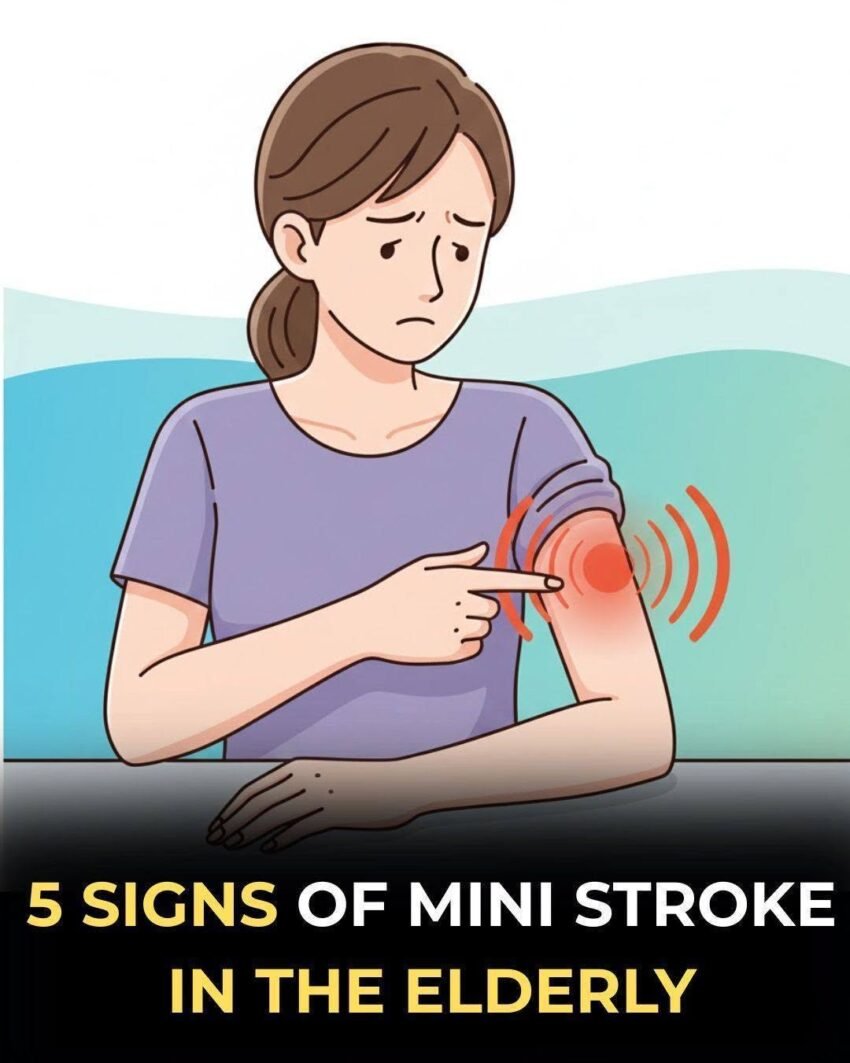
A “mini-stroke” is medically known as a Transient Ischemic Attack (TIA) . It’s caused by a temporary blockage of blood flow to part of the brain. The symptoms are identical to a full-blown stroke, but they typically last only a few minutes to an hour and resolve within 24 hours without immediate, permanent damage.
Here’s the life-saving urgency: A TIA is a warning shot. It means a major stroke is likely imminent. About 1 in 5 people who have a TIA will have a full stroke within 90 days, and half of those occur within the first 48 hours. Treating it as a “funny spell” that went away is a tragic mistake.
Here are five key signs, framed through the FAST lens and beyond, with details specific to how they can present in older adults.
The 5 Signs of a Mini-Stroke (TIA)
1. Face Drooping (The “A” is for Asymmetry)
This isn’t just a slight smile imbalance. Look for a sudden numbness or droop on one side of the face. Ask them to smile. In a TIA or stroke, one side won’t lift properly.
-
In the Elderly: Sometimes family members mistake this for a dental issue, Bell’s palsy, or even a “tired look.” The key differentiator is sudden onset. A smile that was normal at breakfast and drooping an hour later is a TIA until proven otherwise.
2. Arm Weakness or Numbness (Often One-Sided)
A sudden inability to raise and hold up both arms equally. One arm might drift downward, or the person might describe a heavy, “dead weight” feeling, as if the limb doesn’t belong to them.
-
In the Elderly: They might not describe it as numbness. Listen for: “My hand feels clumsy,” “I can’t button my shirt,” or “I just dropped my coffee cup for no reason.” It can also be a leg going numb, causing a sudden stumble or unexplained fall. A fall in an elderly person is a medical event unless proven otherwise; a TIA can be the hidden cause.
3. Speech Disturbance (Slurred or Strange)
This manifests in two ways:
-
Dysarthria: Slurred, thick-tongued speech, like they’re intoxicated. Words are hard to form.
-
Aphasia: The words are clear, but they don’t make sense. They might say, “I need the… you know, the thing outside,” unable to find the word “newspaper.” Or they might be completely unable to understand what you’re saying to them.
-
In the Elderly: Don’t dismiss this as “senior moment” confusion. A TIA causes a specific, localized brain malfunction. If an articulate older adult suddenly can’t name a grandchild or starts speaking gibberish, it’s an emergency, not dementia.
4. Sudden Vision Loss in One Eye (“A Shade Coming Down”)
This is a classic and highly specific TIA symptom called amaurosis fugax. They describe it as a curtain, shade, or veil being pulled vertically down over their vision in one eye, or a general “dimming out” before it slowly rises back up. It’s painless.
-
In the Elderly: This can be mistaken for floaters or cataracts acting up. The difference is the sudden and temporary nature. A cholesterol plaque from the carotid artery breaking off and temporarily lodging in the retinal artery causes this. If they mention “I went blind in one eye for two minutes, but it’s fine now,” they need an immediate ER trip, not an optometrist appointment next week.
5. The “Worst Vertigo of My Life” and Severe Balance Loss
We’re not talking about a mild lightheadedness upon standing. A brainstem TIA causes a violent, sudden spinning sensation (vertigo), an inability to walk, and severe loss of coordination, often with double vision.
-
In the Elderly: This is often tragically written off as a severe inner ear infection (labyrinthitis) or age-related dizziness. The emergency trigger is the cluster: sudden, profound vertigo PLUS one other symptom, like slurred speech, double vision, or numbness. True inner ear vertigo never causes slurred speech.
The Golden Rule: B.E. F.A.S.T.
Use this updated acronym. The “B” and “E” are crucial additions for identifying hidden strokes.
-
B – Balance: Sudden loss of balance or coordination.
-
E – Eyes: Sudden blurred, double, or lost vision in one or both eyes.
-
F – Face: One side drooping or numb.
-
A – Arms: One arm weak or numb; drifts down when raised.
-
S – Speech: Slurred speech, inability to speak, or inability to understand.
-
T – Time: Note the time the symptoms started. Go beyond the initial symptoms—if ANY of these are present, even if they disappear in a few minutes, call an ambulance immediately.
Do not let them drive to the hospital. Do not let them take a nap to “see if it passes.” Brain cells are dying. The clot-busting drugs and surgical interventions that can prevent lifelong disability are only available in a very narrow, specific window of time. You cannot afford to miss it.