
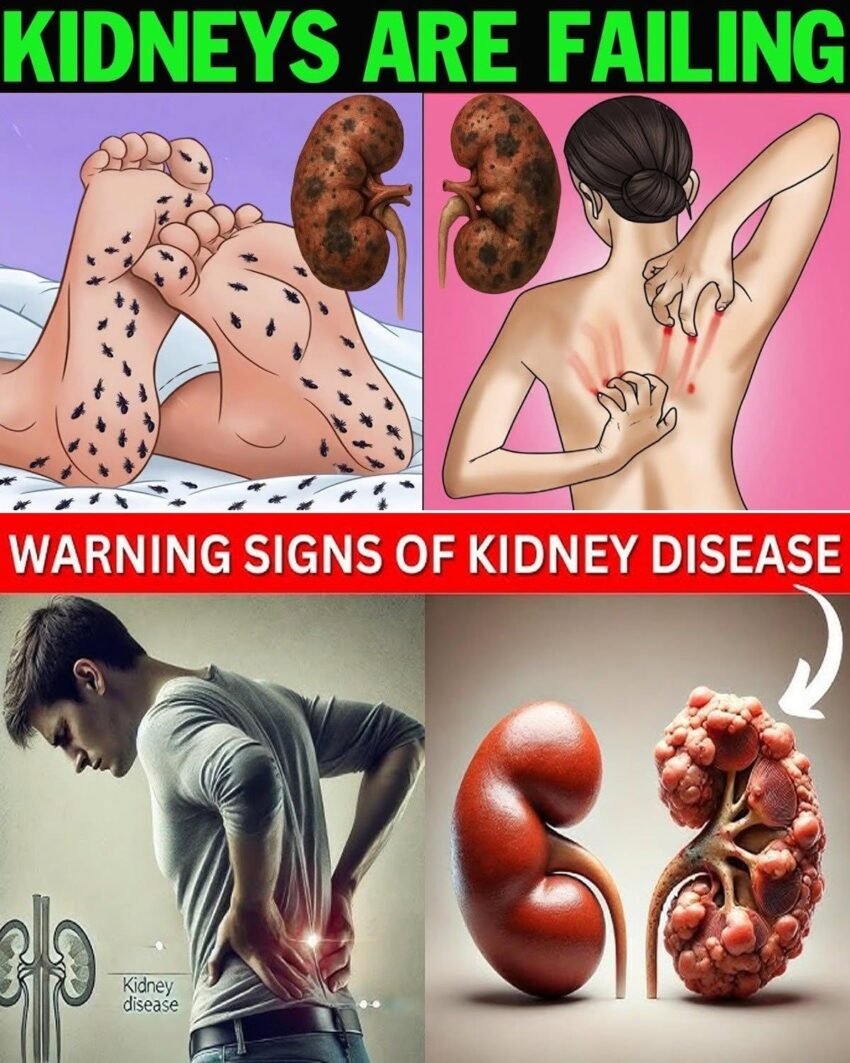
Here are the 7 early warning signs of kidney disease most commonly flagged by health organizations (NKF, NHS, Mayo Clinic)—plus what each can mean and when to get checked.
The 7 signs
1. Changes in urination
-
Foamy or bubbly urine (protein leaking through damaged filters)
-
Urinating more or less often, especially at night (nocturia)
-
Blood in urine (pink, red, or cola-colored)
-
Difficulty urinating or a weak stream
2. Swelling (edema) in legs, ankles, feet, or around the eyes
Damaged kidneys can’t balance fluids and sodium, so fluid pools—often worst in the morning around the eyes or by evening in the ankles.
3. Persistent fatigue and weakness
Kidneys make erythropoietin, which triggers red blood cell production. Declining function → anemia → tiredness, shortness of breath, trouble concentrating.
4. Unexplained back or side pain
Dull ache in the lower back or flank, sometimes with fever or urinary changes—can signal infection, stones, or kidney inflammation.
5. Puffy eyes or facial swelling
Protein loss in urine (proteinuria) can cause puffiness, especially first thing in the morning.
6. Dry, itchy skin and frequent rashes
When kidneys can’t filter waste, buildup in the blood causes itching and skin irritation.
7. Loss of appetite, nausea, or a metallic taste
Waste accumulation can dull appetite and make food taste off—often an early sign that’s easy to dismiss.
Other early clues worth knowing
-
High blood pressure (both a cause and a result of kidney disease)
-
Frequent muscle cramps (electrolyte imbalance)
-
Sleep problems and restless legs
-
Shortness of breath from fluid buildup or anemia
-
Frothy urine persisting for days
Important context
-
Early kidney disease is often silent—most people have no symptoms until significant function is lost, which is why screening matters more than symptom-spotting.
-
Risk factors: diabetes, high blood pressure, heart disease, family history, obesity, smoking, age 60+, and certain medications (e.g., long-term NSAIDs).
-
Get checked if: you have any persistent symptom above, or you’re in a risk group—a simple blood test (eGFR) and urine test (albumin-to-creatinine ratio) detect early disease.
-
Don’t self-diagnose—these signs overlap with many benign conditions. See a clinician for testing.
If you’re noticing a specific symptom, tell me which one and I can explain what tests or next steps are typically recommended.